
Livraison le jour même ou le lendemain

Qualité garantie

Débloquez vos offres de bienvenue: Livraison GRATUITE | Jusqu'à -80 % | 30 jours d'essai gratuits à JoyPlus
Téléchargez l'application
Doing your shopping on foot, taking the bus or bringing parcels home becomes much easier with a foldable shopping trolley. But you need to choose a model that suits the load you'll carry, the route you'll take and the space you have available. A shopping trolley on wheels that's too narrow will fill up in no time, while an oversized model quickly becomes awkward to manoeuvre on public transport.
Here are the criteria to check before you buy, along with a selection of models suited to different everyday uses.
A 56 or 60-litre bag may look very spacious, but that doesn't mean its frame can handle a heavy load. You need to distinguish between these three things:
For a big weekly shop, a large-capacity trolley can be a sensible choice. For everyday purchases, a more compact and lighter model will generally be easier to manoeuvre.
A sturdy folding trolley must fold easily, but also stay stable once opened. Some mechanisms are still relatively bulky when folded, or require several steps. Check the width of the trolley when folded, whether it has a locking system, and how easily it can be stored in a cupboard, car boot or under a bed.
A foldable transport trolley may also come with a telescopic handle. This should be adjustable to the right height so you don't have to pull the trolley with your arm too low or your back bent.
Two wheels are usually enough for regular pavements and shop aisles. Three or four wheels can make it easier to get over certain obstacles, but often at the cost of extra bulk. Before choosing a wheeled shopping bag, think about your usual route: stairs, cobbles, station platforms, narrow pavements and slopes all put the wheels and their fixings under real strain.
For occasional purchases, a 30 to 45-litre bag can work perfectly. A capacity of 56 to 60 litres will be better suited to family shops or less frequent outings. If you regularly carry bottles, tins or other heavy items, choose a model where the maximum load is clearly stated.
Separate pockets can also stop fragile items from getting crushed. For fresh or frozen goods, check for an insulated lining: don't assume it's there just from the look of the bag if it's not mentioned in the product description.
A lightweight shopping trolley is easier to carry up stairs, take on a bus or store. But be careful: a low weight shouldn't mean a wobbly frame. Aluminium is often used to keep the overall weight down, while steel and certain reinforcements generally offer more rigidity.
The handle should give a comfortable grip. For an older person or someone with reduced mobility, it's best to choose a suitable height, wheels that roll smoothly and a simple opening system. The word "ergonomic" in a product description doesn't replace checking the actual dimensions.
Look at the wheel diameter, the material they're made from and how they're attached to the frame. Bearings can make movement smoother, but how well they work also depends on the ground surface and the weight being carried. A brake can be handy for keeping the trolley still on a slope or during a journey on public transport.
For a foldable hand truck rated at 80 kg, make sure the stated load matches what you plan to use it for. A maximum load is usually given for use on a suitable surface: it doesn't guarantee the same performance on stairs or uneven ground.
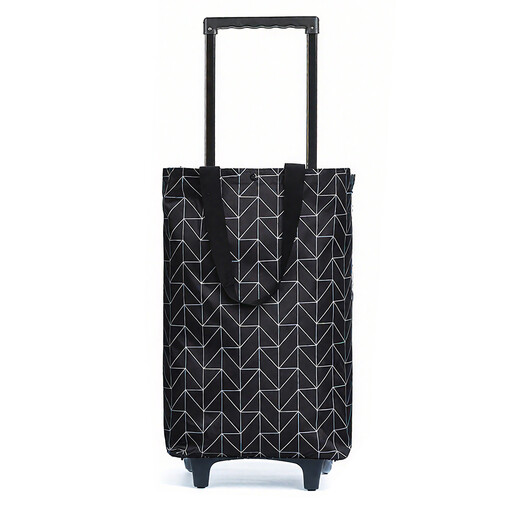
Why this suits this profile: Its foldable design and claimed lightweight format make it an interesting option for a first wheeled shopping trolley, especially for short trips and in a flat where every centimetre counts.
Its foldable format makes storage easy. Before ordering, do check the bag volume and the permitted load in the product description.
A frame claimed to be lightweight, a black colour and a foldable mechanism to simplify storage.
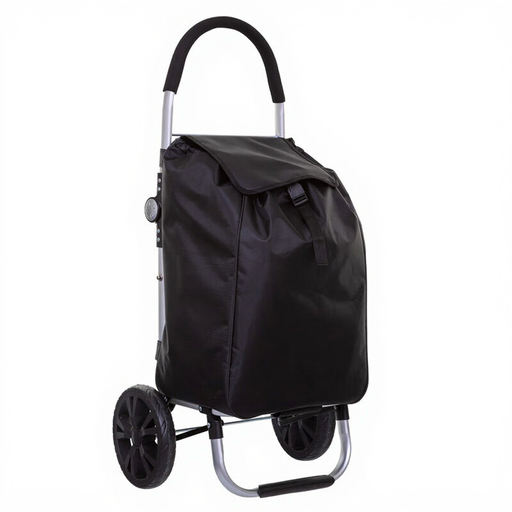
Why this suits this profile: This aluminium shopping trolley targets users looking for a frame claimed to be lightweight, a spacious bag and a practical folding action for everyday use.
The description highlights aluminium and folding. Still, compare the maximum load and dimensions before trusting it with heavy purchases.
A claimed aluminium frame, a spacious main compartment and wheels designed for urban travel.
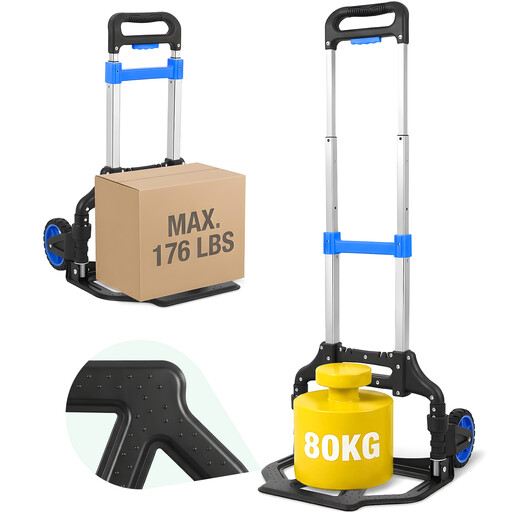
Why this suits this profile: It's more intended for transporting parcels, crates or multipacks when a simple shopping bag reaches its limits.
The specifications show a width of 5.7 cm when folded and a net weight of 3.5 kg: two useful details for planning storage and transport.
An adjustable handle at 63, 90 or 100 cm, TPR wheels with claimed bearings and quick folding with no assembly required.
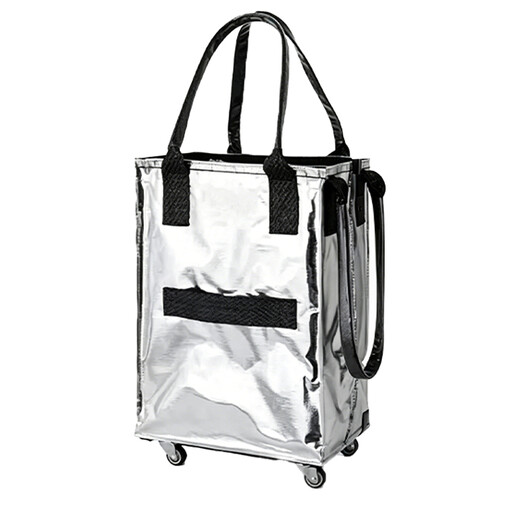
Why this suits this profile: With its approximate 60-litre capacity and claimed maximum load of 35 kg, it's designed for bulky shopping, provided you follow the product description's guidance.
The volume and load are stated separately, making it easier to compare the claimed performance with your actual needs.
A claimed thick woven bag, an approximate 60-litre capacity and a stated maximum load of 35 kg.
We've put together a full selection, updated in real time, of products that meet these criteria and European safety requirements.
For one person, a moderate volume may be enough. A household with several people will generally be better off looking at models of 56 to 60 litres, without forgetting to check the maximum load and the sturdiness of the base.
Yes, as long as you check its dimensions when folded and its weight. An adjustable handle and properly fixed wheels make it easier to get on a bus or train. In tight spaces, a compact model will also be easier to position without getting in the way of other passengers.
Distribute the weight evenly in the bag, stick to the stated load and avoid pulling the trolley up stairs if it's not designed for that. Regularly remove any dirt that builds up on the wheels and dry the metal parts after exposure to damp. Before each use, also check the seams, fixings and folding mechanism.