
Livraison le jour même ou le lendemain

Qualité garantie

Débloquez vos offres de bienvenue: Livraison GRATUITE | Jusqu'à -80 % | 30 jours d'essai gratuits à JoyPlus
Téléchargez l'application
Doing your shopping on foot, carrying provisions to the car, or preparing a picnic all call for the right equipment. A foldable shopping trolley can significantly reduce the effort of carrying things, provided you check its capacity, wheels and folding mechanism before buying.
Product listings sometimes promise "large capacity", a "sturdy" design or "ergonomic" comfort without giving much detail. Here are the essential points to check to avoid any nasty surprises.
A 56 or 60-litre bag may look spacious, but that doesn't necessarily mean the trolley is designed to handle a heavy load. Between bottles, tins and household cleaning products, the weight soon adds up.
Always check the maximum load stated by the manufacturer. If this information isn't clearly shown, it's best not to assume the model is suitable for carrying heavy items.
A small two-wheeled trolley can work perfectly for a short trip on a smooth surface. However, uneven pavements, cobblestones, campsite paths and kerbs call for more stability and manoeuvrability.
Three-wheeled models can help you get over certain obstacles. Meanwhile, four-wheeled wagon-style trolleys offer a more stable base for outdoor trips. The right choice depends on the terrain, not just the number of wheels.
"Foldable" doesn't mean all trolleys take up the same amount of space once collapsed. Before ordering, check the folded dimensions when they're available, then measure the space you have in your boot, a cupboard or a bike shed.
The mechanism also needs to be simple to use. A poorly designed locking system can quickly make folding a chore day after day.
For regular supermarket use, a capacity of 50 to 60 litres can be enough for everyday shopping, depending on the volume and weight of your purchases. A large-capacity shopping trolley is useful for bulky items, but its empty weight may be higher.
For outdoor activities, the dimensions and maximum load become even more important. The TIMBER RIDGE 21727S, for example, claims a volume of 200 litres and a maximum load of 100 kg. These values must be strictly respected: never exceed the limits set by the manufacturer.
An adjustable handle can improve comfort for users of different heights. For older people or those who want to minimise fiddling, choose a model that's easy to handle, with a frame that stays stable once the bag is loaded.
A foldable trolley with wheels should be assessed on several criteria:
Bags made from woven fabric, polyester or Oxford fabric are generally easy to clean with a damp cloth. Some models combine a metal frame with a durable textile or PVC. This combination can work well for both shopping and leisure, as long as you follow the care instructions.
To choose a sturdy shopping trolley, look for a properly described frame, visible stitching and wheels suited to the stated load. A thick bag alone doesn't justify carrying an excessive weight.
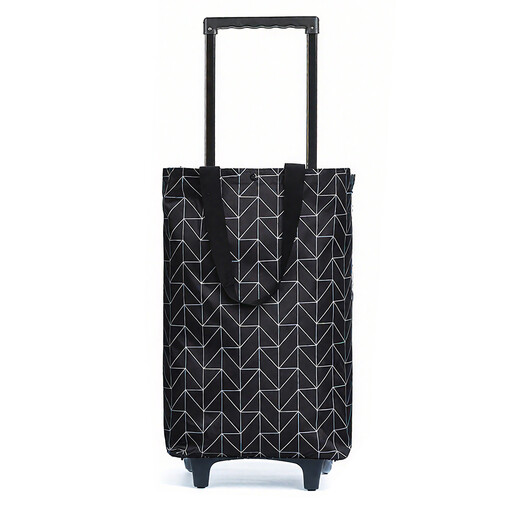
Why this model suits the profile: its foldable format and claimed lightweight design make it suitable for everyday shopping and storing in a small space.
The listing clearly states the model is foldable and portable. Still, check the maximum load before placing heavy purchases inside.
A foldable format in black, easy to store discreetly between uses.
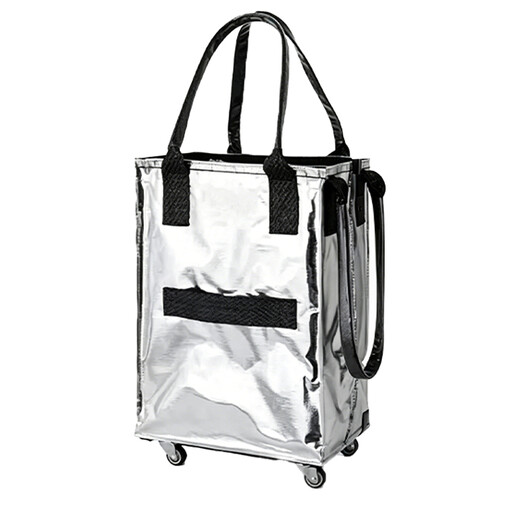
Why this model suits the profile: this wheeled trolley is aimed at big shops thanks to its thick woven bag and claimed capacity of around 60 litres.
The stated maximum load is 35 kg – a concrete benchmark, far more useful than a vague promise of large capacity.
A capacity of around 60 L and a clearly stated maximum load of 35 kg.
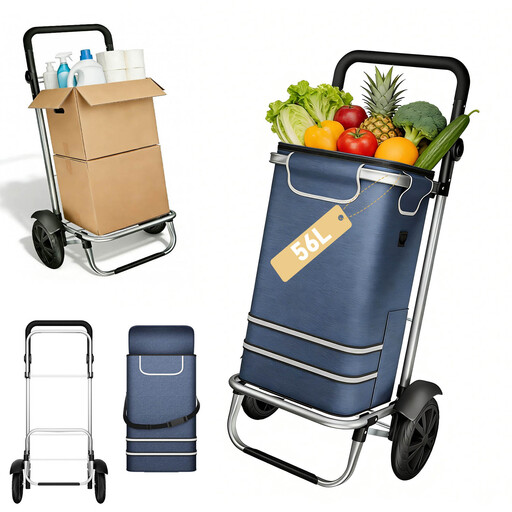
Why this model suits the profile: its hybrid design can work for shopping, camping or picnics when transport conditions vary.
The 56 L volume is in the product name. You still need to check the permitted load and exactly how the wheels work before using it on uneven ground.
A set described as a backpack and trolley, with folding and a 56 L capacity.
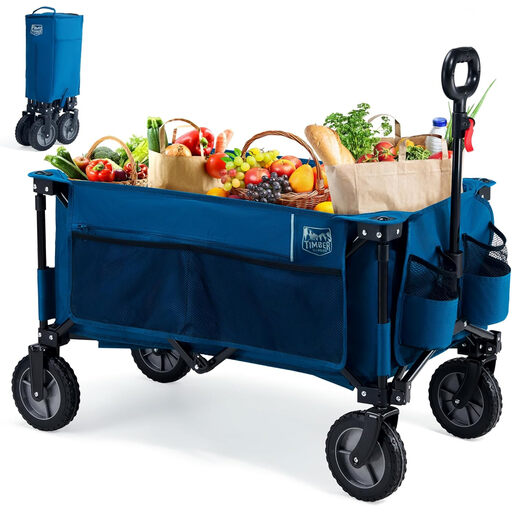
Why this model suits the profile: this 200 L trolley is more suited to camping, gardening, trips to the beach or picnics than short trips to the shops.
The listing provides dimensions of 110 × 54 × 94 cm, a maximum load of 100 kg and advises against use on steep slopes or uneven ground.
A claimed volume of 200 L, a maximum load of 100 kg and an iron frame combined with Oxford fabric and PVC.
We've put together an updated selection of trolleys that meet these selection criteria and the requirements applicable in France and the European Union.
To keep a lightweight shopping trolley – or a larger model – in good condition, distribute the weight at the bottom of the bag and avoid putting fragile items under heavy products. Before pulling the trolley, make sure it's fully open and that the locking parts are properly engaged.
After using it in the rain, let the bag dry before folding it away. For a trolley used in the garden or at the beach, remove dirt and sand with a damp cloth. Don't put textile parts in the washing machine if the instructions say not to.
A volume of 50 to 60 litres can work for everyday purchases, but the usable capacity depends on the shape of the bag and the maximum permitted load. For very large shops or outdoor gear, a 200-litre wagon may be more suitable, though it will take up more space.
It can help you get over certain kerbs, but stability varies depending on the design, the load and the type of ground. Check the wheel diameter, the width of the base and the manufacturer's recommendations before using it on stairs or a slope.
Respect the maximum load, avoid terrain that could tip the trolley over, and never force the folding mechanism. Storing it in a dry place, cleaning the wheels regularly and checking the fixings from time to time will also help to reduce wear and tear.