
Livraison le jour même ou le lendemain

Qualité garantie

Débloquez vos offres de bienvenue: Livraison GRATUITE | Jusqu'à -80 % | 30 jours d'essai gratuits à JoyPlus
Téléchargez l'application
Carrying your shopping on foot, picnic equipment or gardening supplies can quickly become a chore when you have a bag that is too small or a poorly designed trolley. A foldable shopping trolley can make these journeys much easier, provided you check a few essential points before buying.
Photos and marketing claims do not always tell the whole story. A stated capacity without a maximum load, wheels that struggle on British pavements or a fiddly folding mechanism can turn a good idea into a bulky accessory. Here are the criteria to consider when looking for a model that is genuinely suited to how you intend to use it.
A large bag does not necessarily mean that it can carry heavy goods. A large-capacity shopping trolley intended for bottles, tins or bags of compost should display a clearly stated maximum load. Weight distribution also matters: a load that is too high or poorly balanced can make the trolley unstable and difficult to manoeuvre.
A small trolley with wheels will work perfectly well in a supermarket or on a smooth floor. Cobblestones, kerbs, grass and sand, however, require wider wheels and a sufficiently stable frame. The ‘all-terrain’ label is not enough: look at the wheel diameter, tyre width, whether a brake is included and the surfaces for which the model is genuinely designed.
Folding is only useful if the trolley can be stored easily in a cupboard, car boot or bike shed. So check its dimensions when folded, its unloaded weight and whether it has a carrying handle. A model marketed as lightweight can become considerably less practical once it is loaded.
For everyday shopping, a capacity of 50 to 60 litres generally offers a good compromise. A 56 L wheeled shopping bag can hold several soft shopping bags without becoming excessively bulky. For camping, large markets or gardening, a 200 L model serves a completely different purpose: it is more of a foldable transport trolley than a traditional shopping trolley.
Do not focus solely on capacity. Also compare:
A maximum load of 200 or 300 kg should be treated as product specification information. It does not remove the need to follow the instructions for use, distribute the weight correctly and take account of the limitations imposed by the terrain.
For urban use, two large wheels may be more than sufficient. Three-wheeled models can sometimes make it easier to negotiate small steps or kerbs, but they may also be bulkier and have a less convenient turning circle. Wide wheels are better suited to grass, gravel and sand.
An all-terrain trolley intended for camping or gardening benefits from an adjustable handlebar, sufficiently spaced wheels and a system to stop the load from slipping. A brake is also useful when the trolley is placed on a slight slope, although it clearly does not replace normal safety precautions.
A steel or metal-alloy frame can provide good rigidity, while a bag made from Oxford fabric or woven material is generally easier to clean. Check the product listing for information about the manufacturer, the responsible person established in the European Union where required, safety precautions and warranty terms.
To keep your trolley in good condition:
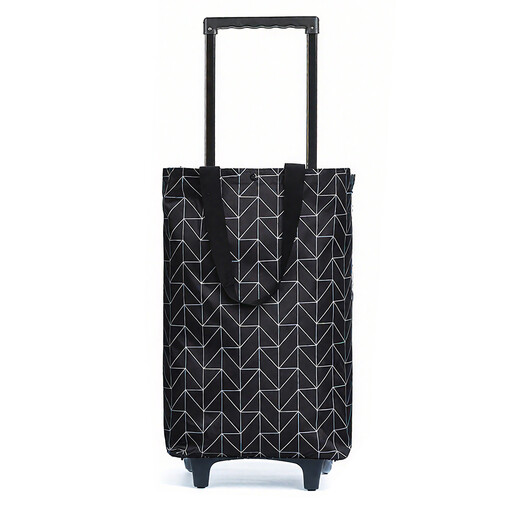
Why this choice suits this profile : Its foldable design and low weight may suit everyday shopping, short journeys and anyone who wants to try a trolley without choosing a bulky model.
The folding design reduces the amount of space it takes up between uses. Before ordering, however, check the usable load stated in the product listing.
Foldable design, black finish and a design made for light loads.
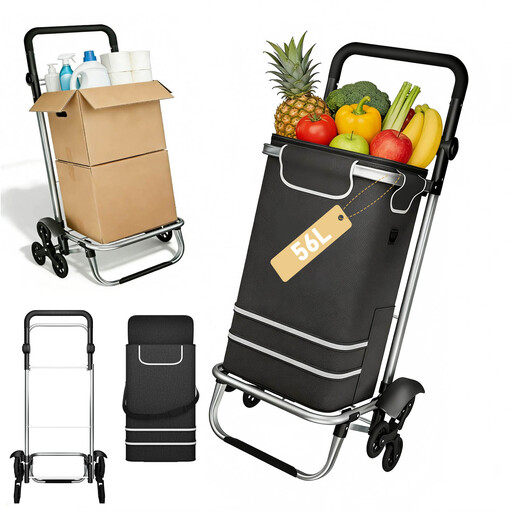
Why this choice suits this profile : With its 56 L capacity and dual backpack-and-trolley function, this model is suitable for shopping, picnics and occasional outings.
The stated capacity makes it easier to compare with other models. However, check the maximum load and folded dimensions before ordering.
56 L capacity, convertible design and advertised folding function.
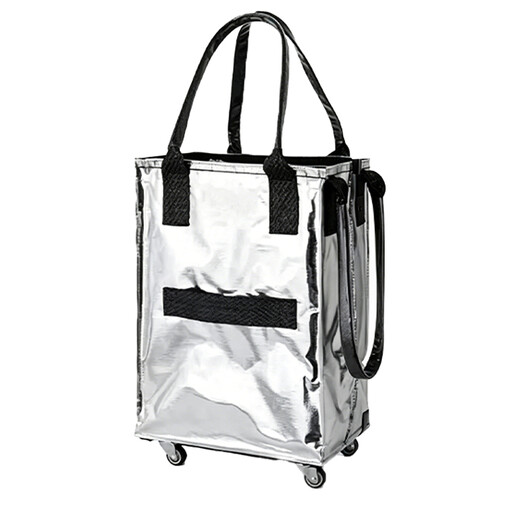
Why this choice suits this profile : Its thick woven bag and capacity of around 60 L are suited to regular shopping, with an advertised maximum load of 35 kg.
The capacity and load are listed separately, so there is no confusion between the bag’s capacity and the weight it can actually carry.
Thick woven bag, approximately 60 L capacity and an advertised maximum load of 35 kg.
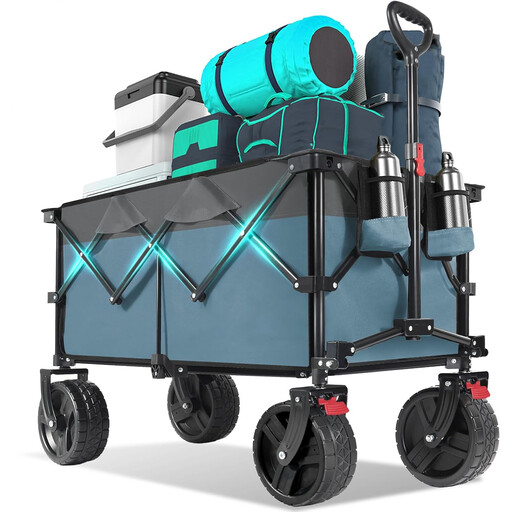
Why this choice suits this profile : With its 200 L capacity, 7-inch wide wheels and brake, this trolley is designed for camping, outdoor events and gardening tasks.
The capacity, load and dimensions are specified in the product listing. Even so, the load must be distributed correctly and suited to the terrain.
200 L capacity, 7-inch all-terrain wheels, brake and an advertised maximum load of 200 kg.
We have brought together a comprehensive, real-time-updated selection of products that meet these exacting criteria, as well as European safety requirements.
A 50 to 60 L model is generally suitable for shopping for one person or a small household. To carry multipacks, camping equipment or gardening tools, a 200 L foldable trolley offers more space. It will also be heavier and bulkier.
Not necessarily. The right choice depends mainly on the available pulling strength, the terrain and the level of stability required. An ergonomic handle, reasonable weight, suitable wheels and a simple folding mechanism may matter more than the number of wheels. Also check that the dimensions allow you to move around comfortably without getting stuck in narrow spaces.
Follow the stated maximum load, avoid regularly pulling it over obstacles and clean the wheels after every outing on wet or muddy ground. Only store it when it is completely dry. Before carrying a heavy load, also inspect the bag’s stitching, the frame joints and the handle fastenings.