
Livraison le jour même ou le lendemain

Qualité garantie

Débloquez vos offres de bienvenue: Livraison GRATUITE | Jusqu'à -80 % | 30 jours d'essai gratuits à JoyPlus
Téléchargez l'application
Running errands, hauling gardening supplies, or packing for a picnic shouldn't be a chore. A foldable shopping cart is the perfect solution to make your life easier. However, the market is flooded with models making tempting promises that don't always hold up in practice. A poor choice quickly leads to frustration: a wheel that jams, a handle that gives way, or a load capacity far lower than advertised.
To help you cut through the noise, we've identified the common pitfalls to avoid and the essential criteria to check before you buy. Our goal: to guide you toward a cart that is reliable, durable, and truly suited to your daily life.
Certain design flaws, often invisible at first glance, can render a cart useless in just a few months. Here are the points to watch closely.
To avoid these pitfalls, focus on a few key technical specifications. They are the guarantee of your cart's durability and user comfort.
A cart's sturdiness depends on its frame. Models made of carbon steel offer excellent resistance and support a high capacity load, which is ideal for heavy-duty use like a gardening wagon or for transporting heavy equipment. Aluminum frames, being lighter, are more maneuverable for daily city use, much like an urban shopping cart.
Our advice: Always check the maximum supported load in kilograms (kg) and ensure it is consistent with the bag's volume. To transport water packs, potting soil, or tools, aim for a capacity of at least 40?kg.
The choice of wheels should be adapted to your usual routes.
Certain options can truly enhance your experience. A cart with an insulated bag is a major asset for transporting frozen goods or keeping drinks cool during a picnic. Other models, which convert into a foldable hand truck, allow you to remove the bag to move bulky items like boxes or crates.
Rather than a generic list, we've matched specific models to user profiles, based on the criteria of robustness and user comfort we've just discussed.
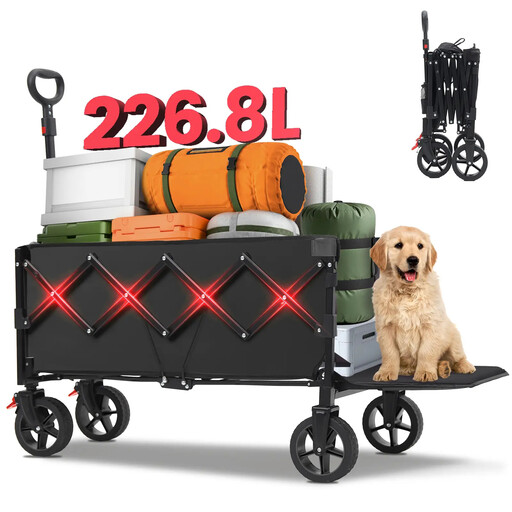
Why it's a match: Its wagon-style structure and very high load capacity (up to 150 kg according to the manufacturer) make it perfect for transporting bags of soil, tools, camping gear, or groceries for a large family.
Its carbon steel frame and robust all-terrain wheels directly address the problem of fragility and underestimated payload. It's built for heavy loads and tough terrain.
XXL load capacity and volume; all-terrain wheels with brakes for added safety; extendable rear tailgate for long items.
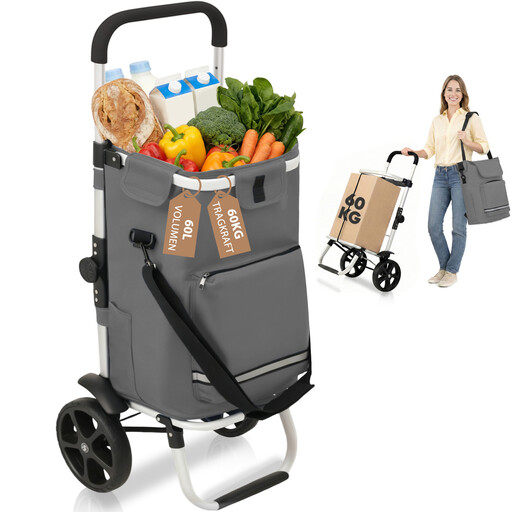
Why it's a match: Lightweight thanks to its aluminum frame, it's easy to maneuver on streets and public transport. Its 3-in-1 function (cart, hand truck, shoulder bag) and insulated compartment make it a versatile ally for city dwellers.
It provides a clear and realistic load capacity (60 kg) for its 60 L volume, avoiding the mismatch between large volume and low payload. Its folding mechanism is simple, designed for frequent use.
3-in-1 multifunction design; integrated insulated compartment; lightweight aluminum frame and adjustable ergonomic handle.
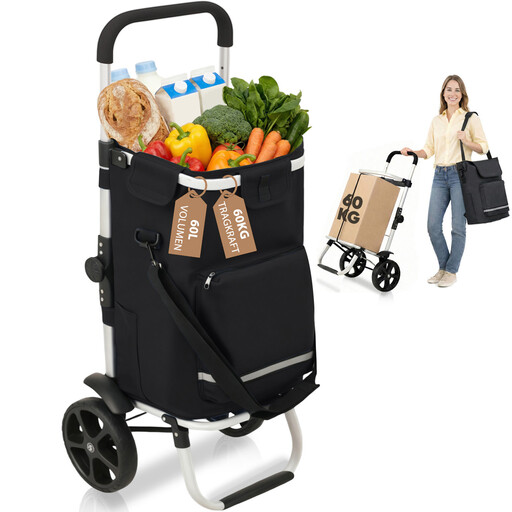
Why it's a match: Its modularity is its main asset for outings. The insulated bag keeps food and drinks cool, while the removable main bag can be carried over the shoulder, leaving the frame free to transport a cooler or folding chairs.
It focuses on practical, concrete features (insulated bag, removable bag) rather than gimmicks. Its quality PVC wheels are at home on both asphalt and park grass.
Great versatility for leisure activities; detachable shoulder bag; very practical cup holder and insulated compartment.
We've compiled a complete selection of products that meet our strictest quality criteria.
A cart's longevity primarily depends on the quality of its materials and its maintenance. A model with a high-quality steel or aluminum frame and robust wheels can last for many years with normal use. To extend its life, clean the wheels regularly, ensure the cart is dry before storing it, and never exceed the maximum load capacity specified by the manufacturer.
Most standard carts are not designed for climbing stairs, and forcing them can damage the wheels or frame. However, there are specific models equipped with a three-wheel system on each side. This mechanism allows the wheels to "climb" steps more easily. If you live in a building without an elevator, opting for a model of this type is almost essential.