
Livraison le jour même ou le lendemain

Qualité garantie

Débloquez vos offres de bienvenue: Livraison GRATUITE | Jusqu'à -80 % | 30 jours d'essai gratuits à JoyPlus
Téléchargez l'application
A foldable home rowing machine helps you improve cardiovascular fitness, strengthen your muscles, and save space once your workout is over. However, product listings do not always tell the whole story. A resistance level described as “powerful,” a high weight capacity, or a Bluetooth connection does not necessarily guarantee a comfortable experience for everyday use.
To avoid choosing the wrong model, compare the resistance type, practical dimensions, stability, and connected features. Here are the key points to check before selecting your home rowing machine.
A machine can fold without being particularly easy to store. In particular, check:
A space-saving foldable rower should therefore be assessed in both configurations: during use and once folded. Upright storage can be particularly practical in an apartment, provided you have a stable, unobstructed, and sufficiently tall storage area.
Noise depends on the mechanism, stroke rate, flooring, and maintenance. A magnetic rower generally delivers a smooth motion without direct contact between the components that create resistance. An air-resistance rower, by contrast, uses a fan wheel: noise typically increases with pulling intensity, but the effort may feel more dynamic.
If you train early in the morning or live in an apartment, look for a precise description of the mechanism, a stable rail, and a properly guided seat. A protective mat can also help reduce vibrations transmitted to the floor.
Bluetooth connectivity does not guarantee compatibility with every app. Before buying a Bluetooth-connected rower or a rower with an app, check:
Connectivity can simplify workout tracking, but it can never replace stable mechanics or adjustments suited to your body type.
Air resistance varies according to the force and speed of your stroke. It suits users looking for a progressive response and cardio effort that is easy to adjust. The YOSUDA R2 featured below uses a 32-blade fan and offers 10 levels of air resistance.
Magnetic resistance relies on a flywheel and magnets. It is often chosen for its quiet operation and the ability to select a precise resistance level. The YOSUDA Upgrade and Pooboo models offer 16 and 14 magnetic resistance levels, respectively.
There is no universally superior system. For moderate workouts in a quiet environment, magnetic resistance may be the more suitable choice. For sessions where intensity changes frequently, air resistance offers a different type of response—one that should be assessed against your usual training style.
A rail that is too short can limit leg extension, particularly for taller users. Check the rail length and the manufacturer’s recommended height range rather than relying solely on the machine’s overall dimensions.
The YOSUDA Upgrade advertises a reinforced design suitable for users measuring 1.55 to 2 metres. This is far more useful than a vague promise of comfort: it helps you determine whether the rower genuinely suits your body type.
The seat should glide smoothly, while the adjustable footrests should hold your feet securely without applying excessive pressure. Before every workout, place the rower on a flat surface cleared of any obstacles.
Never exceed the maximum capacity specified by the manufacturer. This generally refers to the user’s weight and does not include any additional accessories. A steel or metal-alloy frame can contribute to stability, but the overall experience also depends on the width of the base, the rail, and the quality of assembly.
For a high-capacity rower, compare the advertised figures directly:
These figures remain usage limits. They are neither medical recommendations nor guarantees that the machine will suit every body type.
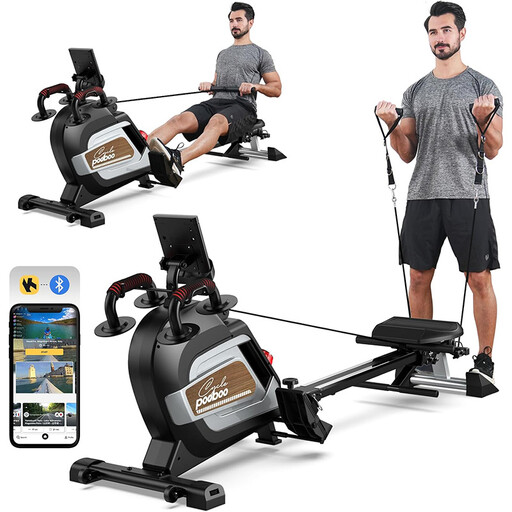
Why this model may be a good fit: it combines magnetic resistance, a foldable design, and a tablet holder in a format suited to regular home workouts.
Its 14 resistance levels let you increase the difficulty gradually instead of having to work with a single fixed setting.
14-level magnetic resistance, LCD display, foldable frame, and an advertised capacity of 360 pounds.
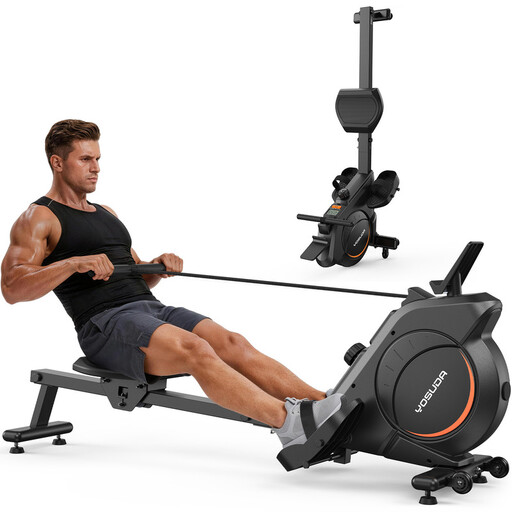
Why this model may be a good fit: its magnetic resistance, foldable design, and Bluetooth connectivity are geared towards home workouts with digital tracking.
The listing states that it offers 16 magnetic resistance levels and operates without mechanical noise. These claims should be considered in the context of your flooring, stroke rate, and equipment maintenance.
16 resistance levels, a 6.3 kg flywheel, advertised compatibility with users measuring 1.55 to 2 m, and the YOSUDA app via Bluetooth.
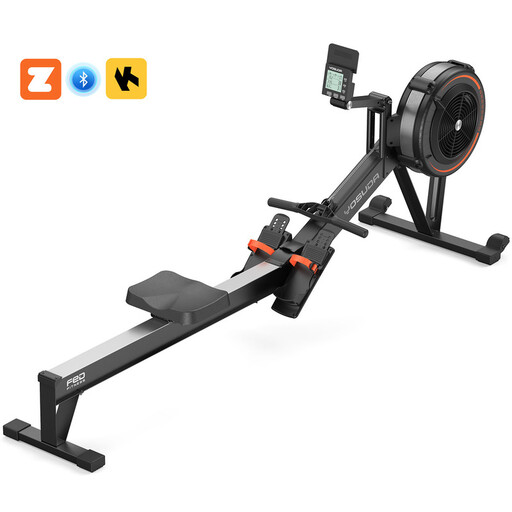
Why this model may be a good fit: this air-resistance rower is designed for users who want to vary workout intensity and store the machine quickly after training.
The maximum capacity of 158 kg is clearly stated, while the advertised one-second upright folding mechanism reduces handling.
10-level air resistance, reinforced aluminium rail, backlit display, Bluetooth, and an advertised three-year warranty.
Explore an updated selection of rowing machines suited to different space, resistance, and weight-capacity requirements.
Yes, provided the model can be stored upright and you have measured the space required when the machine is fully extended. You should also allow for clear space at the front and rear: the seat and footrests should not risk hitting furniture during your workout.
Its lifespan depends on frequency of use, supported weight, assembly quality, and maintenance. Clean the rail regularly, check that the screws remain tight, and keep the machine in a dry place. Always observe the maximum capacity specified by the manufacturer.
A rower without a motor generally does not need to be connected to mains power. Electricity consumption is usually limited to the batteries or display, depending on the model. However, overall cost also depends on the purchase price, maintenance, warranty, and any connected features. Check all of these factors before comparing two machines.