
Livraison le jour même ou le lendemain

Qualité garantie

Débloquez vos offres de bienvenue: Livraison GRATUITE | Jusqu'à -80 % | 30 jours d'essai gratuits à JoyPlus
Téléchargez l'application
Choosing the ideal foldable travel crate for your dog can often be a real headache. Faced with an avalanche of marketing promises and tempting designs, it's easy to get lost and end up with buyer's remorse. Yet the goal is clear: to find a portable sanctuary that is a secure cocoon for your companion, a practical ally for you, and perfectly suited for your travels.
Unfortunately, too many owners end up with a disappointing product on their hands. To prevent your investment from turning into a fiasco, here are the three most common pitfalls to avoid.
To cut through the noise and make the right choice, here are the technical points to inspect closely. These are what separate a gimmick from a true travel companion for your dog travel kennel.
The sturdiness of a foldable crate rests on two pillars: its frame and its fabric.
The ideal size is simple to determine: your dog should be able to stand up and turn around comfortably. The formula? Measure them from the tip of their nose to the base of their tail (length) and from the floor to the top of their head (height), then add 10 to 15 cm to each measurement to get the perfect interior dimensions.
For example, for a medium-sized dog weighing around 11 kg (like a French Bulldog or a Corgi), a crate measuring approximately 60x42x42 cm is often suitable. Also, remember to check the maximum weight supported by the model and, most importantly, its dimensions when folded to avoid any unpleasant surprises when it's time to store it in the trunk or at home.
An excellent car travel crate transforms into a temporary den once you arrive at your destination. The most versatile models generally offer:
Rather than an endless list, we've selected products that meet specific needs.
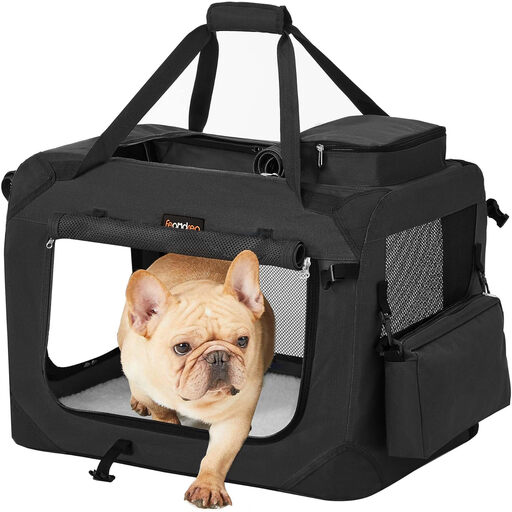
Why this model? It's the Swiss Army knife for owners who travel by car, go away for the weekend, or need a secondary bed that's quick to set up and pack away. Its design gets straight to the point.
Its steel frame immediately sidesteps the "deceptive durability" trap. The large mesh windows guarantee optimal ventilation, and its slim 8 cm thickness when folded is clearly stated. No surprises when it comes to storage.
Its ultra-flat fold in seconds and its carrying handle make it a truly portable model. The removable, faux sheepskin mat is the perfect finishing touch for extra comfort.
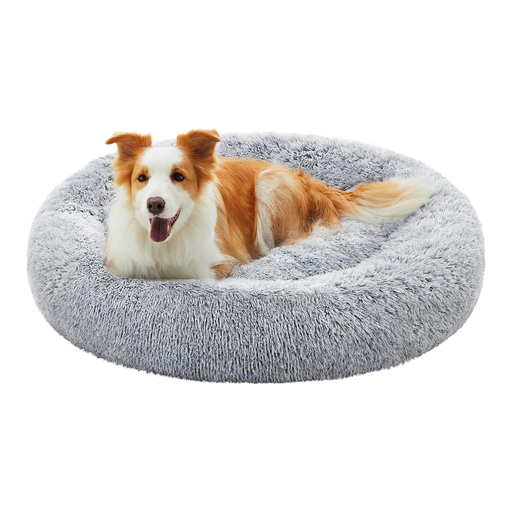
Why this product? This isn't a travel crate, but its ideal companion. Once you arrive, it provides your dog with a cosy and familiar cocoon, whether at a hotel, a friend's house, or a holiday rental.
It combats a dog's anxiety in unfamiliar territory. By having their own comfortable and reassuring bed, your pet can adapt more easily and recover better from the stress of travel.
Its ultra-soft plush fabric and removable (and machine-washable) center cushion combine maximum comfort with perfect hygiene. The bonus: its non-slip base prevents it from sliding on tile or hardwood floors.
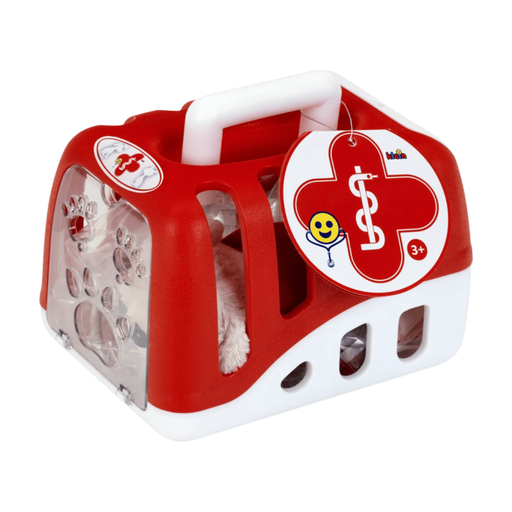
Why this toy? It's the perfect educational tool to introduce children to animal care and the use of a travel crate in a fun and positive way, long before a real pet arrives.
It demystifies the travel crate by making it part of playtime. The child associates it with care, not punishment, which helps reduce their apprehension and positively prepares the whole family for future trips with a pet.
It fosters empathy and kindness towards animals through pretend play. The comprehensive kit, with its vet accessories, promises hours of creative and educational fun.
Explore our full selection of products that meet our quality criteria and current safety standards.
The golden rule: your dog must be able to stand up, sit down, and turn around without being cramped. To find the right size, measure their height (from the floor to the top of their head) and their length (from the tip of their nose to the base of their tail). Add 10 to 15 cm to both of these measurements to get the ideal interior dimensions. If you're hesitating between two sizes, always opt for the larger one.
For car journeys, a quality fabric crate with a steel frame offers a very good level of safety. It contains the animal, preventing it from becoming a projectile during sudden braking. However, for air travel, the question is moot: airlines require a rigid (plastic or metal) IATA-approved crate. Soft-sided carriers are always refused in the cargo hold.
The key is a gradual and positive approach. Leave the crate open in a living area for several days. Place their favourite toys, a blanket with your scent, and give them treats inside to create a positive association. Never force them to enter. Start by closing the door for just a few seconds, then very gradually increase the duration. The goal is for them to see the crate not as a prison, but as their den, their safe space.