
Same-day & Next-day Delivery

Quality Guaranteed

Unlock Your Welcome Offers: FREE Delivery | Up to 80% OFF | Free 30-day JoyPlus trial
Download the APP
A flower pot should be chosen for more than its colour or shape. On a balcony in full sun, in an entrance hall or on a terrace exposed to frost, an unsuitable model may fade, crack or retain too much water. The right choice depends primarily on its location, the plant’s weight and how you intend to manage watering.
A self-watering pot can extend the time between waterings, but it is not necessarily suitable for every plant. Some species do not tolerate constantly damp roots. Check that the pot has a separate water-retention area, together with drainage holes or a system that allows excess water to escape.
For indoor use, also provide a saucer or a waterproof stand. With an outdoor planter, water must be able to drain away without pooling on the ground.
An outdoor pot weighs more than the container itself. Once filled with damp soil, gravel and a plant, it can become extremely difficult to move. On a terrace or balcony, check the container’s stability and the maximum load the location can safely support.
The description frost- and UV-resistant flower pot is a useful indicator for year-round installation, but it does not replace consulting the product information. Temperature fluctuations and water freezing in the soil can place considerable pressure on the container.
A tall pot or large planter may appear perfectly suited to an imposing plant while being too narrow at the base. Measure the available width, ceiling height and space required around the foliage. On a balcony, just a few centimetres can make the difference between comfortable circulation and a cluttered walkway.
The diameter, width and depth provided by the manufacturer are more reliable than photographs alone. A square flower pot sits easily against a wall and can give structure to a terrace, while a cylindrical model may make it easier to rotate the plant.
A pre-drilled base reduces the risk of standing water, provided the holes remain clear. Reservoir systems are convenient if you are regularly away from home, but the water level must be monitored and watering adjusted according to the season.
The 59 cm DEROMA Origin Cotto, for example, features a removable plug that lets you choose between draining water for outdoor use and retaining it for indoor installation. This design allows the same outdoor flower pot to be adapted to different uses, indoors or outside.
Recycled and recyclable plastic is often lightweight, making a plant container easier to handle. Some models are described as being made in France and 100% recyclable, as is the case with several EDA collections. However, the two concepts should be distinguished: a recyclable material is not necessarily biodegradable.
For seedlings, biodegradable seedling pots meet a different need. Kinzo pots made from plant fibres can be planted directly in the soil, according to the product description. They are primarily designed for raising young plants, rather than for permanent decorative use.
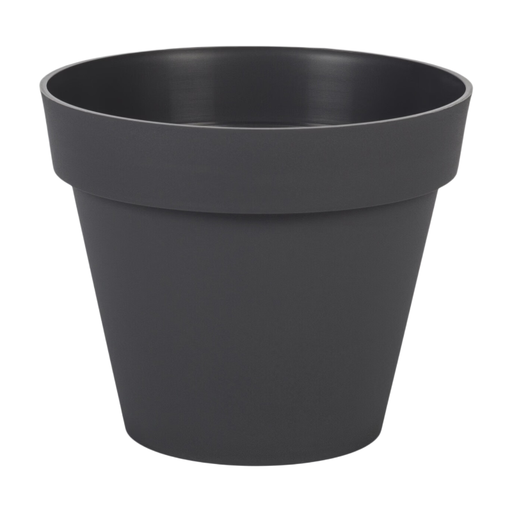
Why it is a good choice: its 3-litre capacity is suitable for small plants, balconies and window sills. Its matt finish looks equally at home indoors and outdoors.
The product information mentions a water-retention area. Nevertheless, check for a drainage hole and use a saucer if the pot is placed indoors.
A product described as made in France and designed with 100% recyclable materials.
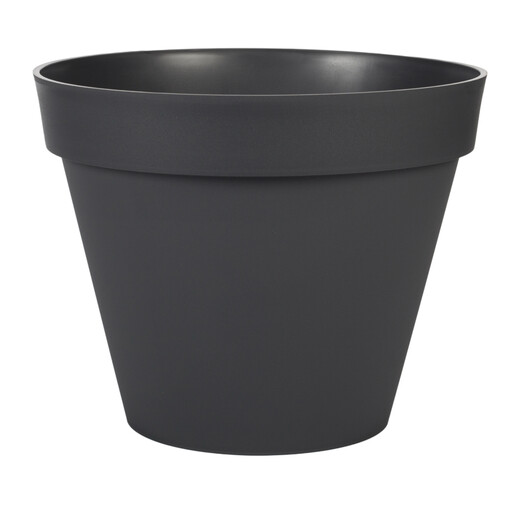
Why it is a good choice: with its 23-litre capacity and anthracite finish, it blends effortlessly into a terrace, entrance hall or conservatory, and accommodates medium- to large-sized plants.
The product information specifies UV protection, a water reservoir and a 7-year warranty in mainland France. Check the conditions applicable to your order.
Polypropylene described as 100% recyclable, combined with French manufacturing.
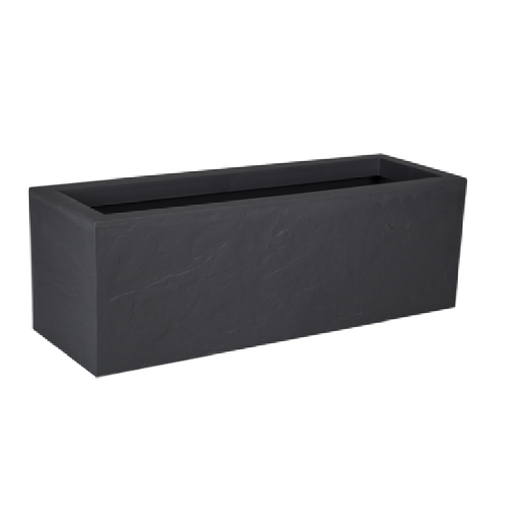
Why it is a good choice: measuring 99.5 cm in length, this large plant container can define a terrace or accommodate shrubs, floral arrangements and small fruit trees.
Its double-wall construction, water-retention area and drainage holes address the main considerations around stability, watering and drainage.
A 98-litre capacity, stone-effect finish, UV protection, frost resistance and an advertised Origine France Garantie certification.
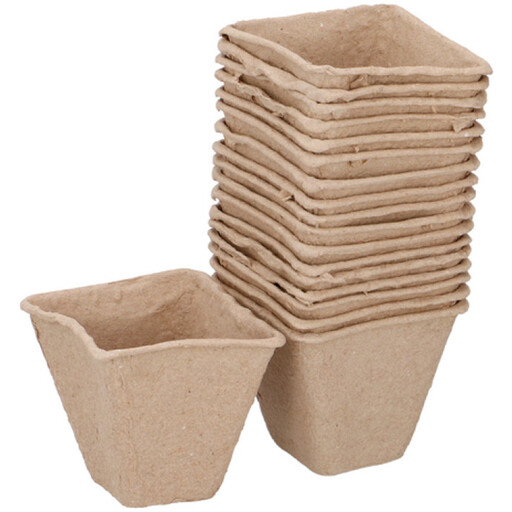
Why it is a good choice: this pack is intended for seeds and young plants, particularly when preparing crops to be moved later to the garden or an outdoor planter.
These pots are not presented as permanent decorative containers: they are clearly intended for seed starting and transplanting.
Recycled plant fibres are advertised, along with the option of planting the container directly in the soil, according to the product description.
We have brought together an up-to-date selection of flower pots, planters and plant containers that meet these purchasing criteria and the safety requirements applicable in France.
Before filling the container, place it on a level surface and check that the drainage holes are not blocked. For a heavy plant, position the pot in its final location from the outset: once filled, it may be impossible to move without considerable effort.
In winter, the advertised frost resistance applies to the container, not necessarily to the plant or the soil. As temperatures fall, prevent water from accumulating in the pot. For plastic surfaces, lukewarm water and mild soap are generally sufficient for cleaning. With a metal or ceramic pot, dry areas exposed to moisture and handle the container with care.
Choose a model whose dimensions suit the available space, with a stable base and a load capacity compatible with the permitted limit. A narrow outdoor planter or square pot can make balcony planning easier, but leave enough room to move around and secure containers installed at height.
It can extend the time between waterings, but frequency depends on the plant, temperature, wind and exposure. Check the moisture level of the growing medium regularly and do not refill the reservoir automatically. Good drainage remains essential to prevent excess water.
An indoor flower pot may prioritise style, light weight and floor protection. For outdoor use, also check resistance to UV rays, frost, rain and temperature fluctuations. Some models, such as the DEROMA Origin Cotto, feature a removable plug that lets you adapt water management to the chosen location.