
Livraison le jour même ou le lendemain

Qualité garantie

Débloquez vos offres de bienvenue: Livraison GRATUITE | Jusqu'à -80 % | 30 jours d'essai gratuits à JoyPlus
Téléchargez l'application
A flower pot with a water reservoir can extend the time between watering and make plant care easier, whether it is placed on a balcony, terrace or in a bright room. However, not all systems are created equal. A reservoir that is too small, insufficient drainage or a material that is unsuitable for changing weather conditions can quickly turn a good idea into a daily chore.
Before buying a planter with a water reservoir, take the time to check three points that are often obscured by marketing claims.
A reservoir does not make a plant self-sufficient. It stores a quantity of water that is gradually made available, depending on the design of the pot, the growing medium, the temperature and the plant’s needs. During periods of hot weather, a pot exposed to full sun may therefore still require regular watering despite having a reservoir.
Check that there is a clearly identified access point for filling the reservoir, as well as an overflow system or drainage holes. Without proper drainage, water can stagnate and leave the growing medium saturated, which can damage the roots.
A designer pot or anthracite planter can easily complement your décor, but its colour and finish do not guarantee long-term durability. For outdoor use, look for an indication of UV resistance and, if the pot will remain outside during winter, frost resistance.
Temperature fluctuations, residual water freezing and exposure to sunlight can weaken certain plastics. The wording ‘frost and UV resistant’ should appear in the product description: it cannot be inferred from the pot’s apparent thickness or weight.
A planter filled with damp compost, water and a well-established plant can become particularly heavy. On a balcony, balustrade or raised terrace, check the stability of the support and comply with the available load limits. External dimensions do not always provide an accurate indication of the actual usable growing-medium capacity.
A pot with a water reservoir should clearly separate the storage area from the planting area. Some models come with pre-drilled holes, while others feature a removable plug that allows you to switch from reservoir-based watering to conventional drainage.
For an indoor flower pot, use a saucer or suitable protection to collect excess water. On a balcony, make sure that water can drain away without running down the façade or onto the neighbour below.
A reservoir is best suited to plants that appreciate consistent moisture. Mediterranean plants, cacti and species that are sensitive to excess water need a more free-draining growing medium and closer monitoring.
The capacity should suit both the plant and the space available to you:
The EDA VOLCANIA Planter model offers a capacity of 98 litres, with dimensions of 99.5 × 39.5 × 43.5 cm. It will be better suited to a terrace or garden than to a narrow balcony. By contrast, the 20 cm, 3-litre EDA TOSCANE pot will be easier to install indoors or in a smaller space.
Recycled and recyclable plastic can offer a good balance between light weight, durability and ease of maintenance. However, bear in mind that the term ‘recyclable’ does not necessarily mean that the product is made entirely from recycled material. The product description should specify the exact composition.
Some EDA products state that they are made in France and use recyclable materials. Volcania products also mention Origine France Garantie certification. These details should be distinguished from a simple commercial statement about the product’s origin.
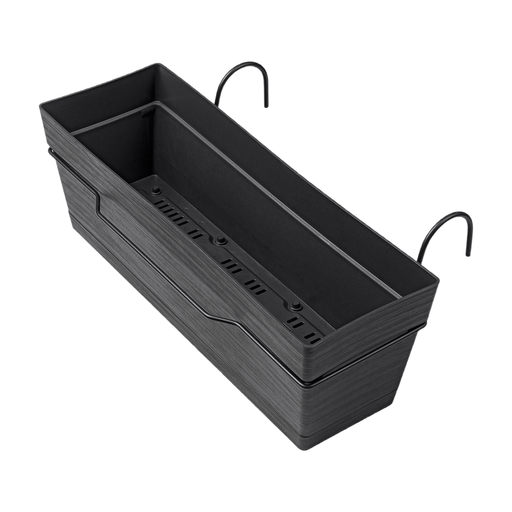
Why this choice suits this profile : Its 49 cm format and anthracite finish are ideal for a first installation on a terrace, balcony or in a bright room.
The description mentions recycled and recyclable material, as well as frost and UV resistance. Your choice is therefore not based solely on the pot’s appearance.
Recycled and recyclable polymer, design stated to be frost and UV resistant, suitable for indoor and outdoor use.
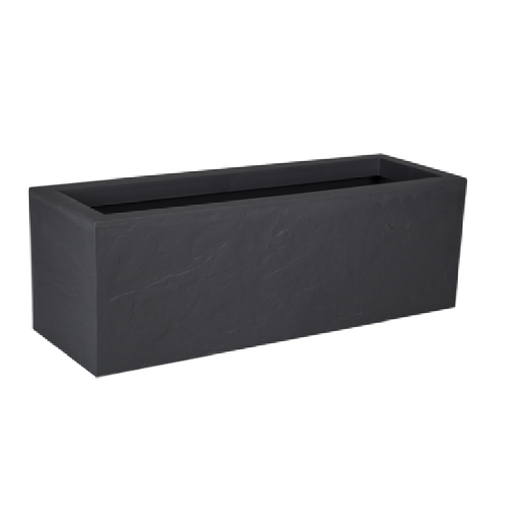
Why this choice suits this profile : Its stone-effect finish and generous capacity are designed to make a statement on a terrace, at an entrance or in a decorative garden.
The double wall, retention area and pre-drilled holes are detailed separately in the description. This makes it easier to check which functions are actually provided.
98-litre capacity, double wall, UV and frost protection, material stated to be 100% recyclable.
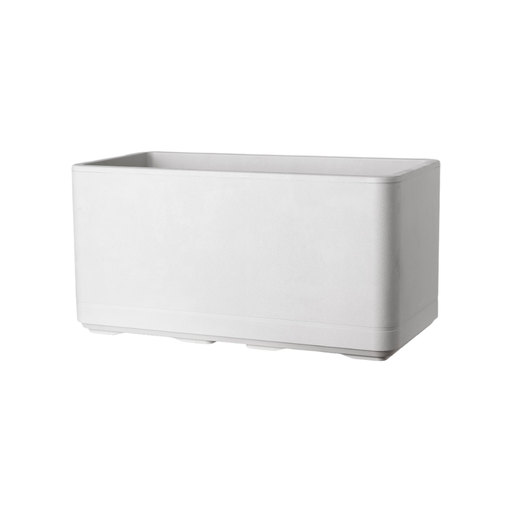
Why this choice suits this profile : The castors make it easier to move a pot placed on a terrace, in a conservatory or when cleaning the area.
The removable plug lets you choose between water retention and conventional drainage, rather than imposing the same watering method on every plant.
Integrated reservoir, removable plug, castors, recycled and recyclable material, resistance stated to frost and UV rays.
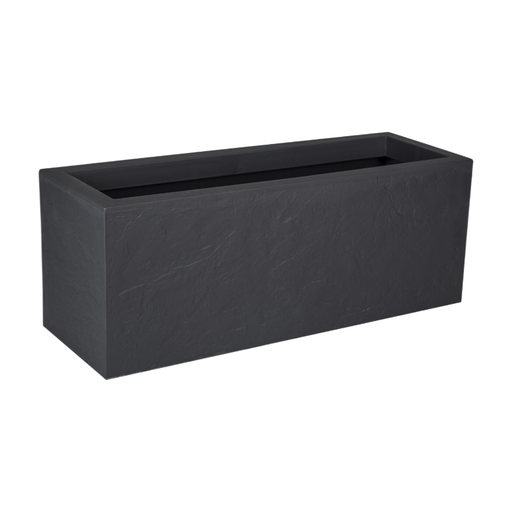
Why this choice suits this profile : At approximately 59 cm long, this model fits neatly on a balcony or along a terrace without obstructing movement.
The retention area and double wall are clearly specified, while the instructions recommend regularly emptying excess water.
59 × 19.5 × 22.8 cm format, 25-litre capacity, stone-effect design and a system designed to extend the time between watering.
To avoid mistakes during installation:
Outdoors, frost resistance applies to the container, not necessarily to the plant or the water in the reservoir. When temperatures fall sharply, protect sensitive plants and avoid leaving a large amount of water to freeze in the pot.
No. This system is mainly suitable for plants that appreciate consistent moisture. Species that need dry growing conditions should be planted in a well-drained pot, with the reservoir used sparingly or even deactivated where the model allows it.
This depends on the material, exposure to UV rays, impacts and freeze-thaw cycles. A product description indicating UV and frost protection provides a useful guide, but it does not replace regular checks of the container, plugs and drainage holes.
It can extend the time between watering and reduce waste caused by overwatering. The result nevertheless depends on the reservoir capacity, climate, exposure and type of plant. Regular checks remain essential, particularly during periods of hot weather.