What should you compare?
Start by choosing the type of cleaning that matters most to you, then consider how much mobility you need and what maintenance you’re prepared to do after each use.
Corded floor washer
Choose this if: you clean near a power socket and want to avoid a session that depends on a charged battery.
Bear in mind: the cable limits how far you can move, and you’ll still need to empty the dirty water and maintain the wet components.
Cordless floor washer
Choose this if: you move between rooms or around furniture without wanting to manage a cable.
Bear in mind: run time depends on the battery, and recharging doesn’t remove the need to check the tanks and clean the dirty components.
Separate vacuum and mop
Choose this if: dry vacuuming is especially important to you, or you wash your floors less often and prefer to keep the two jobs separate.
Bear in mind: vacuuming and mopping take two steps, rather than one wet clean with a dedicated appliance.
| What matters to you |
What to check before buying |
Who should pay particular attention |
| Washing performance and dry vacuuming |
Everyday dirt, the functions the appliance is actually designed for and whether it’s compatible with your flooring. |
If you wash tiled floors often, you’ll want to know whether the appliance also handles dry dirt; around 33% of consumers say washing performance and vacuuming are their top priorities. |
| Maintenance after use |
How easy it is to access the tanks, roller and filter, and what the instruction manual says you need to do. |
If your main aim is to cut down on post-cleaning chores, emptying the tanks and cleaning the components become key considerations; around 27% of consumers put maintenance at the top of their list. |
| Mobility and session length |
The number of rooms, access to power sockets, the stated run time in the mode you plan to use and the tank capacity. |
If you move from room to room, you’ll want to minimise interruptions and restrictions on where you can go; around 20% of consumers prioritise freedom of movement. |
| Running costs and lifespan |
Consumable part numbers and current prices, parts availability and how the battery can be replaced. |
If you want to keep your appliance for the long term, factor in consumables and replacement parts; around 20% of consumers prioritise running costs. |
Models available on Joybuy
These models include corded and cordless floor washers for wet cleaning on hard floors. Check which floor types each model is compatible with and follow its maintenance instructions before choosing.
 No image available
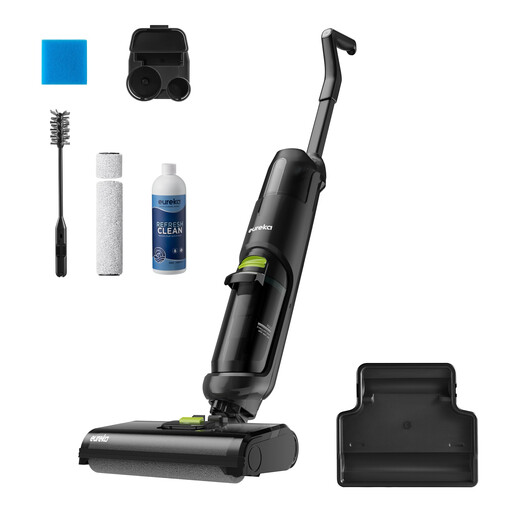
Eureka NEW400 cordless
For wet cleaning across several rooms, the product description presents a cordless appliance that vacuums and washes at the same time.
The description states that it runs for up to 30 minutes, has two tanks to separate clean and dirty water, and features a roller self-cleaning system. It’s designed for compatible sealed hard floors; do not use a floor washer on a wooden floor.
View product
 No image available
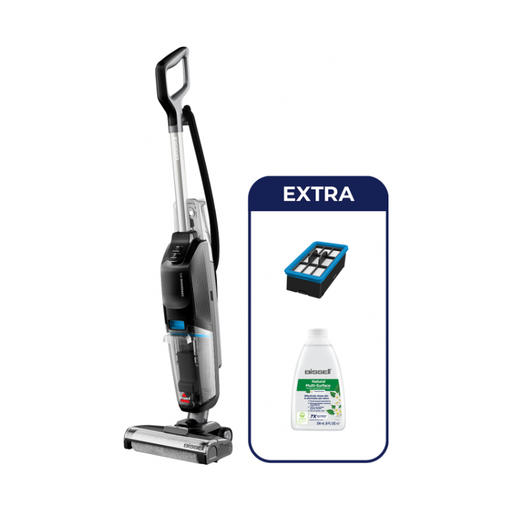
BISSELL CrossWave HF2 Select Multi-Surface Stick
For washing a hard floor near a power socket, this corded model is described as vacuuming and washing at the same time.
The description lists a 7,74 m cable, separate clean- and dirty-water tanks, and self-cleaning for the roller and inside of the appliance. It says to empty and rinse the tanks after use, and to clean the roller and filter regularly. Do not use a floor washer on a wooden floor.
View product
 No image available
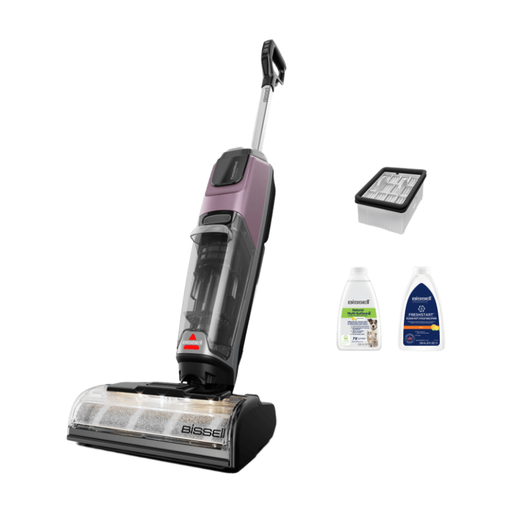
BISSELL CrossWave OmniForce EdgeFind Select 4330N
For switching between wet cleaning and dry debris, the product description specifies a dry-vacuum mode and a PowerMop mode that combines vacuuming and washing.
This model is cordless; the description claims up to 45 minutes of run time and a charging time of 4 hours. The battery needs to be recharged. Do not use a floor washer on a wooden floor.
View product
 No image available
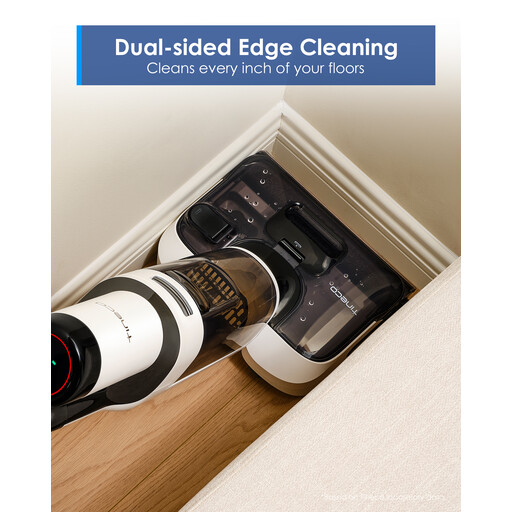
Tineco Floor One Stretch S6
For cleaning hard floors under furniture, the title for this variant describes a design that lies flat at 180°.
The title states that it can reach under furniture to a height of 13 cm and runs for 40 minutes. It also lists FlashDry at 70 °C and a self-cleaning function; check the manual for guidance on your flooring. Do not use a floor washer on a wooden floor.
View product
 No image available
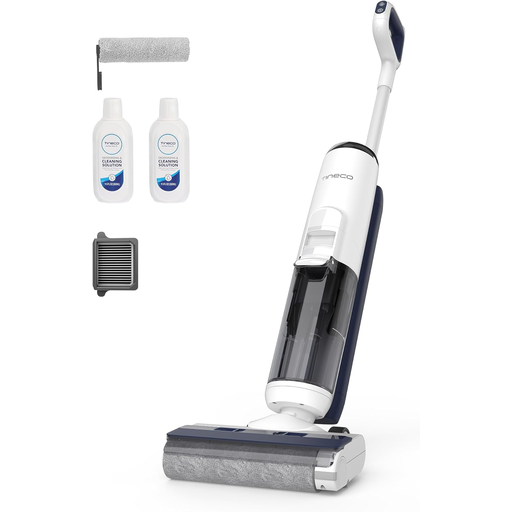
Tineco iFLOOR 5 Breeze Complete
For washing hard floors while picking up dry debris, the product description presents a cordless appliance that vacuums and washes at the same time.
The description claims up to 35 minutes of run time, cleaning to within 0.5 cm of edges, and self-cleaning for the roller and internal pipes. It isn’t designed for rugs or carpets; the dirty-water tank must be emptied after use. Do not use a floor washer on a wooden floor.
View product
Frequently asked questions
Will a floor washer replace my dry vacuum cleaner?
Not necessarily. For the floor washers it covers, UFC-Que Choisir distinguishes between sucking up water and picking up dry dust. If this function matters to you, check that the specific model has a clearly stated dry mode.
What should I do after wet cleaning?
Plan to empty the dirty water and check or clean the rollers and filters as instructed in the appliance manual. A stated self-cleaning programme doesn’t prove that these tasks are no longer needed.
Which floor type should I check before first use?
Check the appliance and accessory manuals for guidance on your flooring. For the purposes of this article, do not use a floor washer on a wooden floor. Kärcher also says the cited rollers for tiled floors should not be used on marble.
Who is responsible for a lack of conformity when you buy from a business in France?
When a consumer buys from a professional seller, the legal guarantee of conformity is provided by the seller. The French Ministry of the Economy states that you have two years from delivery of the goods to exercise this right. This statutory guarantee is separate from any optional commercial warranty.
Are rollers and other parts guaranteed to be available for every model?
No, you shouldn’t assume the same availability period applies to every model. The DGCCRF distinguishes between categories of products for which parts must be made available, and says that the seller must tell you the availability period if the manufacturer has provided it. Ask about the specific model and part you need.


