Households that frequently wash tiles or lino
If you wash your floors regularly, combining two tasks in one pass may appeal to you. However, UFC-Que Choisir distinguishes this from general dust vacuuming.


If you regularly wash tiles or lino, a floor cleaner can wash the floor and collect the dirty water in a single pass, provided you’re happy to clean the tanks and roller afterwards. It won’t necessarily replace your vacuum cleaner and mop: UFC-Que Choisir notes that some models have limited suction, while stubborn stains may need extra attention. Steam cleaning, meanwhile, depends on whether your flooring is compatible.
If you wash your floors regularly, combining two tasks in one pass may appeal to you. However, UFC-Que Choisir distinguishes this from general dust vacuuming.
For marks and small spills, look at how the model performs on the types of mess you deal with. UFC-Que Choisir tests how different stains are cleaned from hard floors, for example; the ‘floor washer’ label alone doesn’t guarantee a particular result.
The time spent washing the floor is only part of the decision. UFC-Que Choisir also points out that you need to empty the tanks, clean the rollers or pads and filters, and replace consumables when needed.
Worth considering: for regularly washing hard floors that can be wet-cleaned; some models are also called ‘floor washers’.
The drawback: according to UFC-Que Choisir, this label doesn’t guarantee suction comparable to a conventional vacuum cleaner, and the appliance needs cleaning after use.
Worth considering: if you’d like to clean with steam and your flooring manufacturer says it’s suitable.
The drawback: steam isn’t suitable for every surface. UFC-Que Choisir also highlights that results vary depending on the surface being cleaned.
Stick with this option: if you want to keep vacuuming dry debris and washing the floor as separate tasks, or if stains need targeted treatment.
The compromise: you’ll need two steps, and shouldn’t assume that one appliance will handle both tasks well.
| Factor | What to check | Who it’s for |
|---|---|---|
| Everyday floor washing | Whether it’s suitable for your hard floors and what you’ll need to do after each use. | When tiles or lino need frequent washing, I want to cut down on the steps without making the clean-up more of a chore. Around 36% of consumers prioritise everyday floor washing. |
| Dry and wet messes | How the model performs on dry debris and on stains like the ones you deal with, assessed separately. | When wet marks and debris are mixed together, I want to know what the appliance actually picks up in one pass. Around 29% of consumers prioritise dealing with messes. |
| Appliance maintenance | How to empty and clean the tanks, rollers and filters, and which consumables to buy. | If I clean regularly, what I have to do once the floor is washed matters when I’m choosing. Around 21% of consumers prioritise keeping maintenance manageable. |
| Floor compatibility | Check the flooring instructions before choosing steam, a wet-cleaning method or, where applicable, a detergent. | When my flooring has specific requirements, I want to choose a method that’s approved for it. Around 14% of consumers put compatibility first. |
The product name doesn’t tell you how well the appliance collects dust and dry debris. UFC-Que Choisir has found that some floor cleaners have weak suction or none at all.
Check the model’s vacuuming and washing test results separately, and look for tests involving the types of mess you get at home.
Rollers, filters and, where needed, detergents may need replacing. Compatibility depends on the model.
Check which parts are compatible and find out whether they’re available before choosing an appliance.
According to UFC-Que Choisir, an unsuitable product may foam or leave marks, and may not be suitable for the appliance’s components.
Follow the appliance instructions and your flooring care guidance to choose an approved product.
Steam cleaning and washing with a damp roller are different methods. Neither means you can ignore the type of flooring you have.
Identify the material, then check its care guidance to see whether steam and the level of moisture you’re considering are suitable.
Kärcher offers roller cleaners for wet-cleaning hard floors. UFC-Que Choisir lists it among the brands that were there from the early days of floor cleaners.
The CrossWave range includes appliances and accessories for wet cleaning; the surfaces they’re suitable for depend on the product.
The X-Clean range includes cordless floor washers; roller-care features vary by model.
These models are options to consider for wet-cleaning hard floors with a floor washer. To choose between them, think about your flooring, the types of mess you need to tackle and how much maintenance you’re happy to do afterwards. Their inclusion here doesn’t mean they can all replace a conventional vacuum cleaner.
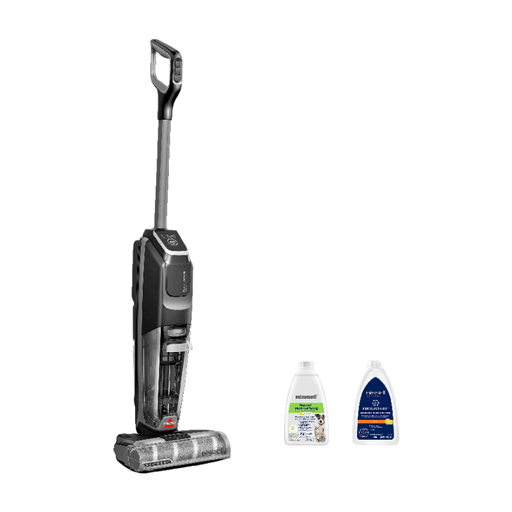 Image unavailable
Worth considering if you’re looking for a cordless appliance to tackle wet and dry messes on hard floors. Compare the 3999N’s vacuuming and washing results for the types of mess you typically deal with. Also check which cleaning solutions are compatible and what you’ll need to do after use.
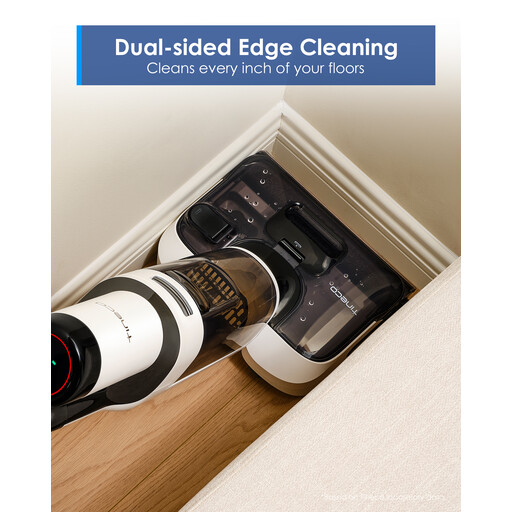 Image unavailable
Worth considering if reaching under low furniture matters as much as washing hard floors. The model name advertises a 180° lay-flat position, a height of 13 cm, a 70 °C FlashDry cycle and up to 40 min of runtime; these figures don’t tell you how long the floor will take to dry. Check that it’s suitable for your flooring and find out what maintenance is required.
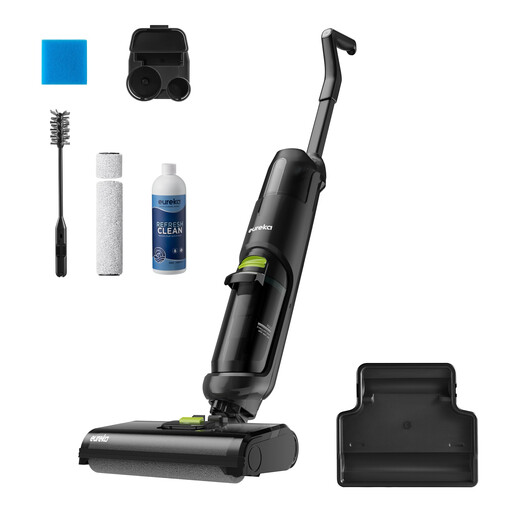 Image unavailable
Worth considering for washing hard floors where the care instructions allow a wet-cleaning appliance. The product name mentions a self-cleaning system, but check what you’ll still need to do after each use and how the NEW400 performs on the types of mess you deal with.
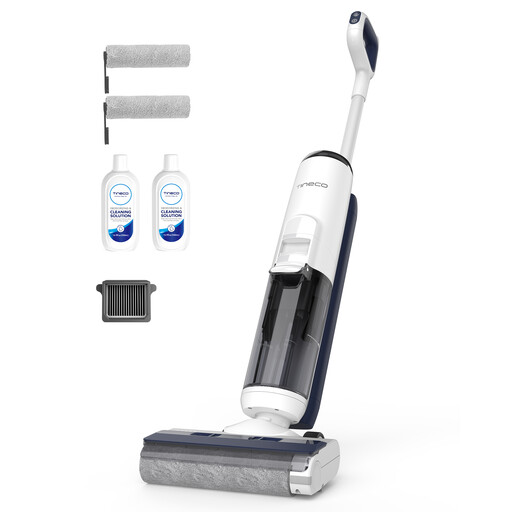 Image unavailable
Worth considering for regular cleaning of hard floors rather than rugs or carpets. The product name advertises up to 35 min of runtime, edge cleaning and self-cleaning. Check that it’s suitable for your flooring, and find out what emptying and maintenance are needed after use.
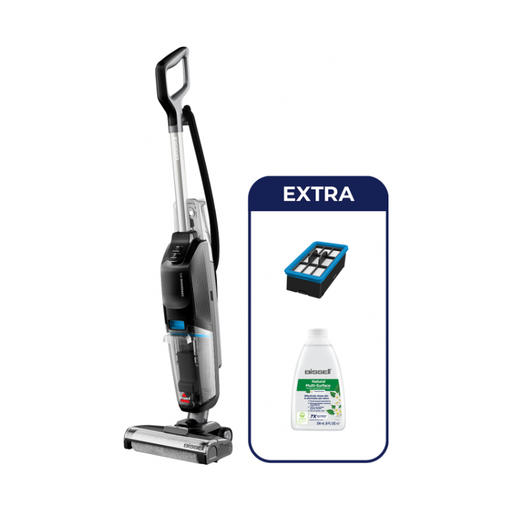 Image unavailable
Worth considering if you’d prefer a corded appliance for wet-cleaning hard floors. Check that the cord reaches around your rooms, then consider how to empty the tanks, care for the roller and find compatible cleaning solutions.
Not always. In March 2026, UFC-Que Choisir reported that some floor cleaners have weak suction or don’t vacuum well, and may struggle with stubborn stains. If you also need to pick up lots of dry debris or tackle ingrained stains, check the test results for the model in question and, if necessary, keep another appliance or cleaning step in your routine.
You’ll need to empty the tanks and clean the parts that come into contact with dirt, including the rollers or pads and filters. UFC-Que Choisir highlights the importance of these tasks. If a model advertises self-cleaning, check exactly what you’ll still need to do yourself.
No. Only use a product approved in the appliance instructions and suitable for your flooring. UFC-Que Choisir warns that an unsuitable detergent may foam or leave marks. Check the guidance from both manufacturers before use.
Take it to a collection point for electrical equipment. The French Ministry for Ecological Transition lists options including dropping it off at a collection point or recycling centre, returning it to a retailer, or handing it to a social and solidarity economy organisation.