Households dealing with everyday spills
If your kitchen or hallway mainly has fresh marks and small spills, frequent wet cleaning could fit your routine. You’ll still need to check that the appliance is suitable for your flooring.


An electric floor washer may suit frequent wet cleaning on compatible hard floors, provided you’re happy to clean its parts and leave them to dry after use. It won’t always replace a vacuum and mop: according to tests by UFC-Que Choisir, its ability to pick up dry debris and remove stubborn stains is often limited.
The main difference is what you need to clean most often: fresh spills, dry debris or stains that need targeted treatment. In its buying guide, UFC-Que Choisir distinguishes routine cleaning of hard floors from dry vacuuming.
If your kitchen or hallway mainly has fresh marks and small spills, frequent wet cleaning could fit your routine. You’ll still need to check that the appliance is suitable for your flooring.
If dry debris is the main issue, keeping a vacuum designed for hard floors meets a separate need from wet cleaning. In that case, pay particular attention to the limitations on suction reported by UFC-Que Choisir.
A wet-cleaning appliance adds tanks and parts that need cleaning and drying. Space at home and the steps required after each clean matter just as much as cleaning the floor itself; instructions vary by model.
If fresh marks are the main reason you’re buying, first consider how it handles wet cleaning and the care needed afterwards. If crumbs or stubborn stains are more of a concern, check dry-suction performance and the cleaning method you’ll need separately. A robot could be an extra option, but don’t assume it will handle both tasks.
| Need | What to check | Who it may suit |
|---|---|---|
| Frequent wet cleaning | Compatibility with your flooring; cleaning the roller after use. | After meals, I want to deal with spills and fresh marks regularly without making several passes. Around 29% of consumers would prioritise this type of wet cleaning. |
| Crumbs and stubborn stains | Test results for dry debris and the types of stains you need to tackle. | If I often pick up crumbs before mopping, I don’t want to rely on a single appliance for tasks it may handle unevenly. Picking up debris and targeted cleaning would come first for around 36% of consumers. |
| Cleaning and storage | Care instructions; space for the appliance and its dock, and somewhere to dry its parts. | With limited space or little time after cleaning, I’d prefer an arrangement that avoids regularly dealing with wet parts. This would be a priority for around 21% of consumers. |
| Extra automation | Robot mopping and vacuuming test results; care of its dock, if included. | I’d like to hand over some of the cleaning between bigger cleans, while keeping a way to deal with stubborn dirt. Around 14% of consumers would prioritise this extra automated help. |
In its floor-washer tests, UFC-Que Choisir found that suction on dry floors was weak or non-existent. The category name alone isn’t enough to decide whether you can do without your vacuum.
If crumbs and dust are common in your home, check dry-vacuuming test results for the model you’re considering, or keep a separate option.
Routine wet cleaning doesn’t guarantee stain removal. UFC-Que Choisir reported limited results on stubborn stains.
Check which types of dirt were included in the tests, and plan a suitable method for areas that need targeted cleaning.
The tank, roller or brush and filter may need attention after use. For the Ultimate 800 Wet & Dry, Electrolux recommends thoroughly cleaning the dirty-water tank after every use and leaving washed parts to air-dry for 24 hours.
Check the instructions for the exact model and work out where its parts can dry.
Depending on the model, you may also need replacement rollers, filters or compatible detergents over time.
In its review of robot mops, UFC-Que Choisir found that mopping and vacuuming performance remained inadequate for most of the models assessed. A dock may also take up space and require you to manage the water.
Treat a robot as an extra until relevant tests show how the model you’re considering performs on your floors and the types of dirt you need to tackle.
These brands offer models worth looking at, but that doesn’t mean every product in their range will perform the same way. Models mentioned in UFC-Que Choisir tests and manufacturers’ instructions should each be considered in their specific context.
The FCV 4 Extra + 1.056-134.0 is among the floor washers assessed by UFC-Que Choisir.
The X-Clean 7 GZ5736E0 features in UFC-Que Choisir’s French test.
The Wet&Dry 800 EW81U3DB features in UFC-Que Choisir’s French test.
The H15 Pro Heat is among the floor washers assessed by UFC-Que Choisir.
The F25 is among the floor washers tested by UFC-Que Choisir; the brand also makes robot vacuum mops.
These four appliances offer motorised wet cleaning for hard floors. Compare their design with your routine, then check that they’re compatible with your flooring and find out what care they need. Don’t assume any of them can replace a vacuum and mop on their own.
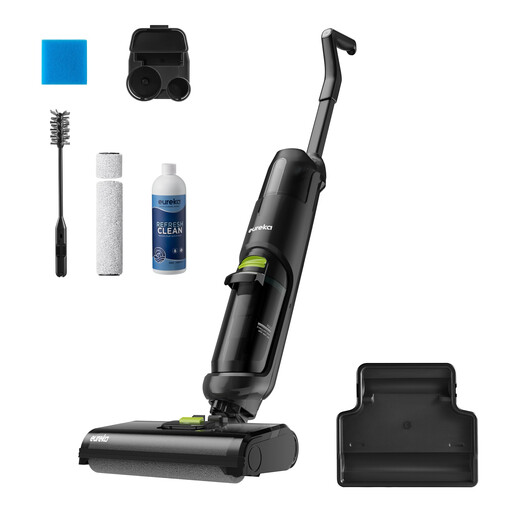 Image unavailable
Worth considering if you clean wet floors regularly and prefer a cordless appliance. Check the instructions to make sure it’s suitable for your flooring and to find out what care it needs after use.
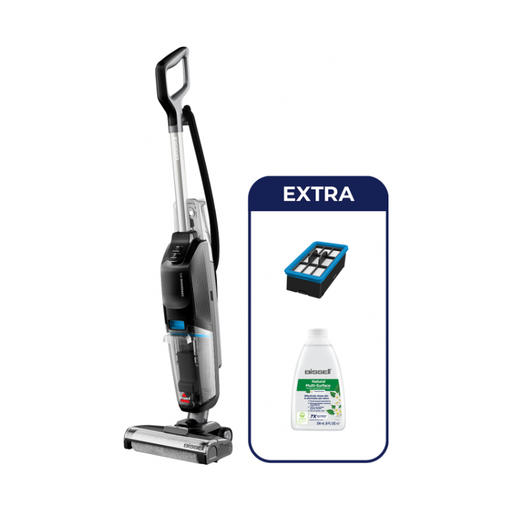 Image unavailable
Worth a look if you want an appliance for wet cleaning on a range of surfaces listed as compatible. Before use, check your floor’s finish and which cleaning products are approved for this model.
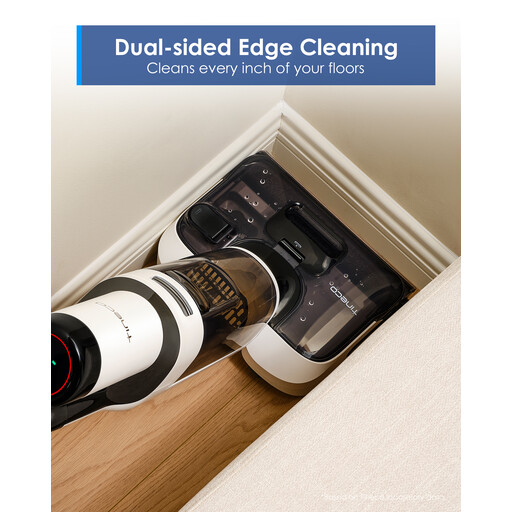 Image unavailable
Worth considering if you need to clean under low furniture: its name indicates that it can lie flat at 180° and is 13 cm high. It also claims up to 40 minutes’ run time and a 70 °C FlashDry system. Check the instructions to see what care is still needed after the cycle.
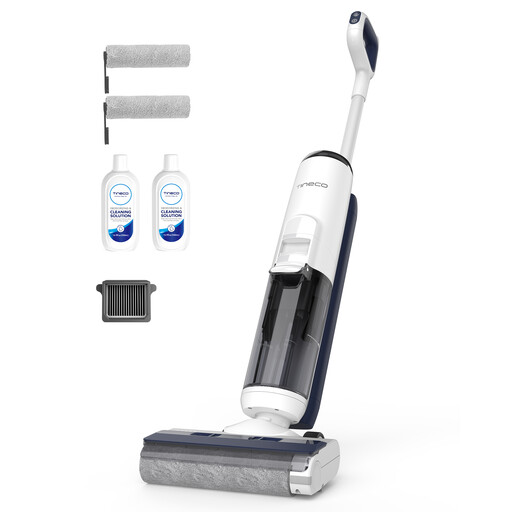 Image unavailable
Worth considering for regular wet cleaning, particularly along skirting boards. Its name indicates up to 35 minutes’ run time and edge cleaning. Check the instructions to confirm it’s suitable for your flooring and find out how to care for it.
Not always: UFC-Que Choisir describes these appliances mainly as hard-floor washers and reports limitations when dealing with dry debris and stubborn stains. If this kind of dirt is a regular occurrence, keep a suitable vacuuming and mopping method as well.
Don’t assume wooden flooring is suitable for wet cleaning: UFC-Que Choisir warns against using these washers on wooden floors. Check both the appliance instructions and the guidance for your floor’s finish.
Follow the instructions for your model. These may include emptying the dirty water, cleaning the tank, filter and brush, then drying the parts. For the Ultimate 800 Wet & Dry, Electrolux recommends thoroughly cleaning the dirty-water tank after every use and air-drying washed parts for 24 hours.
Check which rollers, filters and detergents, if any, are approved for the exact model, and whether they’re available. Accessories aren’t necessarily interchangeable: Kärcher, for example, specifies a roller for particular FC 2-4 appliances.