
Livraison le jour même ou le lendemain

Qualité garantie

Débloquez vos offres de bienvenue: Livraison GRATUITE | Jusqu'à -80 % | 30 jours d'essai gratuits à JoyPlus
Téléchargez l'application
Between devices that vacuum and mop at the same time, autonomous robots and steam mops, choosing a floor washer vacuum can quickly become a headache. A home with pets, children or heavy foot traffic will not have the same needs as a small apartment occupied only during the week.
Before focusing on advertised power or the number of features, take the time to examine the factors that really matter: floor type, appliance maintenance, battery life, storage and the cost of consumables. Here are the criteria to review to find the solution best suited to your home in France in 2026.
A figure such as 25,000 Pa is certainly impressive, but it is not enough to predict performance on the floor. Brush design, water flow, circuit sealing and the ability to prevent hair tangles matter just as much.
Manufacturers do not always measure suction power under the same conditions either. Compare models within the same category and focus on features with a tangible impact: an anti-tangle brush, carpet detection, roller washing and mapping capabilities.
A device that washes floors produces dirty water and requires regular cleaning. Without automatic drying, a floor washer vacuum can develop odours on its roller if it remains damp. Even with a robot vacuum fitted with a self-cleaning station, you still need to empty the dirty-water tank, replace bags and clean the filters.
An automatic self-cleaning cycle therefore does not mean “zero maintenance”. Check how easily the brushes can be removed, the price of replacement filters and the availability of robot vacuum accessories.
A steam floor cleaner or steam mop is intended for hard, sealed surfaces that are compatible with steam. Untreated wood, certain waxed floors and moisture-sensitive coverings may be damaged.
Steam can help loosen dirt on a watertight floor, but it does not necessarily replace vacuuming up pet hair and dust. Check the recommendations provided by the manufacturer of your flooring before use.
For simultaneous vacuuming and mopping, first look at how clean and dirty water are separated. A sufficiently large tank reduces the need for repeated refills, while a water-dosing system helps prevent streaks and splashes.
A floor washer vacuum is particularly effective at handling spills, crumbs and fresh dirt. A wet and dry vacuum is generally designed to pick up a range of dry or wet debris, but it does not necessarily include a brush specifically designed for regular mopping.
For a robot, advertised suction power — for example 8,150 Pa or 25,000 Pa — should be assessed alongside the main brush, carpet detection and its ability to clear thresholds.
A 40-minute runtime may be enough for several rooms, but actual performance depends on the mode selected, water level and amount of dirt to be handled. For a robot vacuum and mop, battery capacity, mapping quality and automatic docking are often more important than any standalone figure.
If your home spans multiple floors, look for a model that can manage several maps. For a corded device, also check the cable length: the 6 to 8 metres offered by some models means you will not need to switch sockets every five minutes.
A washable microfibre mop pad helps reduce waste and recurring purchases. It does, however, require you to follow the washing instructions and recommended replacement schedule. Disposable wipes, such as a Swiffer mop pad, are convenient for quickly picking up dust and pet hair from hard floors, but they do not replace wet mopping.
For a robot, always check the exact reference for the pads and filters. Eureka E20 Plus mop pads, for example, are listed as compatible only with the E10s and E20 Plus models. Approximate compatibility can lead to poor attachment or reduced performance.
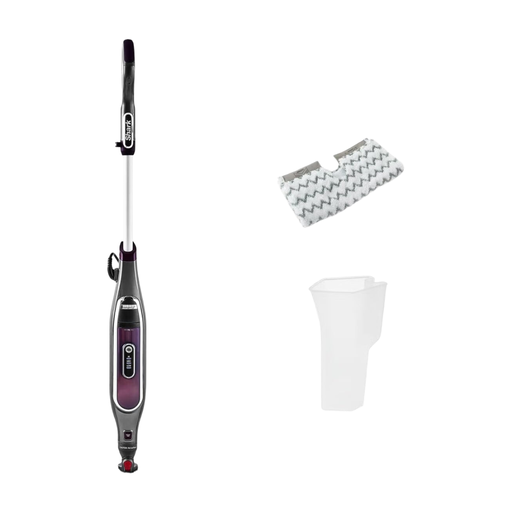
Why this choice suits this profile: a corded solution for regular care of sealed hard floors, with no battery to recharge and no app to configure.
Its 6 m cable eliminates reliance on a theoretical battery runtime. However, it should be used only on surfaces compatible with steam.
1,200 W of power, a stated 30-second heat-up time, two washable pads and a 380 ml tank.
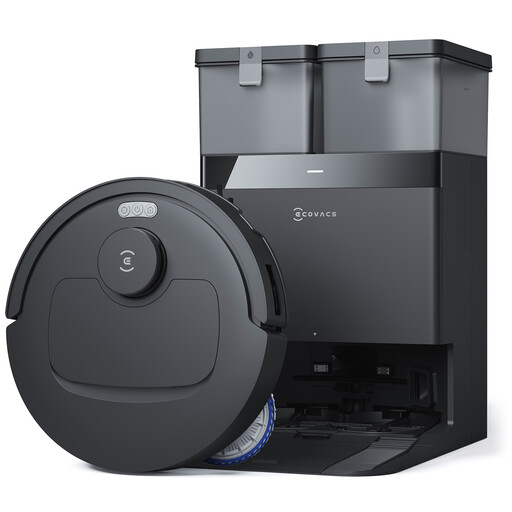
Why this choice suits this profile: it is designed for households that want to schedule vacuuming and mopping, particularly those with pets or large hard-floor areas.
According to the product specification, the station washes the pads in hot water at 75°C, then dries them with hot air at 45°C. Some manual intervention is still required.
Advertised suction power of 25,000 Pa, dual rotating mop pads, TrueMapping 2.0 mapping and a 4 l clean-water tank.
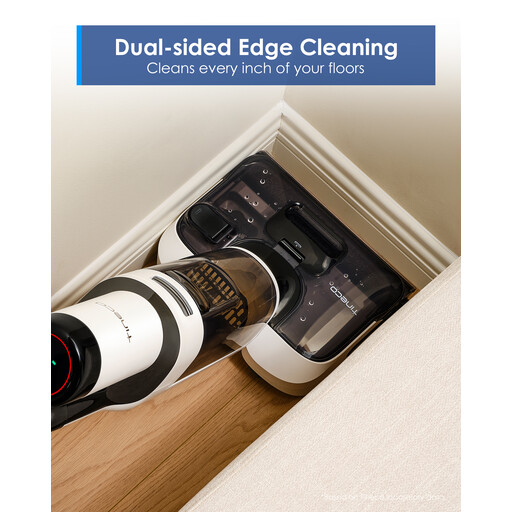
Why this choice suits this profile: a handheld device for quickly tackling marks, crumbs and spills without having to set up a robot.
Its design lets it reach low-clearance areas, with a 180° recline and a stated height of 13 cm.
Up to 40 minutes of advertised runtime, a self-cleaning cycle and FlashDry drying at 70°C according to the product specification.
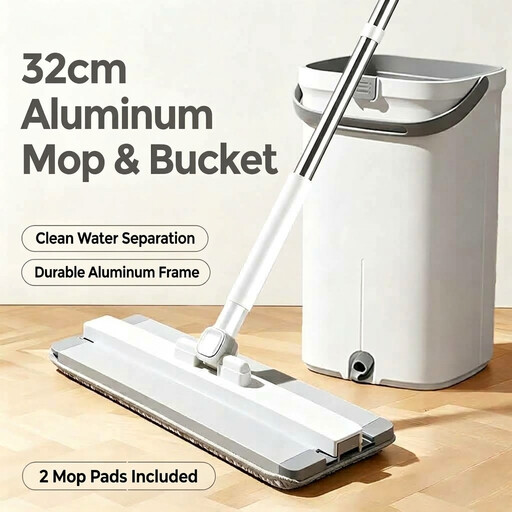
Why this choice suits this profile: a battery-free manual method that gives you full control over the amount of water and pressure applied.
The bucket separates clean water from dirty water and lets you wring out the mop head without touching it directly.
32 cm microfibre head, suitable for dry or wet use, with separate washing and wringing functions.
The Tineco Floor One S5 Steam, a corded model with an 8 m cable, may also suit users looking for a steam-cleaning solution with a digital display. As with any heated appliance, check the operating instructions, floor compatibility and the precautions required to prevent burns.
We have brought together a selection of products to help you compare mopping solutions, pads and accessories suited to everyday floor care.
It can replace a traditional mop for routine cleaning of compatible hard floors, particularly when it vacuums up debris and mops in a single pass. A traditional mop remains useful for stairs, skirting boards, corners and surfaces that should not be heavily saturated.
After each use, empty the dirty-water tank, rinse the designated components and allow removable parts to dry. Check the filters and brushes regularly. With a robot, you also need to empty the station, clean the sensors and replace the pads periodically.
It depends on the model. Some robots detect carpets and automatically raise or stop the mop, while others require you to define a no-go zone in the app. Before buying, check the threshold-climbing height, carpet detection and whether the vacuuming, mopping and vacuum-and-mop modes can be selected independently.