
Livraison le jour même ou le lendemain

Qualité garantie

Débloquez vos offres de bienvenue: Livraison GRATUITE | Jusqu'à -80 % | 30 jours d'essai gratuits à JoyPlus
Téléchargez l'application
A floor cleaning mop can make cleaning tiles, bathrooms, kitchens, garages and patios much easier. You still need to choose the right tool, though. A stiff brush will tackle ingrained dirt, while a steam mop is better suited to the regular care of compatible hard floors.
Before placing your order, it is worth looking out for the most common pitfalls: a poorly designed handle, an accessory presented as multifunctional when it is not really so, or steam used on a floor covering that cannot withstand it.
A scrub brush with a long handle saves you from repeatedly bending down, provided that the handle is sufficiently rigid and suitable for your height. If it is too short, you will have to hunch your back to clean under furniture or scrub the shower. Conversely, a grip that loosens during use can quickly turn cleaning into a DIY session.
In particular, check:
A floor mop fitted with a mop head is useful for removing dust and surface marks. However, it will not necessarily replace a stiff-bristled brush when you need to loosen residue in a garage, on a patio or around tile grout.
For stubborn dirt, examine the type of bristles, their stiffness and their resistance to wear. A squeegee removes water efficiently, but it does not scrub. A brush lifts deposits, but it may leave the surface wet.
A steam mop heats up quickly, but its use should be limited to surfaces approved in the instructions, generally properly sealed hard floors. Unvarnished wood, some laminates, fragile grout and heat-sensitive floor coverings may be damaged.
Steam does not remove the need for basic precautions either: fill the appliance while it is unplugged, allow it to cool completely before storing it and keep it out of children’s reach.
For cleaning tiles, a head fitted with stiff brushes is well suited to grout and ingrained marks. A rubber or foam blade is better for removing water in the bathroom, on a patio or after washing.
A tool that combines a brush and squeegee can also reduce the number of accessories you need to store. The shape of the head deserves your attention too: an angled design makes it easier to clean close to walls and reduces repetitive back movements.
A metal frame and handle provide welcome rigidity for effective scrubbing. Synthetic bristles should retain their shape after rinsing and drying. For a floor squeegee, check the width of the blade and its ability to remain in close contact with a relatively flat surface.
An XL 54 cm squeegee can cover a large pane of glass quickly, but it will be less manoeuvrable in a small shower. The size should therefore be chosen according to the space you actually need to clean.
An electric hard-floor cleaner requires an easily accessible socket and a sufficiently long cable. A 6 to 8-metre cord can save you from changing sockets in a spacious room, although it does not eliminate the inconvenience of having a cable.
With a steam mop, check:
After each use, rinse the brushes and squeegees, then leave them to air-dry. This simple habit limits the build-up of residue and helps preserve the materials.
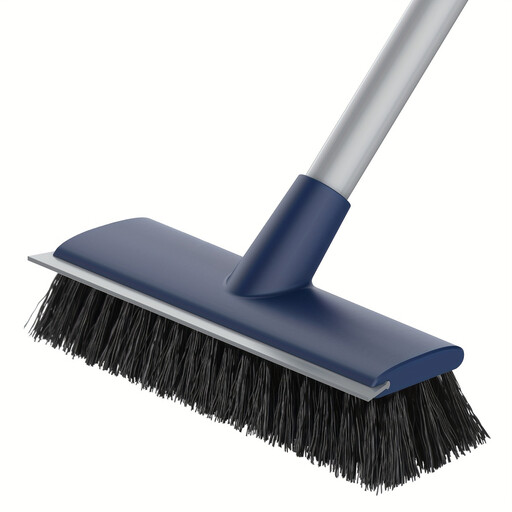
Why this choice suits this type of user : This manual tool is ideal for anyone looking for a simple solution for the bathroom, kitchen, garage, tiles or patio, without needing a power supply.
The handle adjusts from 49.2 to 124 cm, allowing you to find a comfortable working position, while the 45-degree angled head limits unnecessary bending.
A stiff synthetic-bristle brush, a metal frame and an integrated squeegee in one 2-in-1 tool.
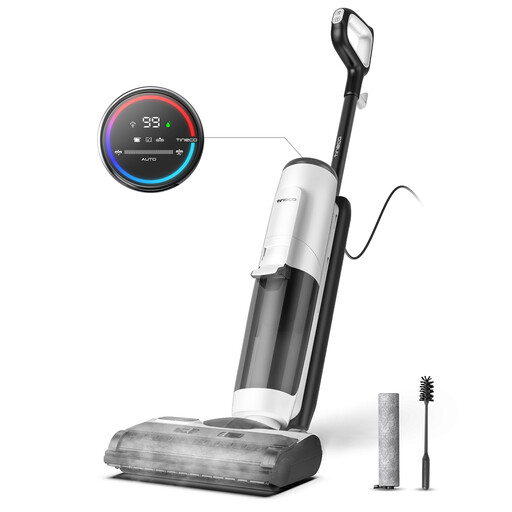
Why this choice suits this type of user : Its electric design is aimed at households that want to spend less time regularly maintaining their hard floors and appreciate having a digital display.
Its 8 m cord means fewer socket changes in a large room. However, check that your floor covering is compatible and read the instructions before using the steam function.
A corded appliance with a digital display and steam function for compatible hard floors.
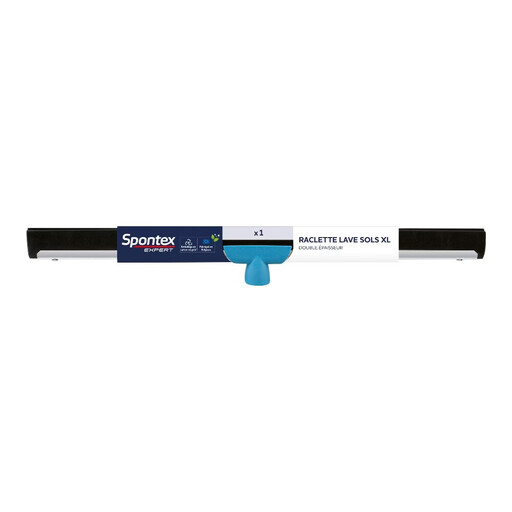
Why this choice suits this type of user : This model is suitable for large glass surfaces, mirrors, patio doors and certain cleaning tasks that require water to be removed quickly.
Its 54 cm width is clearly stated: it speeds up cleaning across large areas but is less practical in confined spaces.
A metal body, a double-thickness foam blade and an XL design for glass surfaces.
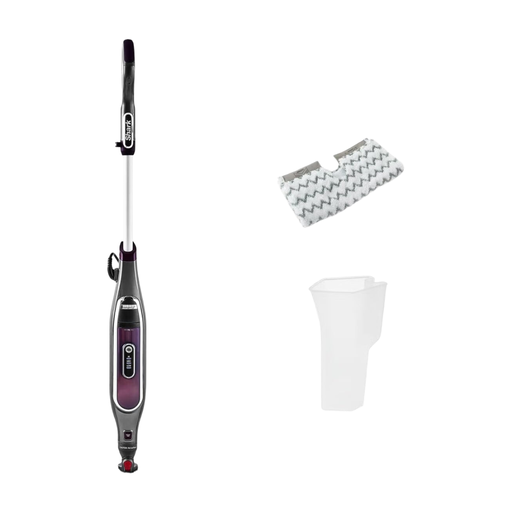
Why this choice suits this type of user : This steam mop is designed for regular users of sealed hard floors who want washable pads and a 6 m cable.
The adjustable steam output lets you adapt use to the floor covering. However, the instructions prohibit use on unsealed surfaces and adding detergent, vinegar or fragrance to the tank.
A power rating of 1,200 W, a stated 30-second heating time, a 380 ml tank and two washable pads included.
We have brought together a complete, real-time selection of products that meet these strict criteria and European safety requirements.
A stiff-bristled brush with an adjustable handle is suitable for ingrained marks and grout. An integrated squeegee can then remove water and loosened residue. For routine cleaning, a steam mop can also do the job if the tiles can withstand heat and the grout is properly sealed.
Its lifespan depends on how often it is used, how well the tank is maintained, the condition of the pads and whether the manufacturer’s instructions are followed. Avoid unauthorised products, never immerse the electrical unit and allow the appliance to cool down after each use.
Consumption depends on the appliance’s power rating and how long it operates. A 1,200 W model used for 30 minutes theoretically consumes around 0.6 kWh, without taking the heating phase or variations caused by actual operation into account. The final cost then depends on the electricity tariff set out in your contract.