
Livraison le jour même ou le lendemain

Qualité garantie

Débloquez vos offres de bienvenue: Livraison GRATUITE | Jusqu'à -80 % | 30 jours d'essai gratuits à JoyPlus
Téléchargez l'application
A floor-cleaning vacuum can make the daily upkeep of hard floors much easier, particularly in homes with children, pets or large rooms. But marketing promises alone are not enough to make the right choice. Limited battery life, time-consuming maintenance or incompatible accessories can quickly turn a practical purchase into a regrettable expense.
Here are the criteria to consider before choosing between a wet-and-dry cordless vacuum, robot vacuum with mop function, hard-floor cleaner or flat mop with bucket.
A high number of pascals may sound impressive, but it is not enough to assess a device’s real-world performance. Brush design, water management, tank capacity and how easily the appliance moves around furniture also play a decisive role.
For a device intended for hard floors, check in particular whether it can vacuum dry dust and wash in a single pass, how it handles hair and whether its head can reach underneath furniture.
A 2-in-1 appliance that vacuums and washes needs to be rinsed, dried and emptied regularly. Otherwise, odours may develop in the roller, dirty-water tank or internal ducts.
Automatic floor cleaning does not mean you will no longer need to do anything. You will still have to empty the tanks, clean the filters and replace wear parts according to the manufacturer’s recommendations.
Robot accessories are rarely universal. A reusable microfibre mop designed for one model may not attach correctly to another device. Before ordering, check the exact reference shown on the robot and on the product page.
For example, the Eureka E10s E20 Plus mop refills are advertised as compatible only with Eureka E10s and E20 Plus robots.
In a home with sealed parquet, tiles, vinyl or laminate flooring suitable for wet cleaning, choose a device with adjustable water flow and a roller designed for hard floors. The steam function may be suitable for certain uses, but you must follow the manufacturer’s instructions and check the flooring’s resistance.
A robot vacuum with a mopping function is mainly suited to regular upkeep. For a localised spill or a high-traffic area, a manual device will generally allow you to clean more precisely.
The stated battery life varies according to the selected mode, suction level and floor type. A runtime of 40 minutes may be enough for several rooms, but remember to allow for any pauses needed to empty or refill the tanks.
For a large area, also check the capacity of the clean- and dirty-water tanks. A robot with a docking station reduces the need for intervention, whereas a manual floor-cleaning vacuum generally requires more attention during a cleaning session.
A washable roller, an easily accessible filter and a drying cycle can make maintenance simpler. Where available, hot-air drying helps reduce residual moisture, but it does not eliminate the need to clean the various components regularly.
For accessories, check their material, how easy they are to wash and the recommended replacement interval. A reusable microfibre mop can reduce consumables usage, provided it is washed and dried correctly.
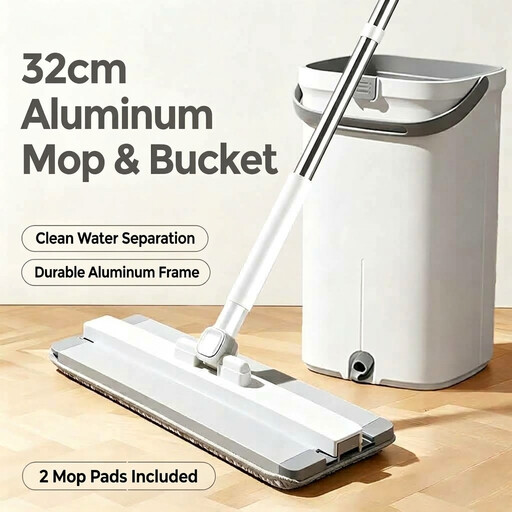
Why this choice suits this user profile : This flat mop and bucket is ideal for people looking for a manual solution, with no battery or app, to maintain hard floors in small or medium-sized areas.
The bucket separates clean water from dirty water, limiting the mixing of rinse water with water that has already been used.
32 cm head, microfibre pad suitable for dry or wet use, and integrated one-handed wringing.
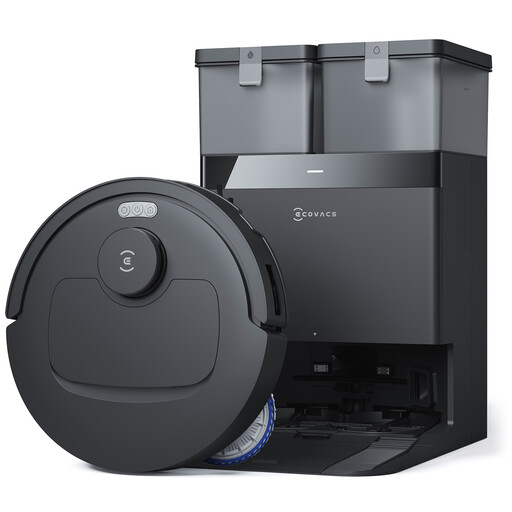
Why this choice suits this user profile : This ECOVACS Deebot robot vacuum is designed for households that prioritise automation, particularly across large areas, in homes with pets and for scheduled cleaning.
The station empties the dust, washes the mop pads at 75 °C, dries them with hot air and refills the water.
Stated suction power of 25 000 Pa, multi-floor mapping and OZMO Turbo 2.0 system with two rotating mop pads.
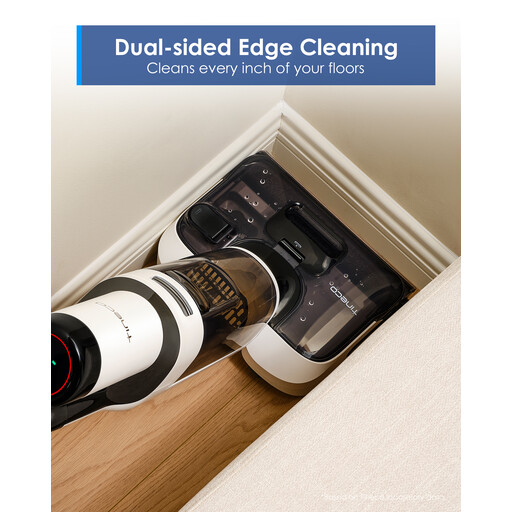
Why this choice suits this user profile : This Tineco floor-cleaning vacuum is designed for frequent manual cleaning, splashes and hard-to-reach areas underneath furniture.
Its 180° reclinable design and stated height of 13 cm make it easier to clean beneath some low furniture.
Stated runtime of 40 minutes, 70 °C FlashDry drying and self-cleaning function.
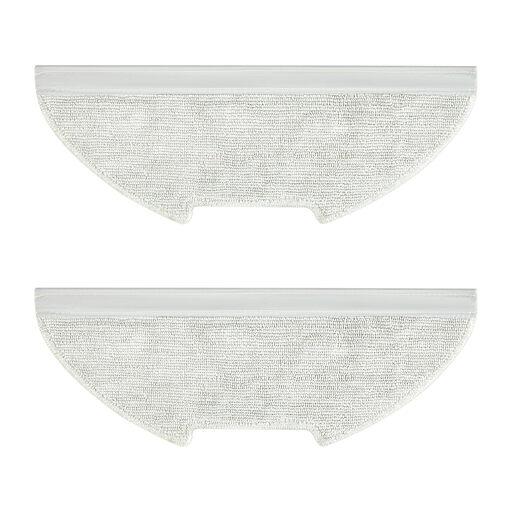
Why this choice suits this user profile : This pack is intended for Eureka E10s or E20 Plus users who want to keep their robot in perfect working order with replacement accessories.
Compatibility is clearly limited to Eureka E10s and E20 Plus models, helping you avoid ordering an unsuitable part.
Washable, reusable microfibre pads, sold in packs of two, with replacement recommended every two to three months depending on use.
We have put together a comprehensive, real-time updated selection of products that meet these demanding selection criteria and European safety standards.
The Tineco Floor One S5 Steam, with its 8-metre cable and steam function indicated in its name, may also appeal to people who prefer a mains-powered appliance. Check the manufacturer’s instructions before using it on a particular type of flooring : not all floors tolerate heat or moisture in the same way.
For an appliance designed to vacuum and wash in a single pass, this is not always necessary. However, remove bulky objects, cables and anything that could block the brush. If the floor is very dusty, vacuuming first may be helpful, depending on the model.
It depends on how often they are used, the type of dirt involved and how the accessories are washed. Regularly check the condition of the fibres, look for any deformation and watch out for persistent odours. For the Eureka accessories featured here, replacement is recommended every two to three months, depending on use and the condition of the part.
It automates everyday upkeep, but some areas still require manual cleaning : stairs, very low furniture, set-in stains or surfaces that the robot cannot reach. Also check that the station can be installed on a stable surface, near a power socket, with enough space for the tanks and for opening the compartments.