
Same-day & Next-day Delivery

Quality Guaranteed

Unlock Your Welcome Offers: FREE Delivery | Up to 80% OFF | Free 30-day JoyPlus trial
Download the APP
Between dust, greasy marks, pet hair and shoe prints, looking after your floors often requires several products and accessories. However, buying a floor cleaner, mop or cleaning appliance at random can quickly lead to unnecessary expense, or even damage certain flooring.
Here are the criteria to consider before choosing your floor cleaning products, along with a selection suited to different households and uses.
A product that removes dirt is not automatically a floor disinfectant. Disinfection follows a specific procedure, with a dilution ratio and contact time stated on the label. It is only relevant if the product claims to perform this function and provides the corresponding regulatory information.
For surfaces that come into contact with food, also check whether rinsing with drinking water is required after application.
Wood, laminate and some tile grout do not cope well with excessive moisture. An overly wet mop can leave marks, cause wooden elements to swell or slow down drying. A wood floor cleaner must be compatible with the type of finish. As for wipes, they should be used on a dry or slightly damp surface when recommended in the instructions.
For a cordless vacuum cleaner, a high wattage or suction pressure rating alone is not enough to assess everyday convenience. You should also consider battery life, weight, noise level, filter maintenance and manoeuvrability under furniture. An appliance that is difficult to empty or whose brush clogs quickly could end up at the back of a cupboard.
Before buying anything, start by identifying the surface involved:
First test the product on a small, inconspicuous area to check how the flooring reacts before treating the entire surface.
Ready-to-use products are convenient for small areas and quick cleaning jobs. Containers of concentrated cleaner, for example in a 5 L format, may offer better value for a large home, family or business premises, provided you follow the dilution instructions precisely.
When it comes to equipment, compare the head width, bucket capacity, ease of wringing and the price of replacement wipes. A flat mop and bucket can be a practical choice if you want to keep clean and dirty water separate and minimise contact with the mop head.
Always read the label before use. Precautions may require you to wear gloves, ventilate the room, avoid mixing several products or rinse certain surfaces. Keep cleaning products out of the reach of children and animals. Biocidal products must be used carefully and in accordance with the manufacturer’s instructions.
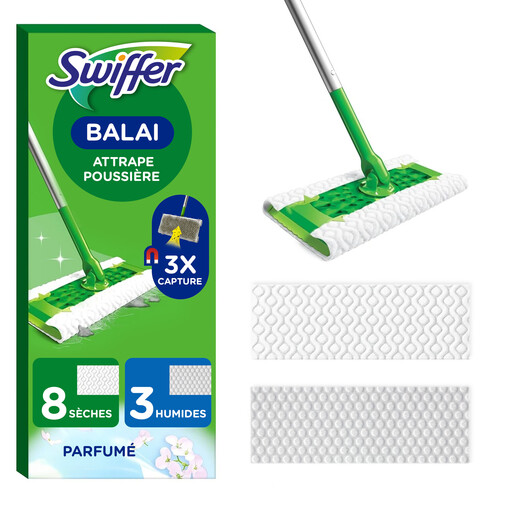
Why this choice suits this profile : This kit combines dry wipes for dusting with wet wipes for everyday cleaning. It is suitable for small areas and for anyone looking for a simple solution without a bucket.
This format avoids buying a bulky appliance for light cleaning. However, take care to check the surfaces listed as unsuitable on the packaging, particularly certain types of wood and carpets.
Eight dry wipes, three wet wipes and a 360° swivel head for reaching corners and cleaning under furniture.
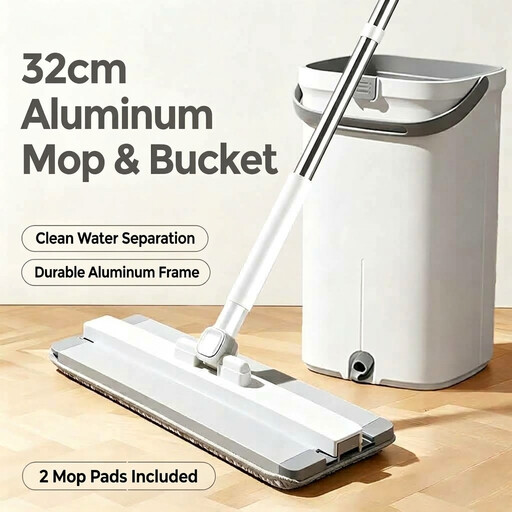
Why this choice suits this profile : This system is designed for users who want complete equipment for larger rooms, with an integrated wringer and flat head.
Separating clean and dirty water means you do not repeatedly dip the mop head into the same water. However, the system is bulkier than a standard flat mop.
Two-compartment bucket, hands-free wringing, 32 cm microfibre head and easier access to low-lying areas.
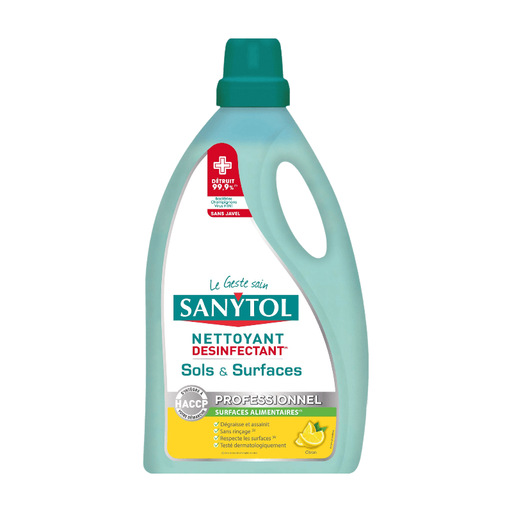
Why this choice suits this profile : Its 5 L format may be suitable for regularly cleaning large areas or business premises. The manufacturer presents its bleach-free formula as suitable for floors and surfaces.
The product details mention bactericidal, fungicidal and virucidal activity standards, including EN 13697, EN 1650 and EN 14476. Always check the label, dilution and contact time before use.
Cleaning and disinfection in a single step, with a lemon fragrance and HACCP indication for certain food-contact surfaces; rinsing is required depending on the use.
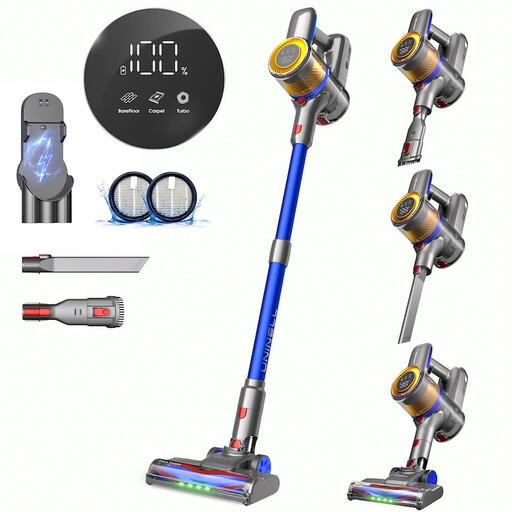
Why this choice suits this profile : This cordless vacuum cleaner is designed to pick up pet hair, dust and debris from both hard floors and carpets. It can complement wet cleaning in a pet-owning household.
The anti-tangle brush and easy-empty dust container help tackle the build-up of hair and pet fur. This appliance is intended for dry vacuuming: liquids must not be picked up.
Advertised battery life of up to 60 minutes, removable battery, LED lighting on the head and washable filtration, which must be dried thoroughly.
We have put together a complete, real-time updated list of products that fully meet these strict selection criteria and European safety regulations.
A simple routine is often enough to reduce the need for harsh cleaning products:
For parquet, dedicated wipes such as parquet wipes can be handy for spot cleaning. However, the product should only be used on compatible surfaces and without excessive moisture.
A standard cleaner removes dirt, while a floor disinfectant is formulated and labelled to provide a biocidal effect under specific conditions. Check the stated standards, dilution, contact time and any rinsing instructions. Never mix several products.
Yes, in most cases. Vacuuming removes dust, hair and pet fur that could turn into mud when they come into contact with water. A cordless vacuum cleaner is convenient for frequent cleaning, while a steam mop may be suitable for certain hard floors that are compatible with heat and moisture. Always consult the flooring manufacturer’s instructions.
Compare the cost per use rather than the price of the bottle. A large concentrated format may offer better value for a large area, provided you get the dilution right. Reusable accessories, such as a washable microfibre head, also reduce the need for replacements, while ready-to-use wipes focus primarily on speed and convenience.