Households that mop tiled floors often
If you regularly wet-clean tiles, lino, PVC or vinyl, a floor cleaner could meet your needs, as long as you’re prepared to empty and clean the appliance after use.


For regular cleaning of tiles, lino or other hard, non-wood floors, a floor cleaner could be a good fit if you’re happy to empty its tanks and clean its rollers after use. If your priority is picking up dry dust and debris, keep a separate vacuum cleaner and mop the floor afterwards: UFC-Que Choisir points out that a floor cleaner does not always replace general vacuuming.
If you regularly wet-clean tiles, lino, PVC or vinyl, a floor cleaner could meet your needs, as long as you’re prepared to empty and clean the appliance after use.
Some appliances combine picking up small bits of dirt with wet cleaning. However, don’t assume they’ll replace your vacuum cleaner for dry dust or general cleaning: UFC-Que Choisir notes that this varies between models.
If you plan to use the appliance often, compare how easy it is to access the rollers and filters, which detergents are approved, and whether parts are available for the model you’re considering. These checks matter just as much as how easy the floor is to clean.
Worth considering: if you regularly clean a large hard-floor area and don’t want to stop to recharge the appliance.
Bear in mind: according to UFC-Que Choisir, the cable restricts your movement and corded models are heavier.
Worth considering: if you value freedom of movement when frequently cleaning tiled or lino floors in several rooms.
Bear in mind: run time and charging vary by model; check the battery replacement terms too.
Worth considering: if picking up dry dust and debris matters as much as washing the floor.
Bear in mind: vacuuming and mopping are still two separate steps.
| What matters | What to check | Consumers concerned |
|---|---|---|
| Frequent wet cleaning | Floor types approved for the exact model and tank capacity. | When I regularly clean tiled or lino floors, I’m mainly looking for a wet-cleaning routine that suits these surfaces. This is the top priority for around 36% of consumers. |
| Everyday small messes | Types of debris it can pick up and whether you need to vacuum first. | For everyday crumbs or pet hair, I’d like to pick up small bits of dirt while cleaning, without giving up my vacuum cleaner too soon. This is the top priority for around 29% of consumers. |
| After-use maintenance | Emptying and manual cleaning steps still required after any automatic cycle. | If I clean the floor several times a week, I want to be able to get the appliance ready for next time without a lengthy process. Around 21% of consumers prioritise easy maintenance. |
| Consumables and repairs | Compatibility and availability of rollers, filters, detergents, batteries and parts. | Before choosing an appliance for long-term use, I want to know whether I’ll be able to replace worn parts. This is the top priority for around 14% of consumers. |
A floor cleaner is primarily designed to wash hard floors. UFC-Que Choisir points out that its ability to pick up dry dust and debris does not mean it can always be considered a conventional vacuum cleaner.
Work out whether your main task is washing away marks or picking up dry dirt. If both matter, consider a floor cleaner as an additional appliance or stick with a vacuum cleaner and mop.
An automatic cleaning cycle can make rinsing a roller easier, but it won’t necessarily remove the need to empty the dirty-water tank or clean the filters.
Check the manual to find out what you need to do after each use and how the parts should be left to dry.
Emptying, rinsing and drying take time after every use.
UFC-Que Choisir notes that rollers, filters and detergents can be specific to a brand or product range. It’s worth checking their availability for the model you’re considering.
Check the product codes for approved consumables, and find out about spare parts and repair options before you choose.
Instructions can vary by appliance and floor type. Although Kärcher lists certain parquet floors as compatible with the FC 7, this guide focuses only on tiles, lino and other hard, non-wood floors.
Check the manual for the exact model and your floor type. Don’t assume that approval listed for the FC 7 also applies to a different model.
The hard-floor cleaner range includes the FC 2-4, FC 4-4, FC 7 and FC 8.
The X-Clean range brings together several cordless hard-floor cleaners.
Dreame France features cordless wet-and-dry cleaners designed for hard floors.
The CrossWave range includes appliances and accessories for caring for hard floors.
The Floor One models are among the cordless cleaners to consider for washing hard floors.
These two cordless appliances are suited to anyone looking to wet-clean hard floors while picking up small bits of dirt. Start by checking which floor types are approved and what maintenance you’re prepared to carry out; keep a separate vacuum cleaner if picking up dry dust remains a priority.
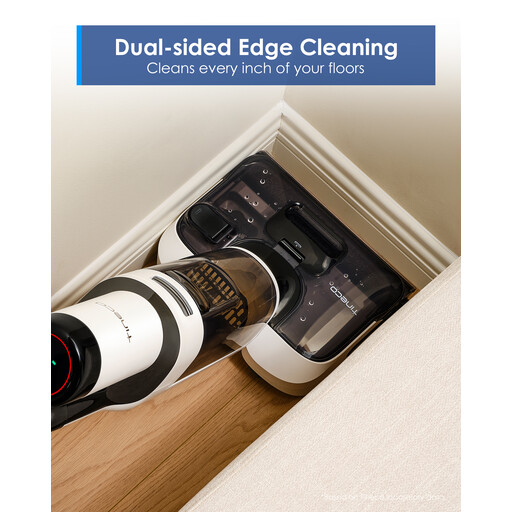 Image unavailable
Worth considering if you regularly clean hard floors without a cable, while picking up small bits of dirt as you go.
The product title lists a 180° lie-flat position, a height of 13 cm, FlashDry drying at 70 °C and a 40 min run time. Check the manual for approved floor types, compatible detergents and what you need to do after the self-cleaning cycle. Wooden parquet is not included in the uses covered here.
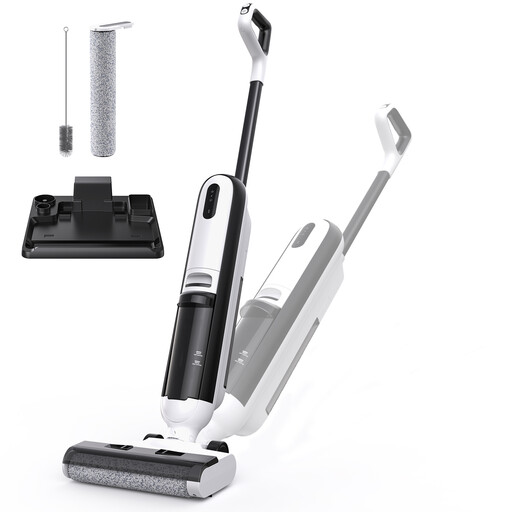 Image unavailable
Worth a closer look if you want to combine wet cleaning with picking up small bits of dirt on a suitable hard floor.
The title mentions wet-and-dry cleaning and a self-cleaning system. The stated run times differ, so confirm the operating time, approved floor types, compatible detergent and maintenance requirements for this T6. Don’t use it on wooden parquet.
Not for every job: UFC-Que Choisir describes a floor cleaner primarily as a wet-cleaning appliance and notes that suction is limited on some models. Keep a separate vacuum cleaner if you regularly need to pick up dry dust or clean rugs and upholstery.
Not as part of this guide, which is limited to tiles, lino and other hard, non-wood floors, in line with the precaution in the UFC-Que Choisir guide. Approval from a manufacturer for a particular model and type of parquet doesn’t apply to other appliances or floor types.
No. Check the manual for your exact model to see which products are approved before filling the tank. A detergent that’s suitable for your floor may not be compatible with the appliance’s components.
Follow the instructions for your model on emptying and cleaning, especially for the dirty-water tank, rollers or pads, and filters. A self-cleaning cycle doesn’t mean these steps are no longer needed.
Yes, if the appliance you’re buying falls into a category for which this label is required in France. The French Ministry of the Economy says the repairability index applies to vacuum cleaners, among other products. Check which category your model falls into, and also find out whether spare parts are available.