
Livraison le jour même ou le lendemain

Qualité garantie

Débloquez vos offres de bienvenue: Livraison GRATUITE | Jusqu'à -80 % | 30 jours d'essai gratuits à JoyPlus
Téléchargez l'application
A floor cleaner can come in many forms: a wet-dry vacuum, a steam mop, an electric brush, a scrubbing brush with a handle, or simply a squeegee. The right choice depends above all on the type of dirt, the surfaces you need to clean, and how much time you want to spend on upkeep.
Before comparing models, it's worth knowing the most common mistakes.
A cordless wet-dry vacuum is designed to pick up dust and liquids on hard floors. It doesn't necessarily replace a scrubbing brush for cleaning grout, removing soap scum, or scouring outdoor surfaces.
On the other hand, a manual or electric brush effectively lifts ingrained dirt, but it doesn't suck up dirty water. So it's not always suitable for the daily maintenance of a large room.
A battery life given in minutes depends on the mode selected, the power used, the condition of the battery, and the type of surface. An appliance advertised as capable of running for up to 35 minutes in standard mode may last significantly less time in intensive mode.
Remember to check:
A 2-in-1 appliance that vacuums and washes must be emptied and rinsed after every use. If you don't, residue builds up, encourages bad odours, and can eventually clog the ducts.
Self-cleaning makes the chore easier, but it doesn't let you off emptying the dirty water tank, rinsing the removable parts, and leaving the roller or brushes to dry.
For varnished parquet, laminate, tiles, vinyl, or marble, check that the manufacturer approves use on sealed hard floors. Appliances that use water and steam mops are not suitable for all porous or untreated surfaces.
In a bathroom, kitchen, on a terrace, or in a garage, a stiff-bristled brush can prove more practical than a floor washer. It allows you to tackle corners, tiled walls, and areas where water then needs to be drained away.
On a wet-dry vacuum, the separation between clean water and dirty water is essential. It stops you from spreading already soiled water back onto the floor.
The Tineco iFLOOR 5, for example, has a clean water tank of 0.8 l and a dirty water tank of 0.72 l, according to its product sheet. Its roller also benefits from a self-cleaning system that can be activated with a single press. This information makes it easier to anticipate how often you'll need to empty it.
An adjustable handle, a tilting head, or a motorised brush can reduce the need for repeated bending. To clean under furniture and along skirting boards, also look at the width of the head and its ability to get close to edges.
With an adjustable handle from 49.2 to 124 cm, like the emmama model shown below, you can adapt the appliance to different working heights. A head fitted with a squeegee also means you don't need a second tool to push the water away.
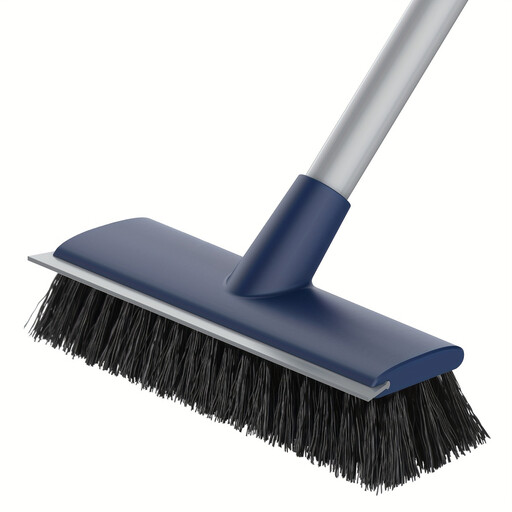
Why this choice suits this profile: This manual brush is ideal for anyone who wants to clean the bathroom, kitchen, tiles, garage, or terrace without needing a battery or a power socket.
Its operation doesn't depend on any stated battery life. Its 45° tilting head and adjustable handle reduce bending while cleaning.
Stiff synthetic bristles, a metal frame, a handle from 49.2 to 124 cm, and an integrated squeegee in a single tool.
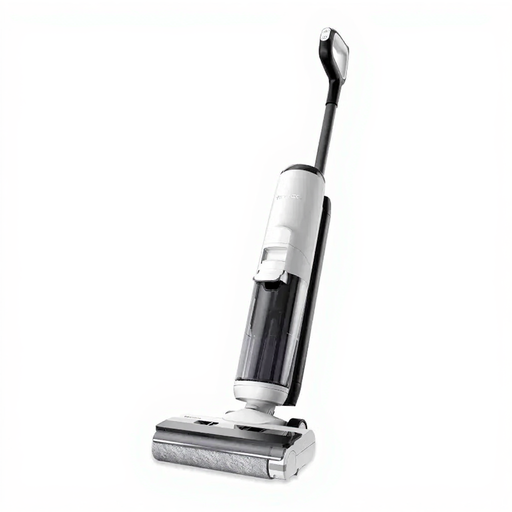
Why this choice suits this profile: It combines suction of dry debris with washing of liquids for the regular maintenance of hard floors, all cordlessly.
The clean and dirty water tanks are separate, while the roller's self-cleaning is triggered with a single press.
Up to 35 minutes of stated battery life, two modes, LED display, and edge cleaning down to 0.5 cm.

Why this choice suits this profile: This electric brush is designed for cleaning the shower, grout, tiled walls, the kitchen, and certain outdoor surfaces.
Its four adjustable handle sections allow you to adapt the working height. The product sheet also indicates IPX8 waterproofing and overload protection.
Nine interchangeable heads, two stated speeds of 300 and 400 rpm, and up to 90 minutes of battery life according to the product sheet.
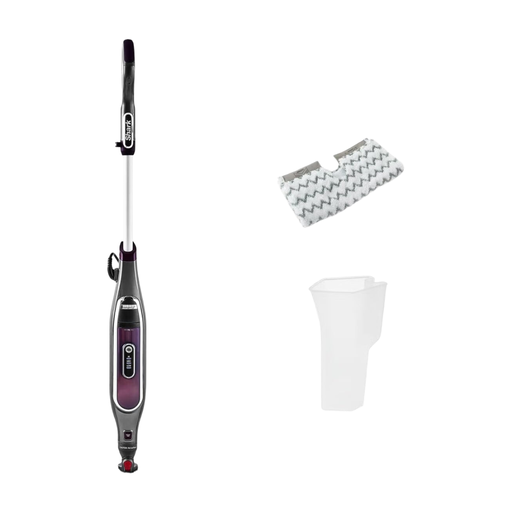
Why this choice suits this profile: This steam mop is suitable for maintaining sealed hard floors if you prefer a corded solution, without detergent.
Its 6 m cable avoids the constraints of a battery. The two washable pads also reduce the need to buy disposable consumables.
Power of 1,200 W, 380 ml tank, heats up in a stated 30 seconds, and adjustable steam flow.
We've put together a comprehensive list, updated in real time, of products that meet these demanding selection criteria and European safety standards.
To keep your floor cleaner performing at its best:
How often you need to replace pads, filters, or brushes depends on usage, the type of dirt, and how well you maintain the appliance. A more sophisticated model may save you some steps, but it still requires regular cleaning.
For large tiled areas, a wet-dry vacuum can remove dust and liquids in a single pass. For grout, corners, and soap scum, an electric brush or a scrubbing brush with a handle usually offers more precise cleaning.
It depends on its power, how long you use it, and the charging time. To keep consumption down, use eco mode when the dirt is light, and avoid leaving the charging station plugged in permanently unless the manual recommends it.
No. A steam mop should only be used on compatible surfaces, typically sealed hard floors. Unvarnished parquet, untreated wood, and certain coverings sensitive to moisture or heat could be damaged. Always check the instructions for your flooring and the appliance before first use.