
Livraison le jour même ou le lendemain

Qualité garantie

Débloquez vos offres de bienvenue: Livraison GRATUITE | Jusqu'à -80 % | 30 jours d'essai gratuits à JoyPlus
Téléchargez l'application
Driven by the Korean cultural wave (Hallyu) and K-dramas, flavored soju has established itself as the trendy, go-to social drink of the moment. With its fruity flavors and moderate alcohol content, it's winning over an ever-growing audience. But with a market that's exploding with options, it can be hard to navigate and avoid disappointment. Some products mask artificial flavors with heaps of sugar, while others fall flat with a disappointing lack of character. This guide is here to help you see clearly and choose the right bottle, without falling for marketing traps.
The boom in popularity for Korean spirits has led to an explosion in the number of available options. To ensure your first tasting isn't a disappointment, here are a few key points to watch out for.
To make sure you get it right, here are a few objective criteria that never fail.
As we've seen, the alcohol by volume (ABV) is an excellent first filter. An ideal flavored soju sits at around 12%. This moderate content makes it enjoyable to sip neat, on the rocks, or as a base for a soju cocktail without the alcohol overpowering the fruit flavors. Stronger versions are often less focused on fruity notes, while those that are too light may lack body.
The quality of a soju depends first and foremost on its alcohol base. Reputable brands like Chum Churum soju use advanced filtration processes to achieve a neutral, smooth spirit that serves as the perfect canvas for flavors. When choosing a flavor, like peach soju or lychee soju, opt for bottles that mention the use of natural juice or extracts, not just "flavorings." This is often a sign of a more authentic and less cloying taste.
While not to say one brand is definitively better than another, turning to established producers like Lotte (Chum Churum), Oppa, or 7Drops is a safe bet. Their production standards ensure consistent quality from one bottle to the next. Their wide range of flavors allows you to explore this world with confidence.
Instead of an exhaustive list, we've selected a few gems for different profiles to help you find the one that's right for you.
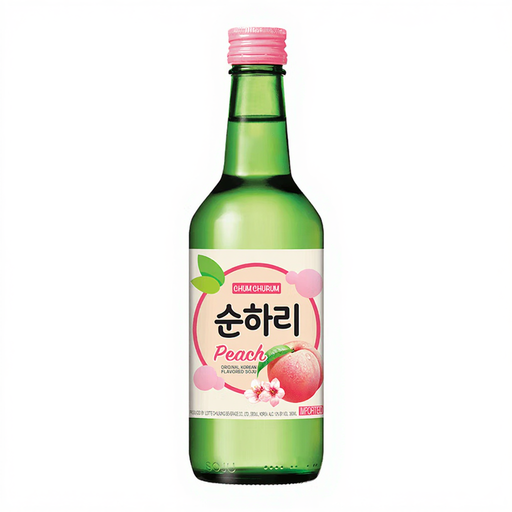
Ideal for getting started with flavored soju. Peach is an iconic flavor—sweet, smooth, and very approachable. It perfectly embodies the balance sought in this type of drink. A safe bet for discovering what a good fruit soju tastes like.
This soju avoids the trap of artificial flavors. Chum Churum uses real peach juice, giving it an authentic taste and well-balanced sweetness, without the chemical aftertaste of entry-level products.
Authentic and balanced peach flavor. Its 12% ABV is perfect for sipping neat or in a simple cocktail.
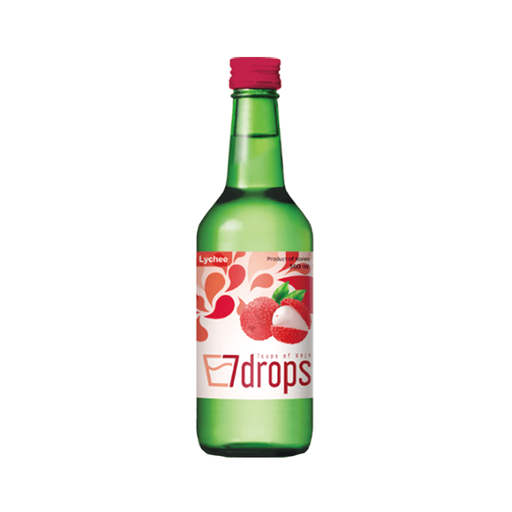
For those who are already familiar with the classics and are looking to venture off the beaten path. Lychee offers a delicate, floral flavor profile that stands out, adding a more sophisticated touch.
This soju doesn't fall into the "liquid candy" trap. Its lychee aroma is present yet refreshing, never cloying. Its base of pear and apple wine lends it a welcome complexity.
An exotic and refined flavor profile. Excellent for creative cocktails or simply for surprising your guests.
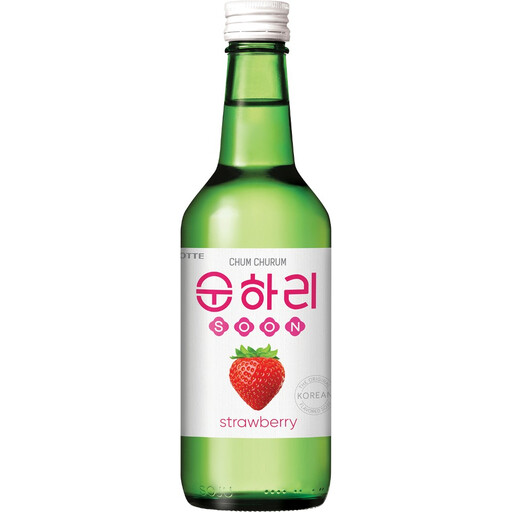
Strawberry is the flavor that's a guaranteed crowd-pleaser. A perfect choice for parties and get-togethers with friends. It's a fun, festive option that lends itself perfectly to large-batch mixing (in pitchers or punch bowls).
By relying on a brand like Chum Churum, you avoid serving a low-quality product to your guests. The taste is sweet yet fresh, without the "cough syrup" quality of some imitations.
A crowd-pleasing and festive flavor. Highly versatile, it's ideal for batch cocktails, especially when mixed with lemonade or sparkling water.
We have selected a full range of products that meet our quality criteria.
Traditionally, it's served chilled in small shot glasses for sipping. You can also drink it on the rocks for a milder version. Finally, it's a fantastic cocktail base: mix it with lemonade, a yogurt-based drink like Calpis, or even beer to make the famous Somaek.
They're almost complete opposites! The fundamental difference lies in their production and origin. Soju is a distilled Korean spirit, which gives it a neutral taste and a higher alcohol content (before flavoring). Sake, on the other hand, is a fermented Japanese rice wine (not distilled). Its flavor profile is more complex and subtle, and its ABV generally ranges from 14% to 16%.
As a spirit, soju doesn't "spoil" like wine once opened. However, for flavored versions, it is highly recommended to keep the bottle in the refrigerator and consume it within a few weeks of opening. The fruit flavors, especially if they are natural, can lose their freshness and intensity when exposed to air.
Alcohol abuse is dangerous for your health; consume in moderation. The consumption of alcoholic beverages during pregnancy, even in small quantities, can have serious consequences for the child's health.