When choosing a washing machine for occasional evening use in a flat, first compare its stated spin-cycle noise level and acoustic class, then check its capacity, dimensions and programming options. ADEME describes acoustic classes A and B as particularly quiet, but this rating doesn’t guarantee there’ll be no vibrations: a stable installation and an evenly distributed load matter too.
Who is this choice for?
People with neighbours nearby
If you sometimes run a wash in the evening, compare the stated spin-cycle noise level without confusing it with the vibrations you may feel in your home. A stable installation is still important: Electrolux notes that incorrect levelling and an unevenly distributed load can cause noise and vibrations during the spin cycle.
People living in a small flat
A shallow front-loading model or a top-loader may suit different space constraints. Measure the space and clearance you’ll need, then choose a capacity that suits the amount of laundry you usually wash.
People who schedule their washing
Check how the delay-start function works on the model you’re considering and when the programme will reach the spin cycle. Scheduling the start of a cycle doesn’t make it quieter.
Which features should you check?
Start with the specifications you can compare across models, then check their dimensions and programming options against your home and schedule.
| Feature |
What to check |
How it suits my needs |
| Spin-cycle noise |
Compare the stated noise emissions in dB and the acoustic class for each exact model. The European Commission says this information is shown on the energy label; ADEME describes classes A and B as particularly quiet. |
My wash cycles may reach the spin stage while my neighbours are at home. I want to compare machines using the same stated measure, without assuming it guarantees quiet operation in my flat. |
| Vibrations |
Check the manual for instructions on removing transport bolts, levelling the machine and loading it. Electrolux and Bosch highlight the importance of these checks to help prevent shaking during the spin cycle. |
I want to minimise banging and movement from the machine, not just choose a noise figure from a label. |
| Programming |
Check whether the machine has a delay-start function, its available settings and the duration of your chosen programme. Delay start sets when the cycle begins, not how noisy it is. |
If I schedule a wash in the evening, I need to know when it will start and when the spin cycle is likely to happen. |
| Dimensions |
Measure the width, depth and height, as well as access routes and the clearance needed for connections and opening the door or lid. A shallow front-loader and a slim top-loader suit different space constraints. |
Space is tight on depth or width, so I need to check the full installation requirements, not just one advertised measurement. |
| Capacity and spin performance |
Match the capacity in kg to the amount of laundry you usually wash. Consider the spin-drying efficiency class separately from noise: the maximum speed in tr/min isn’t enough to judge how noisy a machine will be. |
I’m looking for a capacity that suits my usual loads, without having to run more cycles or assuming a faster spin will be quieter. |
Mistakes to avoid
-
Relying only on revolutions per minute or the word “quiet”
The spin speed and a description of the motor don’t tell you the model’s stated noise level on their own.
Compare the dB rating and acoustic class on the label for each model, then look separately at its spin-drying efficiency class.
-
Assuming the label guarantees there’ll be no shaking
According to Electrolux support, transport bolts left in place, incorrect levelling or an unevenly distributed load can cause noise and vibrations during the spin cycle.
Before first use, have the machine installed according to its manual, then check that it’s stable and the laundry is evenly distributed.
-
Choosing a compact model without measuring the space
The machine’s dimensions alone don’t tell you how much room you’ll need for access, opening it and making the connections.
Measure the access route and the full installation space before choosing between a shallow front-loader and a slim top-loader. Also check that its capacity suits your usual loads.
-
Counting on delay start to reduce disruption
This function delays the start of the programme, but doesn’t reduce the noise or vibrations of the spin cycle.
Estimate when the spin cycle will happen, check the installation and consider the rules in your building before scheduling a late wash.
A guide to the brands
These specifications apply to the models mentioned, not to every washing machine from each brand.
Bosch
A brand to consider if you’re looking for a front-loader and want to compare a model’s capacity, spin performance and maintenance details.
- Bosch lists a capacity of 8 kg and a maximum speed of 1 400 tr/min for the WUU28T18FR.
- Bosch says spare parts for its washing machines are generally available for 15 years.
- These figures don’t describe the noise or vibrations of every Bosch model.
Electrolux
Two models with published specifications let you look at depth and width constraints separately.
- Electrolux lists a 6 kg capacity, a depth of 411 mm and a 20 h delay-start function for the EW6S3626XA front-loader.
- The brand lists a width of 400 mm and a 20 h delay-start function for the EW7T3632PA top-loader.
- These dimensions and programming options don’t tell you how much the machine will vibrate in a flat.
Whirlpool
The TWB721SENSEWASHFR is a top-loader worth considering, taking its stated spin-cycle noise level into account.
- Whirlpool lists a spin-cycle noise level of 76 dB for this model.
- Check the model’s product information for its dimensions and features rather than assuming they apply to other Whirlpool washing machines.
Beko
The BTL1WFP10652FR has specifications you can compare against your space and noise requirements.
- Beko’s product information lists a 6,5 kg capacity, a maximum speed of 1 200 tr/min and a stated noise level of 78 dB.
- Describing the motor as quieter doesn’t replace checking the stated noise level for this particular model.
Washing machines available on Joybuy
This selection includes two front-loading washing machines and one top-loader. For each model, check its dimensions against your available space and review the spin-cycle noise level, programming options and installation instructions for the exact model before planning late-night washes.
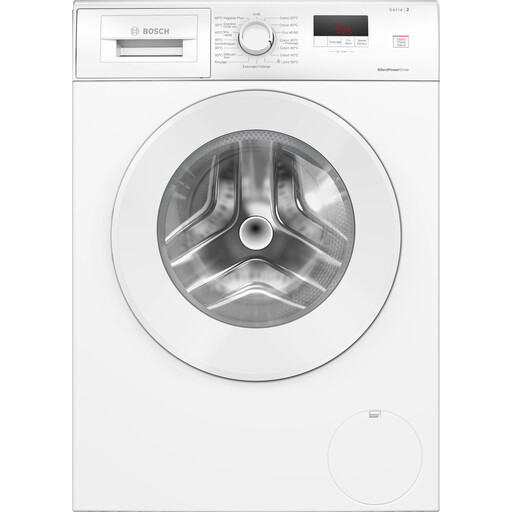 Image unavailable
Bosch WGE02407FR front-loader, 7 kg, 1 400 tr/min
Compare this 7 kg front-loader with the amount of laundry you usually wash. For evening use, check its spin-cycle noise level on the energy label and consult the manual for programming and installation details.
View on Joybuy
 Image unavailable
Electrolux EW7FI259160V front-loader, 9 kg, 1 600 tr/min
Its 9 kg capacity is worth comparing with your usual loads and the space you have available. The stated 1 600 tr/min isn’t enough to judge how noisy it is: check the energy label for its spin-cycle noise level and consult the manual for programming details.
View on Joybuy
 Image unavailable
Candy TCA464TM4-S ProWash 500 top-loader, 6 kg, 1 400 tr/min
If you’re considering a top-loader, measure the available width and clearance for opening the lid before choosing this 6 kg model. For evening cycles, compare its stated spin-cycle noise level and check the manual for the conditions of your chosen programme.
View on Joybuy
Frequently asked questions
Does the noise level on the label also include vibrations?
No. The energy label lets you compare the stated noise emissions during the spin cycle, but this figure doesn’t describe the shaking you may feel in your home. Electrolux says that installation and how the load is distributed can also cause noise and vibrations.
Will a slower spin be quieter?
Not necessarily. Compare the model’s stated spin-cycle noise level rather than relying only on tr/min, then consider its spin-drying efficiency class separately, based on your drying needs.
What should I check before the first cycle?
Follow the model’s manual to remove the transport bolts and stabilise the machine. Bosch recommends adjusting the feet to level it. Also check the hoses and avoid overloading the machine or distributing the laundry unevenly.
Does delay start make an evening wash quieter?
No. It lets you choose when the cycle starts, but doesn’t reduce the noise of the spin cycle. Before scheduling a late wash, estimate when this stage will happen, check the installation and consider the rules in your building.


