People who dry their laundry indoors
If you often dry laundry inside your home, spin efficiency is an important factor. ADEME recommends checking the rating on the energy label to find a machine that leaves less water in your laundry.


Start by choosing a capacity that suits your usual laundry loads, then compare spin efficiency ratings and spin-cycle noise. ADEME says that 7 kg is usually sufficient and recommends an A spin efficiency rating to help laundry dry faster indoors. A front-loading machine needs enough depth and room for the door to open; a top-loader may suit a narrow space, while a washer-dryer means checking the washing and drying capacities separately.
If you often dry laundry inside your home, spin efficiency is an important factor. ADEME recommends checking the rating on the energy label to find a machine that leaves less water in your laundry.
If you wash clothes near a bedroom or a shared wall, compare the stated noise level during the spin cycle. Installation and load balance matter too: a decibel rating alone cannot guarantee that you won’t feel vibrations in your home.
In a narrow kitchen or a small bathroom, measure the space available and the clearance needed to open the door or lid before choosing between a front-loader, a top-loader and a washer-dryer. A washer-dryer’s drying capacity must also suit your loads.
When choosing a washing machine for a flat, start with the space available and your usual laundry loads. Then compare the models that fit your priorities for drying and noise.
| Criteria | What to check | Who is this for? |
|---|---|---|
| Spin cycle and drying laundry indoors | Spin efficiency rating on the energy label; spin speeds available on the programmes you usually use. | If I often dry laundry in my flat, I want it to retain less water after washing. Around 33% of consumers make spin performance a priority. |
| Noise and vibrations | Noise level and acoustic class during the spin cycle; the model’s installation instructions. | If the machine runs near living areas or neighbours, I mainly want to minimise noise during the spin cycle. This is a priority for around 27% of consumers. |
| Drum capacity | Capacity in kg compared with your usual loads; stated energy and water consumption for comparable models. | For regular laundry, I want a capacity that avoids splitting my washing across too many cycles, without choosing an unnecessarily large drum. Around 20% of consumers prioritise this balance. |
| Space and type of opening | Dimensions and clearance for opening; for a washer-dryer, separate washing and drying capacities. | In a narrow space, I need to be able to install and open the machine. If I’m considering a washer-dryer, its drying capacity matters too. This is the top priority for around 20% of consumers. |
A drum that’s too small can mean more cycles, but a large drum won’t necessarily suit smaller loads. ADEME says that 7 kg is sufficient most of the time, but this isn’t a rule for every household.
Think about how much laundry you wash between loads, and factor in any bedding or bulky fabrics you regularly wash.
The maximum spin speed doesn’t tell you on its own how much water will remain in your laundry. For indoor drying, ADEME recommends choosing an A spin efficiency rating.
Compare the spin efficiency rating on the energy label, then check the spin speeds available on the programmes you’ll use.
The two capacities can differ. For example, LG lists a washing capacity of 8.5 kg and a drying capacity of 5 kg for its F852SV52IRS.
Compare the maximum washing and drying loads separately, as well as the full-cycle figures on the energy label for the model you’re considering.
If the washing load exceeds the drying capacity, you’ll need to remove some laundry or split it across drying cycles.
The stated noise level during the spin cycle makes it easier to compare machines, but it can’t predict on its own how much vibration will travel through the floor or result from an incorrectly levelled installation.
Compare the acoustic figures, install the machine according to its instructions and avoid repeatedly running it in a way that could disturb your neighbours.
These examples of ranges and models give you an idea of the formats available. Check the specifications of the exact model before you choose.
Bosch’s range of front-loading machines includes capacities from 7 to 10 kg. Compare these with your usual loads and the space available.
An Electrolux top-loader may be worth considering if width is the main obstacle to installation.
LG washer-dryers are worth considering if combining washing and drying in one appliance would help you save space.
The WEA125 WCS 8kg Active front-loader is one example of an 8 kg capacity in the Miele range.
These models include front-loading machines for drying laundry indoors, as well as washer-dryers to consider if combining washing and drying would help you save space.
 Image unavailable
Worth comparing if your usual loads call for an 8 kg capacity and you have enough room to open a front-loader’s door. The model name indicates a maximum spin speed of 1,400 rpm; its spin efficiency rating is B, rather than the A rating ADEME recommends to help laundry dry faster indoors. Check that there’s enough clearance for the door in your chosen space.
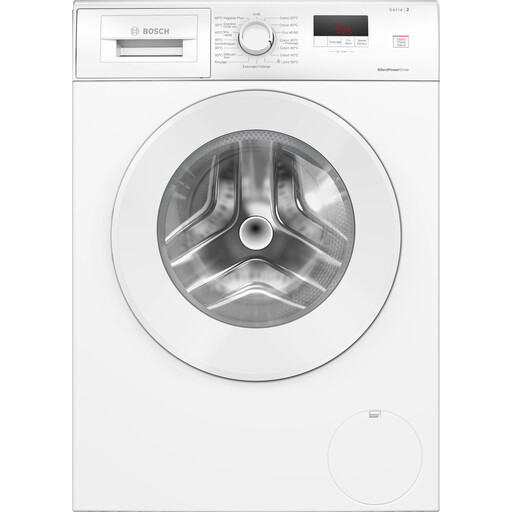 Image unavailable
Its 7 kg capacity matches ADEME’s guideline, which it says is often enough for everyday laundry, though you should check this against your own loads. The model name indicates 1,400 rpm, but its spin efficiency rating is B. Check its stated depth of 59 cm, or 63.2 cm including the door, and make sure there’s room to open it.
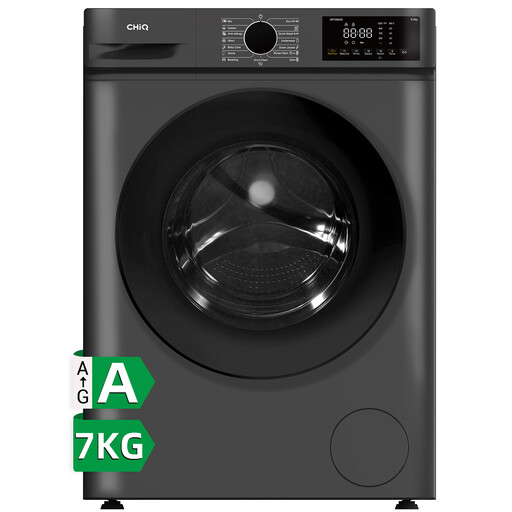 Image unavailable
Worth considering if a 7 kg capacity suits your routine and you have limited depth available. The model is listed at 1,200 rpm with a stated depth of 47 cm. Check its width, height and door clearance too. If you dry laundry indoors, check the spin efficiency rating and spin-cycle noise on the energy label to see how well it suits your needs.
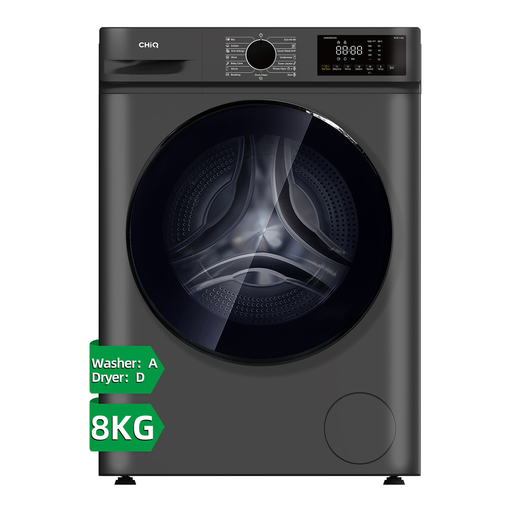 Image unavailable
Consider this washer-dryer if you want to wash and dry with the same appliance. Its stated capacity is 8 kg for washing and 5 kg for drying, so a full washing load will need to be reduced before drying. The model name indicates 1,400 rpm. Before deciding where to put it, confirm the exact dimensions of this variant, as the stated width figures differ. Then check its noise level and spin efficiency rating.
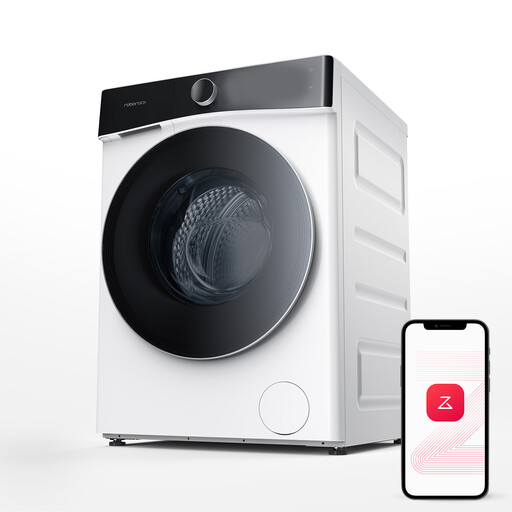 Image unavailable
Worth considering if your loads call for a washer-dryer with this capacity. The model name indicates a washing capacity of 10 kg and a drying capacity of 6 kg, so a full washing load won’t fit into one full-capacity drying cycle. Check the dimensions against your available space, along with the spin, noise and energy consumption figures for the cycles you plan to use.
ADEME says that 7 kg is sufficient most of the time. Still, choose a capacity that suits the laundry you actually wash between cycles, especially if your household regularly washes bedding or bulky fabrics.
Start by checking the spin efficiency rating on the energy label. ADEME recommends choosing an A rating to help laundry dry faster indoors. Also compare spin-cycle noise if the machine will run near living areas or neighbours.
In France, Article R1336-5 of the Public Health Code, published by Légifrance, prohibits any specific noise from disturbing neighbours’ peace or affecting their health through its duration, repetition or intensity. Check the rules that apply to your home too, and avoid repeated spin cycles that could disturb your neighbours.
A washer-dryer may take less laundry for drying than it can wash. For example, LG lists a washing capacity of 8.5 kg and a drying capacity of 5 kg for the F852SV52IRS. Check both capacities and the full-cycle figures for the model you’re considering.