People who dry laundry on an airer
If you mainly dry your laundry indoors, consider your washing machine’s spin-drying efficiency and noise levels. Anses advises placing the airer in a well-ventilated room when outdoor drying isn’t possible.


If you mainly dry your laundry on an airer, choose a washing machine that suits your loads and compare its spin-drying efficiency class and noise levels. ADEME recommends class A spin-drying efficiency to help laundry dry quickly indoors. If you want to dry clothes in a machine, a washer-dryer is a practical choice when you only have space for one appliance, but its drying capacity may be lower than its washing capacity. A separate tumble dryer needs more space and must be installed in line with the instructions. In all cases, Anses advises drying laundry in a well-ventilated room when outdoor drying isn’t possible.
If you mainly dry your laundry indoors, consider your washing machine’s spin-drying efficiency and noise levels. Anses advises placing the airer in a well-ventilated room when outdoor drying isn’t possible.
A washer-dryer lets you wash and dry your clothes in the same space. Compare its washing and drying capacities separately, and check how long the full cycle takes for your usual loads.
A separate tumble dryer has a dedicated drying capacity. Measure the available space and check the manual for installation requirements, access for maintenance and how the model handles water.
Start with the amount of laundry you need to wash and the space available, then compare spin performance, noise and drying requirements.
| Factor | What to check | Depending on your needs |
|---|---|---|
| Spin cycle | Compare the spin-drying efficiency class on the label and the noise level during this phase. Don’t judge how much moisture will remain based on the number of revolutions per minute alone. | I dry my laundry on an airer, so I want to know the model’s spin-drying efficiency before choosing. ADEME recommends prioritising class A when laundry needs to dry quickly indoors. |
| Capacity and cycles | Choose a washing capacity that suits your household’s usual loads. For a washer-dryer, also compare its drying capacity and the length of the full cycle. | I’d prefer not to do more loads than necessary, but I won’t put more laundry in to dry than the machine’s drying capacity allows. |
| Space and installation | Measure the available space, the route to it and the clearance needed to open the door or lid. For a separate tumble dryer, check the manual for installation and maintenance requirements, and how it handles condensed water. | Only have room for one appliance? I’ll compare washer-dryers. If I can fit two appliances, I can also consider a separate tumble dryer. |
| Noise | Compare noise levels published for the same part of the cycle, particularly the spin cycle. Also check the levelling instructions in the manual. | If the appliance is near a living area or a neighbour, noise during the spin cycle matters just as much as the washing machine’s other features. |
| Ventilation | If you use an airer, choose a well-ventilated room and don’t block existing ventilation. Anses recommends a well-ventilated room when outdoor drying isn’t possible. | If I often dry laundry indoors, I need to consider how well the room is ventilated, whatever washing machine I choose. |
Its drying capacity may be lower. For example, Electrolux lists 10 kg for washing and 6 kg for drying on the EW9W1165RC. So a full washing load can’t be dried all at once in this model.
Compare both capacities and the length of the wash-and-dry programme for the model you’re interested in.
Maximum spin speed doesn’t tell you everything about spin-drying efficiency, which can vary depending on the programme, load and fabrics.
Check the spin-drying efficiency class and noise level on the label, then look at test results for the model if available.
You’ll also need to get the appliance into place, open its door and access the parts that need maintenance. Dimensions and water management vary from model to model.
Measure the delivery route and the space where it will go, then check the required clearances and installation instructions for the exact model.
ADEME describes air-drying laundry as a major source of moisture in indoor air. Anses advises using a well-ventilated room when you can’t dry your laundry outdoors.
Choose a well-ventilated room for drying laundry and keep your home’s ventilation running as normal.
The specifications below apply to the models mentioned, not to every appliance from each brand.
Bosch offers washer-dryers and separate tumble dryers. Compare the capacity and dimensions of each model individually.
The range includes washer-dryers and heat pump tumble dryers, with capacities that vary by model.
Miele’s range includes separate heat pump tumble dryers with capacities of 8 kg and 9 kg, depending on the model.
This selection includes washing machines for laundry you’ll dry on an airer afterwards, and washer-dryers for homes with space for just one appliance.
 Image unavailable
If you want to wash and dry with a single appliance, compare the amount of laundry you want to dry with its stated capacities: 11 kg for washing and 6 kg for drying. You’ll need to remove some laundry before drying a full-capacity wash load. Also check the installation requirements for your space.
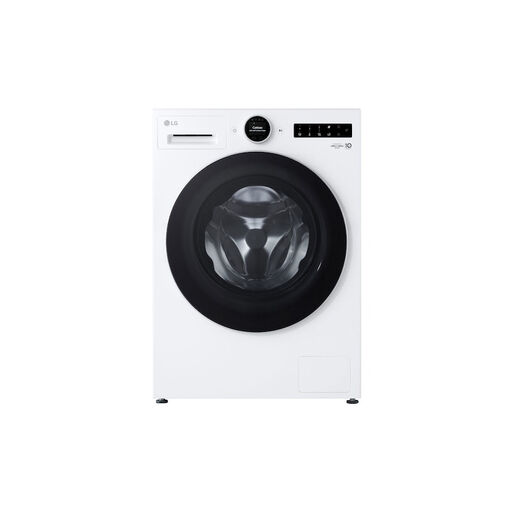 Image unavailable
Its stated 11 kg capacity should be considered alongside your household’s usual loads. This washing machine doesn’t dry laundry, so if you use an airer, compare its spin-drying efficiency and noise levels too, then check the installation requirements.
 Image unavailable
A top-loading machine is worth considering if space is tight, as long as there’s enough clearance above it to open the lid. Its stated capacity is 7 kg and the maximum speed shown in the product name is 1 200 tr/min. Before drying your laundry on an airer, also compare the spin-drying efficiency class and noise levels.
 Image unavailable
This appliance combines washing and drying, with a stated capacity of 10 kg for washing and 6 kg for drying. If you wash a load weighing more than 6 kg, you’ll need to remove some of it before drying. Also compare the length of the full cycle, spin performance and noise levels for your needs.
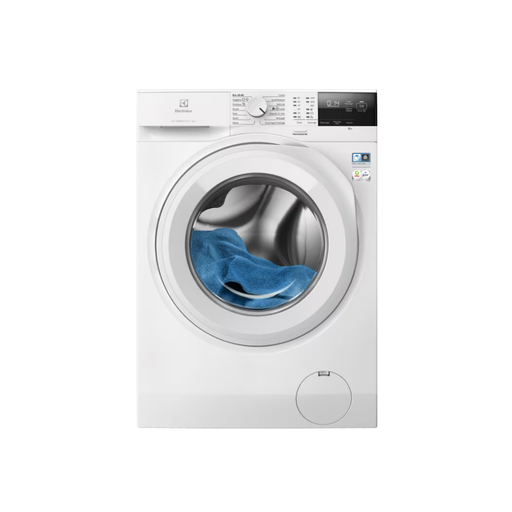 Image unavailable
With a stated capacity of 8 kg, this model is worth comparing with your household’s usual laundry loads. Its stated maximum speed is 1 400 tr/min, but that alone doesn’t tell you how efficiently it spins. Your laundry will then need to dry on an airer or in a separate appliance.
No. When outdoor drying isn’t possible, Anses advises drying laundry in a well-ventilated room. Don’t block any existing ventilation systems.
Not necessarily: compare its washing and drying capacities. For example, Electrolux lists 10 kg for washing and 6 kg for drying on the EW9W1165RC, so a full 10 kg wash load is more than it can dry in one go.
First compare the spin-drying efficiency class, then the noise level during the spin cycle and a capacity suited to your loads. ADEME recommends prioritising class A spin-drying efficiency when laundry needs to dry quickly indoors.
No. You’ll need to check the available space and the installation instructions for your chosen model, including access for maintenance and how it handles water. For example, Bosch lists dimensions of 842 × 598 × 613 mm and a water drain hose for the WQG2450SFR.
No. Compare the published noise level for the part of the cycle that matters to you, especially the spin cycle, rather than relying on a label alone. Que Choisir includes noise in its washing machine tests and flags the spin cycle as one to watch.