If you only have space for one appliance and want to wash and dry your laundry in one go, a washer-dryer could be a good fit, as long as you keep the load within its drying capacity, which is often lower than its washing capacity. Consider separate appliances if you regularly dry large loads and have space for a second machine. If you use a clothes airer, choose a washing machine that suits your loads and make sure the room is well ventilated.
Who are these options best suited to?
Space for just one appliance
A washer-dryer combines both functions, but you’ll need to compare its washing and drying capacities separately. UFC-Que Choisir points out that the drying capacity is lower than the washing capacity. Check how much laundry you can actually get dry in a single wash-and-dry cycle.
Regularly drying full loads
If you need to dry bedding, towels or consecutive loads without splitting them up, compare a washing machine and tumble dryer with capacities that suit your needs. This option does require space for both appliances, or an approved stacking setup that complies with the manufacturers’ instructions.
Mostly drying laundry on an airer
Your washing machine’s spin efficiency and noise level matter, but so does the room where you dry your laundry. ADEME notes that air-drying releases a lot of moisture into the air indoors, so make sure you have a well-ventilated space.
What should you check before choosing?
Washing machine and airer
Worth considering: if you have a suitable room for air-drying but no space for a tumble dryer.
The trade-off: drying depends on ventilation and how much time you have. According to ADEME, air-drying increases indoor humidity.
Washer-dryer
Worth considering: if you can only install one appliance and want to wash and dry your laundry in one go.
The trade-off: for the models cited by Bosch, Miele and Electrolux, the drying capacity is lower than the maximum washing capacity, so you may need to split a large load.
Two separate appliances
Worth considering: if you regularly dry large loads and have room for both appliances.
The trade-off: you’ll need to allow for the space and installation requirements, as well as transferring laundry between the appliances.
First, measure the space. Then compare appliance capacities and energy label details with the way you usually wash and dry your laundry.
| Factor |
What to check |
What I need |
| Usable capacity |
Compare the washing capacity in kg with your usual loads, then check the drying capacity separately. If you’re buying two appliances, compare their respective capacities. |
I want to avoid running half-empty drums, but I also don’t want to have to remove some of the laundry before drying. |
| Air-drying and spin efficiency |
Check the spin efficiency and find a well-ventilated room for your airer. Consider how much space your laundry will take up while it dries. |
If I’m drying laundry at home, I need to be able to hang it up without taking over a closed room for a long time. |
| Dimensions and noise |
Measure the depth, access route and door opening, not just the width. Check the model’s noise level during the spin cycle and, if applicable, while drying. |
If the machine is close to my living space, it needs to fit the available space and be suitable for the times I plan to use it. |
| Energy and water |
For a washer-dryer, look at the figures for washing alone separately from those for a wash-and-dry cycle. The European Commission says the label includes details such as energy, water, cycle duration and noise. Compare like-for-like cycles. |
I want to check the consumption of the cycle I’ll actually use, rather than assuming that the washing efficiency rating also tells me how efficient the drying cycle is. |
| Durability |
Check the information shown for the exact model. According to the French ministry responsible for ecology, the durability index has been gradually replacing the repairability index for washing machines in France since 8 April 2025. |
I want to check the relevant rating for the appliance I choose, rather than relying on a general claim from the brand. |
Which mistakes should you avoid?
-
Looking only at a washer-dryer’s washing capacity in kg
For the Bosch WNG24402FR and Electrolux EW7IW4966BG models, the manufacturers state a washing capacity of 9 kg, but a wash-and-dry capacity of 6 kg. So a 9 kg wash load won’t dry completely in a continuous cycle within the stated capacity.
Note both capacities for each model and, most importantly, compare the drying capacity in kg with your usual load.
-
Planning to use an airer without considering ventilation
ADEME identifies air-drying laundry as a significant source of indoor humidity. The size and ventilation of the room are therefore important when choosing this option.
Before relying on indoor drying, find a spot in a well-ventilated room or one with suitable extraction.
-
Comparing the washing-only rating with a complete cycle
A washer-dryer may show separate information for washing alone and for washing and drying. A good rating for the former doesn’t tell you everything about the latter, as the published figures for the Electrolux EW7IW4966BG show.
Compare the energy, water and duration figures for the same type of cycle on the labels of the models you’re considering.
-
Measuring only the width of the space
The depth, door opening and access to connections can all prevent an appliance from fitting in the space you’ve planned for it. If you’re buying a separate tumble dryer, you’ll also need to consider how to manage the condensed water, depending on the model.
Measure the appliance and the route to its final position, then check the installation instructions and the delivery options you’ve selected.
A few examples from popular brands
These manufacturer examples show which features to compare for a specific model. They don’t necessarily apply to other models from the same brand.
Bosch
Bosch lists a washing capacity of 9 kg and a wash-and-dry capacity of 6 kg for the WNG24402FR. Its WQH246CSFR heat pump tumble dryer is listed with a capacity of 9 kg.
- These two models make it easy to compare capacities for two different setups.
- Check the dimensions and noise levels of each model before planning an installation.
Miele
Miele lists a washing capacity of 8 kg and a drying capacity of 5 kg for its WTD160 WCS WT1 washer-dryer.
- The two capacity figures help you work out how much laundry you can wash and dry in one continuous cycle.
- These figures apply to this model, not to every Miele washer-dryer.
Electrolux
Electrolux lists a washing capacity of 9 kg and a drying capacity of 6 kg for its SteamCare 700 EW7IW4966BG washer-dryer.
- For this model, the product information lists separate ratings for washing alone and for washing and drying.
- Also check the dimensions and installation requirements of the model you’re considering.
Laundry options on Joybuy
These two appliances suit different needs in a flat: a washer-dryer lets you wash and dry with one appliance, while a washing machine can be paired with a suitable airer.
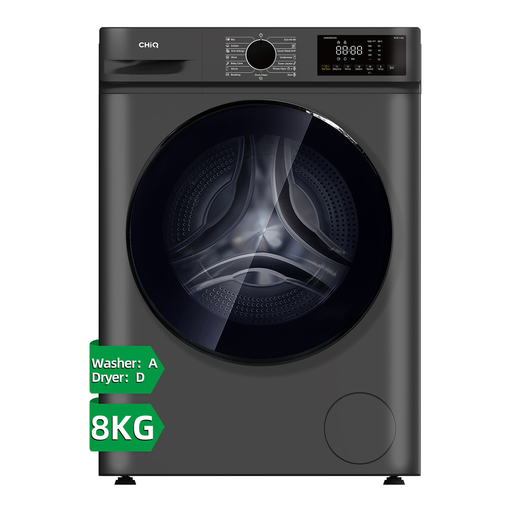 Image unavailable
CHiQ JW85882HG washer-dryer, 8/5 kg
This washer-dryer combines washing and drying in one appliance, making it a practical option if you only have space for one machine.
Listed capacities: 8 kg for washing and 5 kg for drying. To run both cycles without removing any laundry, keep the load within the drying capacity.
The listed dimensions for this model are inconsistent, so ask the retailer to confirm the width and depth before planning its installation. Also check the energy label for the exact model to compare the wash-and-dry cycle.
View on Joybuy
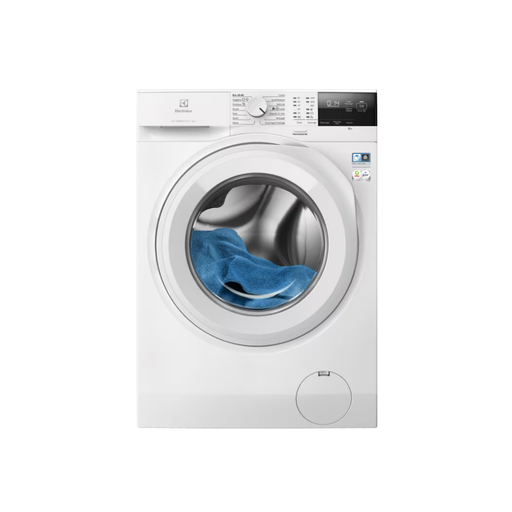 Image unavailable
Electrolux EW6FI4805AW washing machine, 8 kg, 1 400 tr/min
You can pair this washing machine with an airer if you have a sufficiently well-ventilated room.
The product title lists a capacity of 8 kg and a spin speed of 1 400 tr/min. This machine doesn’t dry laundry mechanically, so make sure you have room to hang it up. Also check whether the noise during the spin cycle suits the times you plan to use it.
View on Joybuy
Frequently asked questions
Why won’t a 9/6 kg washer-dryer dry 9 kg of laundry?
The two figures refer to different capacities. For the Bosch WNG24402FR and Electrolux EW7IW4966BG models, the manufacturers list a washing capacity of 9 kg and a wash-and-dry capacity of 6 kg. To run both cycles without removing any laundry, limit the load to 6 kg for these models.
What should you compare on the energy labels of two washer-dryers?
Compare figures for the same cycle, including the efficiency rating, energy use per 100 cycles, water use per cycle and duration. The European Commission explains that washer-dryer labels show the information you need to make these comparisons. The washing-only rating doesn’t describe the wash-and-dry cycle.
Can you dry laundry in a small, closed room?
It’s better to use a ventilated space than to rely on a small, closed room. ADEME notes that air-drying releases a lot of moisture into the air indoors, so make sure your chosen room is well ventilated or has suitable extraction.
Which durability index should you check for a washing machine in France?
Check the index shown for the specific model. According to the French ministry responsible for ecology, the durability index has been gradually replacing the repairability index for washing machines in France since 8 April 2025. Don’t assume that the rating for one model applies to another.


