If you have a suitable, well-ventilated room where you can hang your washing, choose a washing machine with an efficient spin cycle. ADEME recommends spin efficiency class A when you need clothes to dry quickly indoors. If a clothes airer would take up space in your home on a permanent basis, a washer-dryer combines both functions in one appliance, although its drying capacity may be lower than its washing capacity. If you do laundry frequently, two separate appliances let you wash one load while another dries, provided you have a suitable installation. A heated airer is another option, but make sure you have room for it and follow the instructions for use.
Who are these set-ups for?
Renters with space for just one appliance
If you can only install one full-size appliance and want to avoid having a clothes airer permanently in your living space, compare drying capacity, the duration of a full cycle and the depth required, including connections.
Households that use an indoor clothes airer
If you have room to hang your washing but want to cut down drying time, look at the washing machine’s spin efficiency and noise level. The room you choose matters too: ADEME points out that drying clothes indoors adds moisture to the air.
Busy households with a dedicated laundry space
If you need to get through several loads, two appliances let you wash and dry different loads at the same time. However, stacking them requires compatible appliances and a suitable stacking kit.
What sets the options apart?
Start by measuring the space and deciding where your washing can dry, then compare capacities and the figures for the cycle you’ll actually use. You could also consider a heated airer, but you’ll still need suitable ventilation for drying clothes indoors.
| What matters |
What to check |
Who is it for? |
| Available space |
Measure the depth, allowing for connections and door clearance; check the washing and drying capacities separately. |
When there’s room for just one appliance in my flat, I want to avoid having a clothes airer take up space in the living room. Around 36% of consumers put saving space first. |
| Drying and humidity |
Compare the spin efficiency class and make sure the room you plan to use for drying is well ventilated or has an extractor fan. |
If my washing dries indoors, I want to spend less time waiting for it to dry on the airer without letting moisture build up. This is the main concern for around 29% of consumers. |
| Getting through several loads |
Consider your usual loads and whether you have room for two appliances. If stacking them, check that the machines and stacking kit are compatible. |
When I have several loads to do, I don’t want to wait for the drying cycle to finish before starting another wash. Around 21% of consumers prioritise being able to get through loads this way. |
| Noise and everyday use |
Compare spin-cycle noise, as well as water and energy use and cycle duration for the relevant programme, particularly the wash-and-dry cycle on a combined appliance. |
If my machine is near a living space, I look first at its noise level and the resources used by my usual cycles. Around 14% of consumers prioritise these everyday considerations. |
What should you avoid before buying?
-
Assuming washing capacity is the same as drying capacity
A washer-dryer may be able to wash more laundry than it can dry in one go. For example, LG lists a washing capacity of 8.5 kg and a drying capacity of 5 kg for the F852SV52IRS model.
Choose an appliance based on the load you want to dry, and check both capacity limits for the model you’re considering.
-
Relying on the spin cycle without planning for ventilation
An efficient spin cycle won’t prevent moisture from being released by clothes hung up to dry. ADEME notes that drying clothes indoors adds moisture to the air; a poorly ventilated room can encourage condensation and mould.
Before relying on a clothes airer as your main solution, make sure you have a well-ventilated room or a suitable extractor.
-
Comparing washer-dryers on the wash cycle alone
Washing figures alone don’t tell you how long a wash-and-dry cycle takes or how much it uses.
Alongside the figures for washing alone, compare the wash-and-dry cycle information on the energy label and product specifications.
-
Assuming that two machines can be stacked
Stacking kits have specific requirements for the appliances they’re designed for. For one of its kits, Electrolux specifies front-loading machines with a depth of 47 to 60 cm and advises checking compatibility.
Before planning a stacked installation, check the model numbers and dimensions of both appliances, as well as the kit recommended by the manufacturer.
Brands to know
Bosch
Bosch offers front-loading washer-dryers in France, including a model listed with a washing capacity of 10.5 kg and a drying capacity of 6 kg.
- The separate capacity figures make it easy to check how much laundry you can dry compared with how much you can wash.
- When comparing models, also check the cycle duration, energy and water use, and noise level listed for each one.
LG
LG offers the slim F852SV52IRS model, listed with a washing capacity of 8.5 kg and a drying capacity of 5 kg.
- Its slim design is worth considering if depth is an issue in your alcove.
- The drying capacity is limited to 5 kg for this model. Also measure the space needed for connections and to open the door.
Electrolux
Electrolux offers both washer-dryers and kits for certain installations with two front-loading appliances.
- The EW9W1166RA2 washer-dryer is listed with a washing capacity of 10 kg and a drying capacity of 6 kg.
- You’ll need to confirm that a stacking kit is compatible with the specific appliance models; you can’t assume compatibility based on the brand alone.
Washer-dryers available on Joybuy
These appliances combine washing and drying in one machine, making them a good option if you don’t have room for two. Before choosing, compare their drying capacity with the size of your usual loads.
 Image unavailable
Samsung WD11DG6B85BEU3, 11 kg wash capacity and 6 kg drying capacity
Worth considering if you want to combine washing and drying in one appliance and often wash large loads. It has a listed washing capacity of 11 kg and a drying capacity of 6 kg, so you’ll need to reduce a full wash load before drying it.
View on Joybuy
 Image unavailable
Samsung WD10HG6U34BEU3, 10 kg wash capacity and 6 kg drying capacity
If you want to wash and dry without setting aside space for two appliances, this model has a listed washing capacity of 10 kg and a drying capacity of 6 kg. If you plan to use both functions one after the other, check the duration and energy use of the full cycle, as well as the space needed for installation.
View on Joybuy
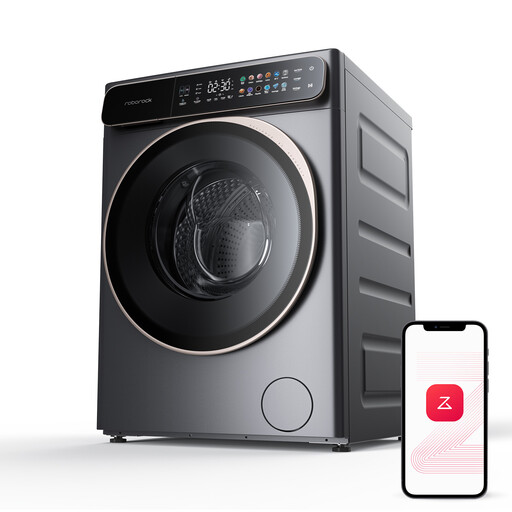 Image unavailable
Grey Roborock Zeo One, 10 kg wash capacity and 6 kg drying capacity
This washer-dryer is worth considering if you want both functions in one appliance. It has a listed washing capacity of 10 kg and a drying capacity of 6 kg. Check its dimensions and the full-cycle figures before deciding where to install it or comparing how it will suit your needs.
View on Joybuy
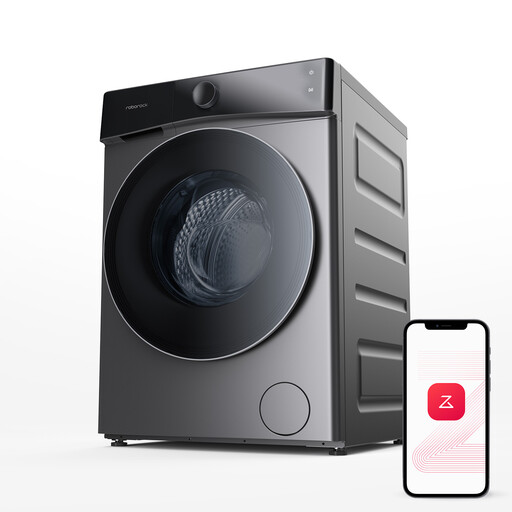 Image unavailable
Grey Roborock Zeo Lite, 10 kg wash capacity and 6 kg drying capacity
Another combined option if you want to avoid installing two machines, the Zeo Lite has a listed washing capacity of 10 kg, a drying capacity of 6 kg and 27 wash programmes. Check the dimensions and compare the duration and energy use of the wash-and-dry cycle for your needs.
View on Joybuy
Frequently asked questions
What should I look for if I dry clothes on an indoor airer?
Check the spin efficiency class: ADEME recommends choosing class A when you need clothes to dry quickly indoors. If your machine is near a living space, also compare spin-cycle noise and make sure you have a well-ventilated place to hang your washing.
Is a bathroom with no window or mechanical ventilation suitable for drying clothes?
Avoid using it as your usual drying space unless you have a suitable way to circulate the air. ADEME says that hanging clothes to dry adds a lot of moisture to indoor air, while Qualitel highlights the risk of condensation and mould in a poorly ventilated bathroom. If possible, choose a larger, well-ventilated room or one with an extractor fan.
Why might I need to remove some washing before drying it in a washer-dryer?
The drying capacity may be lower than the washing capacity. For example, LG lists a washing capacity of 8.5 kg and a drying capacity of 5 kg for its F852SV52IRS model, so a full wash load can’t all go straight into the drying cycle within the stated limits. Check both capacities for the model you’re considering.
Does a commercial warranty replace the legal guarantee for a new appliance bought in France?
No. According to the French Ministry of the Economy, a commercial warranty is in addition to legal guarantees and doesn’t replace them. For a new appliance bought from a professional seller in France, you can claim under the legal guarantee of conformity for two years. Check the terms of any commercial warranty separately.


