What should you consider first?
Before choosing an appliance, work out whether the humidity only appears while clothes are drying or whether it’s an ongoing problem. Other considerations mainly depend on how much space you have and how often you do the washing.
| What matters | What to check | Which shoppers? |
|---|
| Cause of the damp |
Use a hygrometer to measure humidity and check whether condensation or damp patches persist between washes. |
When my windows mist up even when there’s no washing to dry, I want to know whether an appliance will solve the problem; around 31% of shoppers put this check first. |
| Space for drying |
Check the space the airer takes up when open, whether there’s room to move around it and how well the room is ventilated. ADEME recommends a large, well-ventilated room or one with suitable extraction. |
In a small room, I need to hang out my washing without blocking the way; this is a priority for around 31% of shoppers. |
| Frequent washing |
Compare tumble dryers’ capacity, dimensions, noise levels and energy labels. UFC-Que Choisir notes the low electricity consumption of heat pump models. |
If the next load arrives before the previous one is dry, my main aim is to spend less time hanging washing out; around 23% of shoppers prioritise this. |
| Water left in clothes after spinning |
When choosing a washing machine, check its fabric programmes and the conditions for using its maximum spin speed. |
Before I hang out my washing, I want it to retain less water, especially if I’m already replacing my washing machine; around 15% of shoppers make this their priority. |
Joybuy products to suit your needs
This selection brings together dehumidifiers with a laundry mode for occasional use, a multi-tier clothes airer and a heat pump tumble dryer for regular washing. Start by choosing according to the humidity you’ve noticed, the space available and how often you need to dry clothes.
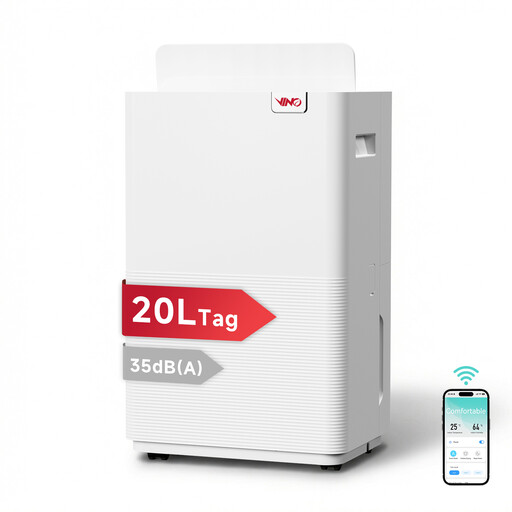 Image unavailable
VINO 20L Smart, 2.5 L tank
Worth considering as an extra helping hand when humidity rises as clothes dry, but not as a fix for persistent damp. The model title lists a Dry mode, WiFi control and a claimed capacity of 20 L/day; this figure doesn’t predict how it will perform in your room. Check the noise level for the mode you plan to use before buying.
View on Joybuy
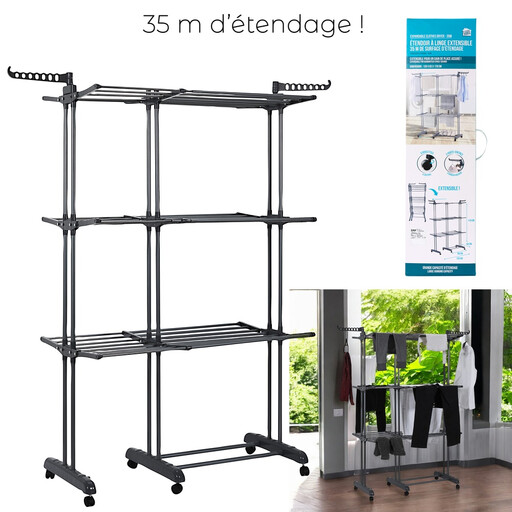 Image unavailable
Three-tier extendable clothes airer, 35 m
For drying clothes in a room where you can still leave space to move around and maintain good airflow. The title lists three tiers and 35 m of drying space; check the footprint when fully open, its folded dimensions and the maximum load for your clothes. This airer won’t reduce the moisture released into the air.
View on Joybuy
 Image unavailable
Hotpoint CHD84MWBSEE, heat pump, 8 kg
Worth considering if you dry full loads regularly and have a suitable space for it. The title lists an 8 kg capacity and energy rating C; check the model’s energy label before comparing electricity use. Also check its dimensions and the space needed to install it.
View on Joybuy
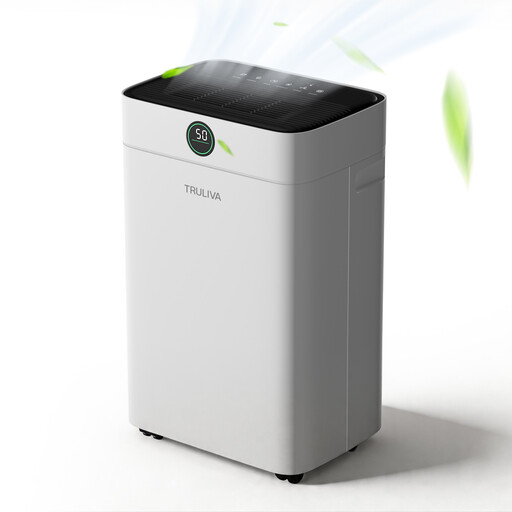 Image unavailable
TRULIVA 25L/Day, 2.8 L tank
Worth considering as an extra aid in a room where drying clothes increases humidity, while ensuring your home is still properly ventilated. The title lists a laundry drying mode, a 2.8 L tank and a hose for continuous drainage. The claimed capacity of 25 L/day is based on conditions of 90% relative humidity and 95 °F; also check the noise level and the space needed around the appliance.
View on Joybuy
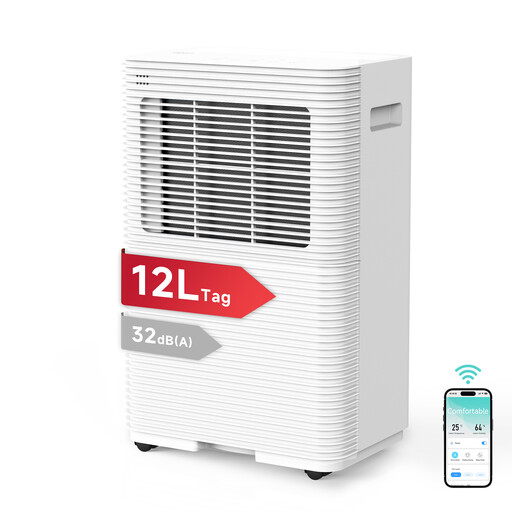 Image unavailable
VINO 12L Smart, 1.8 L tank
Worth considering for extra help while clothes dry, once you’ve ruled out damp that’s present all the time. The title lists a Dry mode, WiFi control and a claimed capacity of 12 L/day, measured at 30 °C and 80% relative humidity; this doesn’t guarantee how quickly clothes will dry in your home. Check the noise level for the mode you plan to use.
View on Joybuy
Frequently asked questions
Can a dehumidifier replace ventilation in your home?
No. A dehumidifier can remove moisture from the air as extra help, but it won’t fix faulty ventilation or water ingress. If condensation, damp patches or smells persist between washes, find out what’s causing them. Qualitel points out that damp in a home can have several causes.
What humidity level should you check before choosing an appliance?
Use a hygrometer to take measurements at different times, including while clothes are drying and between drying sessions. Qualitel generally recommends a humidity level of between 40% and 60% in the home and advises keeping an eye on higher readings. A single measurement won’t reveal the cause of an ongoing problem.
Should you ventilate the room when drying clothes indoors?
Yes. ADEME recommends drying clothes in a large, well-ventilated room or one with a suitable extractor vent. Even with a compact clothes airer, make sure air can circulate around the clothes and the room remains properly ventilated.
What should you compare when choosing a tumble dryer for a flat?
Start with the model’s capacity, installation dimensions, noise level and maintenance requirements. The summary of EU rules published by EUR-Lex states that tumble dryers sold in the European Union carry an energy label. Check the label for the model you’re considering to compare its energy use.
Can you use a vented tumble dryer without an outlet to the outside?
A vented model needs a suitable outlet to the outside. If your space doesn’t have one, consider a condenser tumble dryer instead, checking its dimensions, installation instructions and how the water is collected or drained.


