In a flat with a spacious, well-ventilated room where you can dry your laundry, an airer may be a suitable option if you’re happy with the space it takes up and the time needed for clothes to dry. If you do laundry frequently and have room for an appliance, a heat-pump condenser tumble dryer means you won’t have to hang out every load, but you’ll need to check the available space, noise level, water collection and maintenance requirements. If you only have room for one appliance, a washer-dryer is also worth considering. Compare its washing and drying capacities separately.
Who are these options for?
People who regularly air-dry their laundry
If you keep an airer in your flat, think about where it can stand while your clothes dry without getting in the way or blocking air inlets and outlets. ADEME notes that air-drying releases a lot of moisture into your home, so good ventilation is just as important as having enough floor space.
Households that do laundry frequently
If an airer takes up a room for long periods, a tumble dryer could make laundry easier to manage. Before making space for one, compare its dimensions and capacity, check its stated noise level, and find out how it collects or drains water.
Households with room for just one laundry appliance
A washer-dryer combines both functions in one appliance. However, check its drying capacity separately from its washing capacity, as well as the length and energy consumption of the combined cycle on the label for the model you’re considering.
What should you check before choosing?
Start by working out where and how often you’ll dry your laundry, then compare each option with the space and connections available.
Indoor airer
Worth considering: if you can use a spacious, well-ventilated room for drying without blocking the way.
The trade-off: your laundry takes up space while it dries, and ADEME identifies air-drying as a significant source of indoor moisture.
Heat-pump tumble dryer
Worth considering: if you do laundry frequently and have space for a separate appliance.
The trade-off: a condenser model requires you to manage the collected water and maintain the parts specified in its instructions, even though it doesn’t need an external air vent.
Washer-dryer
Worth considering: if you can only fit one appliance in your home and its drying capacity suits your laundry needs.
The trade-off: drying capacity may be lower than washing capacity, so compare both figures for the model you choose.
| Priority | What to check | What I need |
|---|
| Ventilation |
For an airer, find a spacious, well-ventilated room. Keep air inlets and extractor vents clear; ADEME recommends leaving your mechanical ventilation system (VMC) running. |
I want to dry laundry without filling up a stuffy room. |
| Installation |
Measure the space and allow room to open the door. According to UFC-Que Choisir, a vented tumble dryer needs an external air vent, unlike a condenser model. Check how the latter handles water. |
I don’t have an external air vent, or the appliance needs to fit into a specific space. |
| Laundry loads |
Compare the drying capacity with your usual loads. For a washer-dryer, check the washing and drying capacities separately, along with the length of the combined cycle. |
If I wash large loads, I need to know whether they can be dried in one go. |
| Energy use and cycle length |
Compare the stated energy consumption for the same type of cycle, capacity and programme length. The European Commission says that household tumble dryers placed on the market since 1 July 2025 use the A to G energy label scale. |
I want to consider both the electricity used and the time needed between loads. |
| Noise and maintenance |
Check the stated noise level if the appliance will be near a living area. Check that the filter is easy to reach, read the condenser maintenance instructions, and find out whether the appliance has a water tank or drain hose. |
An appliance near my living space also needs to fit into my maintenance routine. |
What mistakes should you avoid?
-
Comparing energy ratings without checking the scale
The European Commission introduced an A to G label for household tumble dryers placed on the market from 1 July 2025. A letter on this scale cannot be directly compared with a rating on the old A+++ to D label.
Compare appliances that use the same scale, then check the stated energy consumption, capacity and length of the relevant programme.
-
Overlooking the air vent or water collection
According to UFC-Que Choisir, a vented tumble dryer needs an external air vent, while a condenser model doesn’t. However, the latter still collects water in a tank or drains it away, depending on the model.
Before ordering, check the appliance type, the connections it needs, its dimensions and the space required to open the door.
-
Choosing based only on capacity or energy rating
Neither of these tells you how long the cycle takes or how noisy the appliance is likely to be near a living area.
Compare the capacity with your usual loads, then check the programme length and stated noise level on the product details for the model you’re considering.
-
Neglecting the filter and condenser
Bosch advises cleaning the filter after use. Electrolux warns that a condenser clogged with fluff can increase energy consumption and damage the appliance.
Check your model’s instructions for maintenance tasks and how often to do them, and make sure you can easily reach the parts that need cleaning.
What do the brands have to offer?
Bosch
The WQG2450SFR is one example of a heat-pump tumble dryer in Bosch’s French range.
- Bosch lists a 9 kg capacity, dimensions of 842 × 598 × 613 mm, a noise level of 64 dB(A) and a water drain hose for this model.
- These specifications apply to the WQG2450SFR. Bosch also advises cleaning the filter after use.
Miele
Miele’s French range includes tumble dryers with capacities of 7, 8 and 9 kg.
- Miele describes the TEA525WP 8kg Active as an 8 kg heat-pump model.
- Before choosing a space for it, check the dimensions and installation requirements for the exact model rather than relying on capacity alone.
Beko
Beko offers a range of heat-pump tumble dryers.
- The brand describes technology that reuses warm air inside the appliance.
- To compare two models, check their individual specifications for capacity, energy consumption, cycle length, noise and dimensions.
Electrolux
The EW7HI395BN is one example of the specifications to compare in Electrolux’s heat-pump tumble dryer range.
- Electrolux lists a drying capacity of 9 kg, a noise level of 63 dB and an energy rating of C for this model.
- Electrolux warns that a condenser clogged with fluff can increase energy consumption and damage the appliance. Follow the model’s instructions for maintenance.
Which appliances should you look at on Joybuy?
These Joybuy options include a heat-pump tumble dryer and washer-dryers. They let you explore two ways to dry laundry mechanically when space and how often you do laundry are part of your decision.
 Image unavailable
Hotpoint CHD84MWBSEE, 8 kg heat-pump tumble dryer
For drying laundry in a separate appliance instead of on an airer. The stated capacity is 8 kg; check the dimensions, noise level, water collection and maintenance instructions to make sure it suits your home.
View on Joybuy
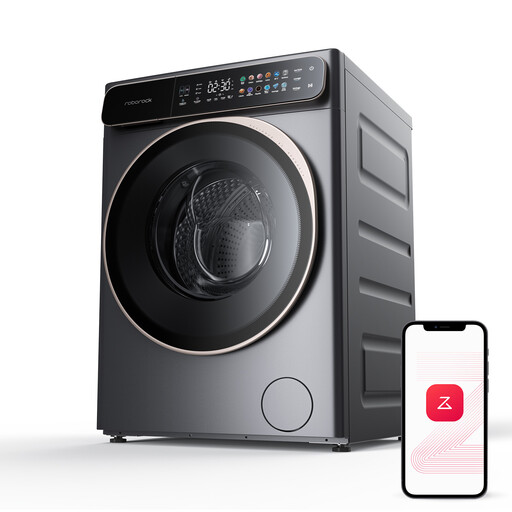 Image unavailable
Grey Roborock Zeo One washer-dryer, 10 kg / 6 kg
A single-appliance option if you can’t install separate washing and drying machines. Its stated capacities are 10 kg for washing and 6 kg for drying, so a full washing load will need to be split for drying. Check the dimensions and connections too.
View on Joybuy
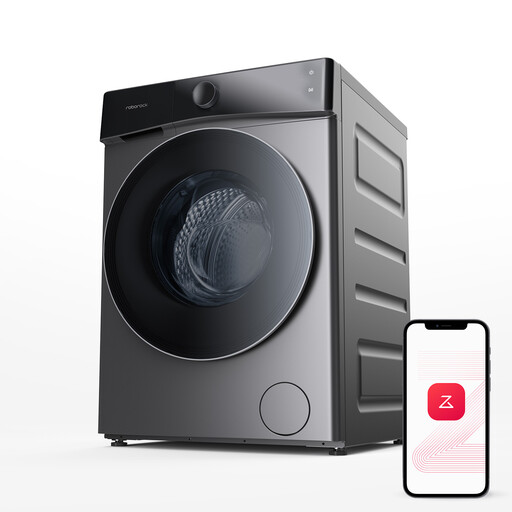 Image unavailable
Grey Roborock Zeo Lite washer-dryer, 10 kg / 6 kg
This model combines washing and drying when there isn’t room for two appliances. It has a stated capacity of 10 kg for washing and 6 kg for drying, as well as Zeo-Cycle technology and the LintClear system. Check programme lengths, dimensions and connections before choosing.
View on Joybuy
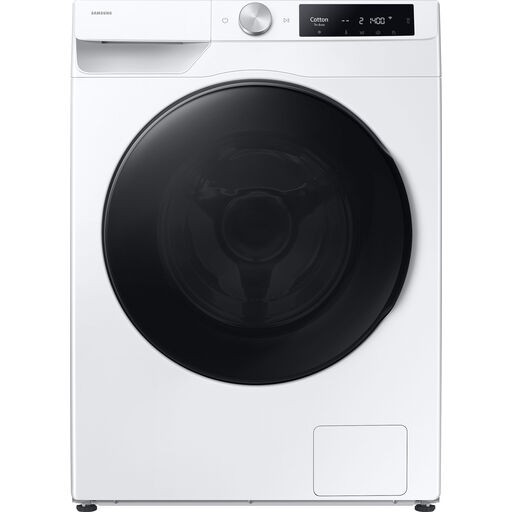 Image unavailable
Samsung WD11DG6B85BEU3 washer-dryer, 11 kg / 6 kg
This freestanding model combines washing and drying in one appliance. Its stated capacities are 11 kg for washing and 6 kg for drying, so you’ll need to split a full washing load. Check you have enough space and the necessary connections.
View on Joybuy
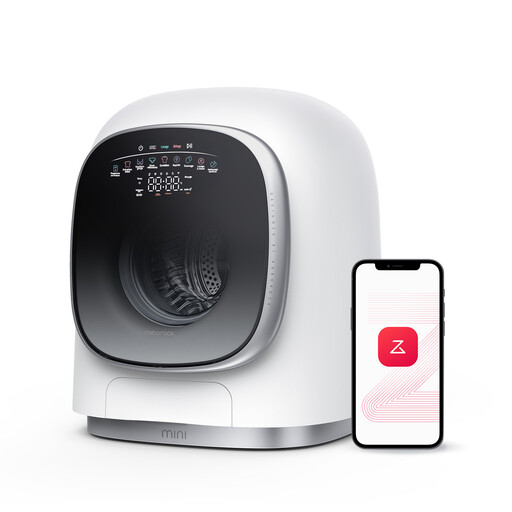 Image unavailable
White Roborock Marshmallow Zeo Mini, 1 kg / 0.5 kg
Worth considering for very small loads in a tight space: this washer-dryer has a stated capacity of 1 kg for washing and 0.5 kg for drying. You’ll need to split a full washing load before drying it. Check the dimensions and connections too.
View on Joybuy
Frequently asked questions
Can you install a vented tumble dryer without an external air vent?
No. According to UFC-Que Choisir, this type of appliance needs an external air vent. A condenser tumble dryer doesn’t need one, but you’ll need to check how the model collects or drains water.
What type of new household tumble dryer should you look for in France?
For a new household appliance placed on the EU market since 1 July 2025, the European Commission says ecodesign requirements permit heat-pump technology. Then compare the capacity, dimensions and A to G energy label details of the models you’re considering.
Do you need to empty the tank on a heat-pump tumble dryer?
Yes, if the water collects in a tank and the appliance isn’t connected to a drain. Check the instructions for your model to see whether a hose is supplied and how it can be installed.
What maintenance does a tumble dryer need?
Follow the instructions for your model, particularly for the fluff filter and accessible condenser. Bosch advises cleaning the filter after use; Electrolux warns that a clogged condenser can increase energy consumption and damage the appliance.
Can a dehumidifier replace ventilation while laundry is drying?
No. Don’t treat it as a replacement for ventilation in your home. ADEME recommends leaving your mechanical ventilation system (VMC) running and keeping its vents clean. If your ventilation isn’t working properly, you should look into that separately from your choice of laundry appliance.


