How do the options compare?
First decide where your clothes will dry, then compare the amount of laundry you need to dry with your home’s practical limitations. Choosing an appliance comes after answering these two questions.
Washer-dryer
Consider this if: you want to wash and then dry your clothes without installing a second appliance.
The trade-off: the drying capacity is often lower, so you may need to handle a large wash load again before drying it.
Separate tumble dryer
Consider this if: you often dry large loads and can install two appliances.
The trade-off: even when stacked, you’ll need enough height and a compatible stacking kit, as Que Choisir points out.
Indoor air-drying
Consider this if: you have room to air-dry your clothes and don’t want to add a tumble dryer.
The trade-off: your clothes will take up that space while they dry. A good spin cycle doesn’t mean you can skip checking the ventilation.
| Your concern |
What to check |
Who this matters to |
| Available space |
Measure the space, door clearance and any room needed around the appliance. With a washer-dryer, check the washing and drying capacities separately. |
There’s no room for an airer or a second appliance, so I want to be able to wash and dry a small load in the same machine. Around 33% of consumers prioritise having a single appliance. |
| Loads to dry |
Compare the drying capacity with the size of your usual wash loads. If you’re thinking of stacking two appliances, check that they’re compatible with the kit. |
When my wash loads are large and frequent, I’d rather not have to remove some clothes before starting the drying cycle. Drying large loads comes first for around 27% of consumers. |
| Cycle noise |
Compare the noise level stated for the exact model, taking into account where it will go and when you’ll use it. |
If the machine is near living areas or neighbours, spin-cycle noise affects my choice. Around 20% of consumers prioritise low noise. |
| Air-drying and energy use |
Check the spin-drying efficiency class and compare the stated energy use for similar cycles. If you air-dry your clothes, check the existing ventilation too. |
I can still air-dry some of my clothes, but I want them to spend less time in the flat without overlooking energy use. Around 20% of consumers prioritise this balance. |
Appliances for different drying needs
The four washer-dryers below combine washing and drying in a single appliance. A separate tumble dryer is better suited to households that already have a washing machine and can install a second appliance. For each option, compare the dimensions and drying capacity with your home and your usual wash loads.
 Image unavailable
Samsung WD10HG6U34BEU3 washer-dryer, 10/6 kg
Combines washing and drying in a single appliance, with a stated capacity of 10 kg for washing and 6 kg for drying.
Stated dimensions: 600 × 850 × 590 mm. The wash-and-dry programme is listed as taking 7 h 32 min. Check clearances, door opening space and connections before installation.
View on Joybuy
 Image unavailable
Samsung WD11DG6B85BEU3 washer-dryer, 11/6 kg
Wash up to 11 kg without making room for a separate tumble dryer; the stated drying capacity is 6 kg.
Stated dimensions: 60 × 85 × 60 cm; stated spin-cycle noise level: 72 dB. Check that the difference between the two capacities suits your usual loads, and allow enough space for the door to open and for connections.
View on Joybuy
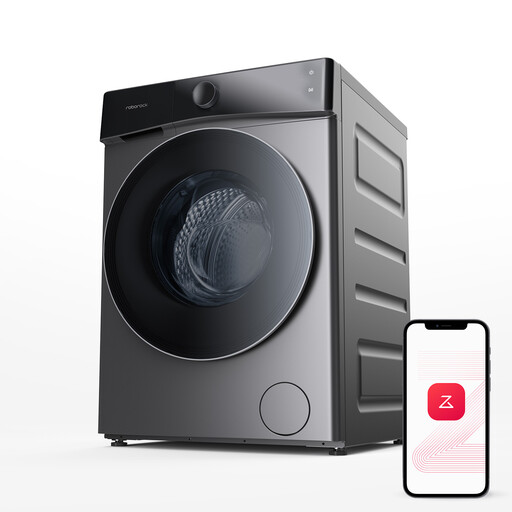 Image unavailable
Grey Roborock Zeo Lite washer-dryer, 10/6 kg
Combines both functions in one appliance, with a stated washing capacity of 10 kg and drying capacity of 6 kg.
The product description mentions automatic dosing and the LintClear filter maintenance system. Before choosing this model for a fitted space, check its dimensions, noise level and energy use in the full product specifications.
View on Joybuy
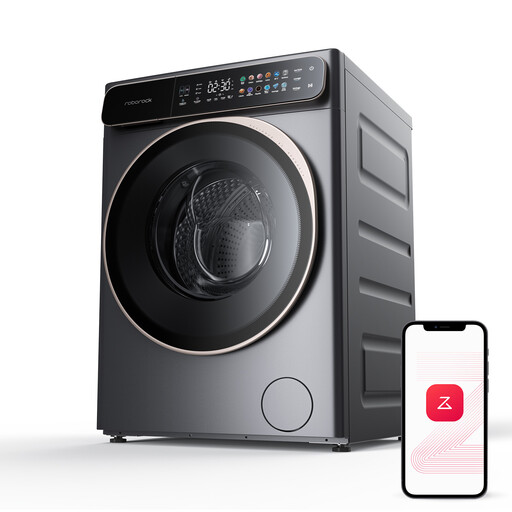 Image unavailable
Grey Roborock Zeo One washer-dryer, 10/6 kg
Wash and dry your clothes in one appliance, as long as the stated drying capacity of 6 kg is enough for your loads; the stated washing capacity is 10 kg.
The product description mentions automatic dosing and LintClear. Check the dimensions, installation requirements, noise level and cycle times before choosing where to put it.
View on Joybuy
 Image unavailable
Hotpoint CHD84MWBSEE 8 kg heat pump tumble dryer
A separate drying option if you already have a washing machine and can install a second appliance; the stated capacity is 8 kg.
The stated noise level is 64 dB. Measure the space and check the manual for required clearances and stacking compatibility before planning a stacked set-up.
View on Joybuy
Frequently asked questions
Why doesn’t a 9 kg washer-dryer necessarily dry 9 kg?
Because washing and drying capacities are different. For example, Bosch lists a washing capacity of 9 kg but a wash-and-dry capacity of 6 kg for the WNG24402FR. If you want to run both cycles without removing any laundry in between, compare your usual load with the drying capacity.
Can you put a tumble dryer on top of a washing machine?
You can stack front-loading appliances using a compatible stacking kit, as Que Choisir explains. Check that the models are compatible, confirm the total height and follow the instructions in both manuals before planning this set-up.
What should you check about the power supply before installation?
Check the electrical requirements in each appliance manual and the available installation at the intended location. Having a socket there doesn’t necessarily mean it’s suitable for your planned use. If you’re unsure, ask a qualified professional to check the installation.
Is a good spin cycle enough to dry clothes indoors?
No. It can help clothes dry faster, but it doesn’t replace good air circulation. ADEME recommends checking the spin-drying efficiency class for faster indoor drying, while Qualitel highlights the importance of ventilation. Check the existing air inlets and extraction vents.
What should you check for maintenance before choosing a washer-dryer?
Check that you’ll be able to reach the filter, detergent drawer and door seal easily, following the instructions for the model. Que Choisir includes these tasks in its assessment of how easy washer-dryers are to use. Easy access matters particularly when space is tight.


