
Livraison le jour même ou le lendemain

Qualité garantie

Débloquez vos offres de bienvenue: Livraison GRATUITE | Jusqu'à -80 % | 30 jours d'essai gratuits à JoyPlus
Téléchargez l'application
There's nothing like a soft, ambient glow to enjoy your garden or patio after dark. The promise of a flame effect solar torch is tempting: recreating the magic of a real wood fire, but without the risks, smoke, or maintenance. The problem? The market is flooded with models making dazzling claims that, once unboxed, lead to bitter disappointment. To avoid regretting your purchase after the first downpour, here’s how to sidestep the most common pitfalls.
Too many buyers end up with products that don't survive the winter. Here are the two most frequent disappointments and, more importantly, how to avoid them.
It's a classic trap: a false promise of being waterproof. A product that is merely "water-resistant" won't survive a heavy downpour. Most entry-level models have an Ingress Protection (IP) rating of 44, a standard that only protects them from splashes. The first serious storm will cause water to seep in, frying the circuits and the battery, and your solar outdoor lighting will end up in the bin.
The main appeal of these torches is, of course, their ability to simulate a flame. Unfortunately, many low-end models settle for a jerky, repetitive animation that looks more like a tow truck's flashing light than a campfire. This poor effect is often the result of an insufficient number of LEDs or a simplistic algorithm. It's a far cry from the realistic LED dancing flame you want for your outdoor garden decor.
To make a confident choice and invest in a solar garden lamp that will last, focus on these two non-negotiable technical specifications.
This is the number one criterion. For outdoor use in climates with unpredictable weather, an IP65 rating is the absolute minimum.
An IP65 waterproof solar torch is therefore designed to withstand heavy downpours and operate flawlessly all year round. Don't settle for anything less.
The realism of the flame is directly dependent on the number of LEDs. A torch with 12 LEDs will produce a basic effect, while a model with 96 LEDs will offer a much more complex and natural animation. Another crucial point is battery life. A good torch should last between 8 and 10 hours after a full day's charge. To ensure this, check the battery capacity (in mAh) and the quality of the solar panel. These components will guarantee light that lasts all evening, even after an overcast day.
To save you from drowning in a sea of options, we've selected a few models that tick all the right boxes, each tailored to a specific need.
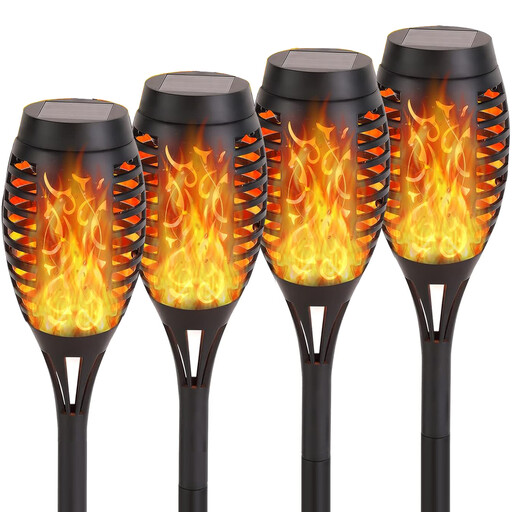
Why we chose it: Ideal for lining a pathway or decorating a flowerbed without breaking the bank. This set of solar torches allows you to cover a large area on a tight budget.
This model ticks the most important box: certified IP65, it can withstand the elements, overcoming the usual Achilles' heel of budget-friendly options.
The four-pack format offers unbeatable price-per-area coverage for illuminating a large space, with durability to boot.
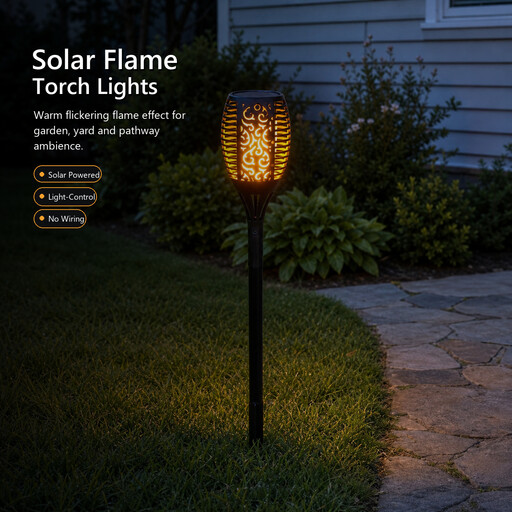
Why we chose it: For those who prioritise aesthetics above all else. The goal here is to achieve the most stunning LED dancing flame effect possible for a truly immersive atmosphere.
With its 96 LEDs, this model shatters the "cheap flame" effect pitfall. The animation is complex, fluid, and infinitely more natural than on entry-level models.
Its visual realism is its strongest selling point. A real upgrade for your outdoor garden decor that will be a head-turner at your summer evening gatherings.
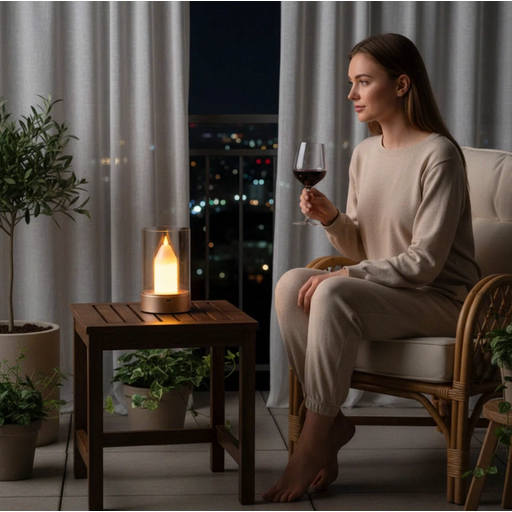
Why we chose it: The perfect solution for balconies, paved patios, or simply as a centrepiece where staking a solar garden torch into the ground isn't an option.
This clever model bypasses installation hassles (fragile stakes, hard ground...). Its stable base and portable design make it an ultra-flexible ambient lighting solution.
Its versatility. Rechargeable via USB-C and equipped with a dimmer, it gives you complete control over the atmosphere—a rare luxury for classic solar models.
We have curated a complete selection of products that meet our strict requirements for quality and safety.
It mainly depends on the battery. A quality lithium-ion model will last for about 500 charge cycles, which is just over a year of daily use. The LEDs themselves are virtually indestructible (over 15,000 hours). The weakest link is therefore the battery, which will start to lose capacity after two or three seasons.
Yes, but don't expect miracles. In winter, shorter days and limited sunlight restrict charging. As a result, the battery life in the evening will be much shorter. You can count on a few hours of light, not a full night. A tip: keep the solar panel clean and facing south to maximise its charge.
It's incredibly simple and requires no tools.