Families serving drinks at the table
If everyone pours a glass during the meal, start by comparing 1.5 L bottles and how many containers you’ll need.


If you’re serving several glasses at the table, a 1.5 L bottle is a practical choice. For individual portions, consider multipacks of cans instead. Check the product description, juice content, sugar and any sweeteners too: as the DGCCRF points out, a fizzy orange drink should not automatically be treated as orange juice.
If everyone pours a glass during the meal, start by comparing 1.5 L bottles and how many containers you’ll need.
If sugar or sweeteners are important to your choice, check the nutrition information and ingredients for the exact variant, including those labelled ‘no added sugar’.
Cans make it easy to give everyone their own portion. They may also suit you if you’re looking for a blood orange recipe rather than a bottle to share.
When shopping for a large family, first decide whether you want to pour drinks into glasses or serve individual portions, then compare the ingredients of the recipes you’ve shortlisted. If you’re specifically looking for orange juice, check the product description: still, pure orange juice is a different choice from a fizzy drink.
| Criterion | What to check | Who is it for? |
|---|---|---|
| Size for sharing | Net volume and number of bottles; a 1.5 L bottle lets you pour several glasses from one container. | When the whole family is having a drink at the table, I prefer pouring glasses from a bottle rather than handing out cans; around 42% of consumers prioritise sharing. |
| Sugar and ingredients | Product description, juice percentage, sugar per 100 ml and the sweeteners listed for the variant you choose. | If I’m comparing several orange recipes, I want to know what’s actually in each drink before choosing; this is the top priority for around 33% of consumers. |
| Portions and flavour | Volume per can, number of cans and exact flavour, such as orange or blood orange. | In my household, tastes differ or everyone prefers their own can; serving individual portions or choosing a particular flavour is the priority for around 25% of consumers. |
Having juice in a fizzy drink recipe does not make it a fruit juice. The DGCCRF points out that in France, the description ‘fruit juice’ is reserved for products that meet its regulatory definition.
Check the product description, juice percentage and ingredients rather than relying on the fruit shown on the packaging.
The Orangina no-added-sugar variant featured by Carrefour contains acesulfame K and sucralose.
If you want to avoid these ingredients, check the full ingredients list on the bottle or multipack you’re considering.
A 1.5 L bottle serves several glasses, while a pack of six 33 cl cans divides 1.98 L into individual portions. Container count alone tells you neither the total volume nor how much each person gets.
Compare the total volume, volume per portion and sugar per 100 ml before choosing a format.
These examples show different formats and recipes. Always check the details for the specific variant you’re thinking of buying.
Fizzy orange drink with pulp, available in formats including a 1.5 L bottle.
Fizzy citrus drinks, including Aranciata and Aranciata Rossa, available in formats such as 33 cl cans.
Pulp’Orange is an orange pulp drink in a 1.5 L bottle.
The blood orange product featured by E.Leclerc is a fizzy drink with pulp in a 1.5 L bottle.
These products let you compare Orangina bottles for sharing with multipacks of cans for individual servings. Sanpellegrino Aranciata and Aranciata Rossa are distinct variants, so choose the one with the flavour you’re looking for.
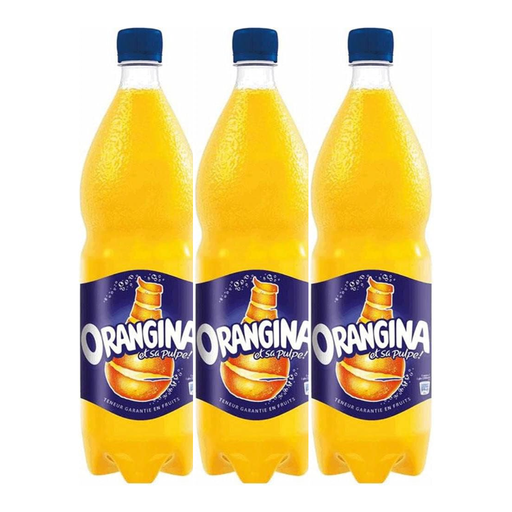 Image unavailable
For serving drinks in glasses over several family meals, this pack contains three 1.5 L bottles, giving you 4.5 L in total.
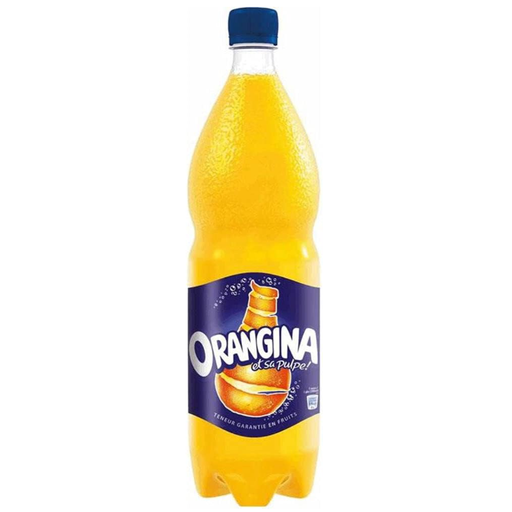 Image unavailable
If one bottle is enough to serve at the table, this format contains 1.5 L.
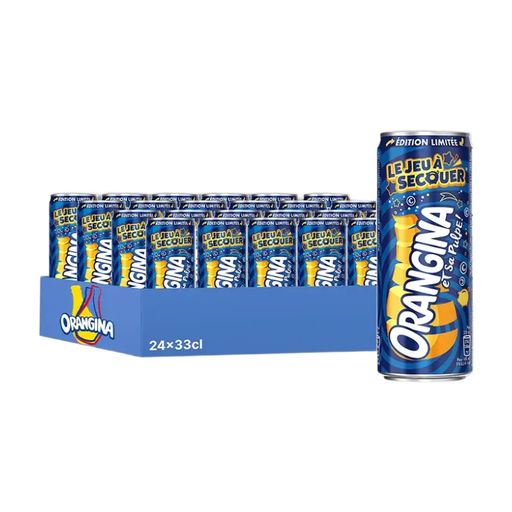 Image unavailable
For individual servings, this pack contains 24 × 330 ml cans, giving you 7.92 L in total. It means handling more containers than pouring drinks from a bottle.
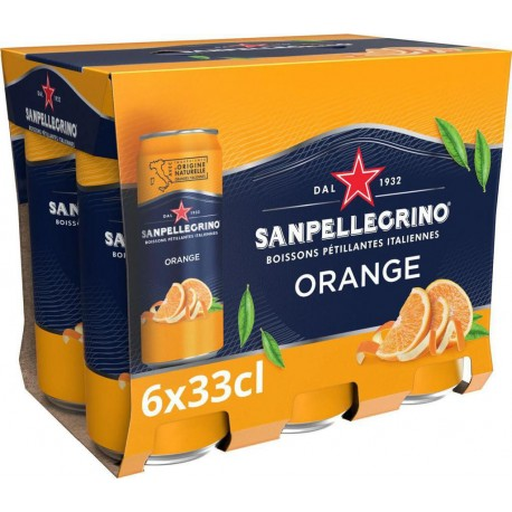 Image unavailable
If you prefer serving individual cans, this Aranciata pack contains six 330 ml portions, giving you 1.98 L in total.
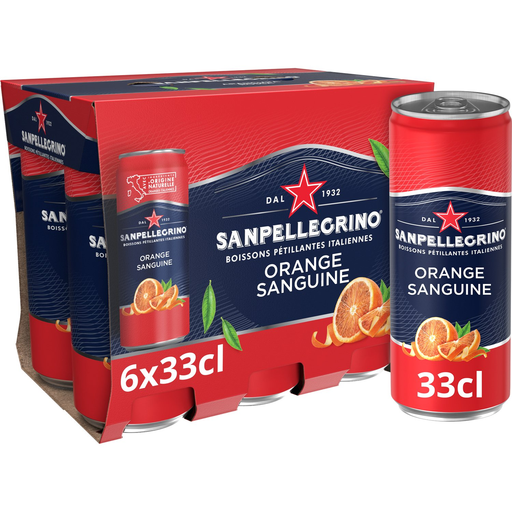 Image unavailable
For individual portions in the Aranciata Rossa variant, this pack contains six 330 ml cans, giving you 1.98 L in total. Check the ingredients for this variant rather than assuming they’re the same as Aranciata.
No. Having orange juice in a fizzy drink is not enough for it to be described as ‘fruit juice’. In France, the DGCCRF explains that this description depends on regulatory definitions. Check the product description and ingredients.
Not necessarily: the Orangina no-added-sugar variant featured by Carrefour contains acesulfame K and sucralose. Check the ingredients list for the specific variant you choose.
Choose a 1.5 L bottle if you want to pour several glasses from one container; opt for cans if everyone needs their own portion. Check the total volume too: six 33 cl cans add up to 1.98 L.
Follow the instructions on the packaging of the product you’ve bought. For its 1.5 L Orangina bottle, Monoprix Courses recommends storing it away from sunlight and heat; check the instructions for storage after opening separately.