Parents keeping an eye on sugar at snack time
You want to save sugary drinks for certain occasions and keep an eye on the serving size. Manger Bouger recommends choosing water and limiting juice and other sugary drinks.


For a child’s usual snack, choose water rather than fizzy multifruit juice: Manger Bouger recommends water and advises limiting juice and other sugary drinks. If you’re looking for bubbles for a special occasion, check the drink’s description, whether it’s carbonated, the sugar content per 100 ml and the serving size. A fizzy fruit drink isn’t necessarily a multifruit juice.
You want to save sugary drinks for certain occasions and keep an eye on the serving size. Manger Bouger recommends choosing water and limiting juice and other sugary drinks.
You’d like to serve a fizzy drink without mistaking a fruit drink for multifruit juice. The product’s exact description and ingredients list are key.
You’re choosing between pure juice, juice from concentrate and nectar, or between a family-sized bottle and individual portions. Compare the ingredients, sugar per 100 ml and the amount you plan to serve.
For a child’s snack, first decide whether you want to serve something other than water, and how much. Then check the product category and, if you’re looking for bubbles, whether it’s explicitly described as carbonated.
| What matters | What to check | Who this matters to |
|---|---|---|
| Sugar and serving size | Compare the sugar content per 100 ml and measure the amount you serve. Manger Bouger advises a maximum of half a glass a day for sugary drinks for children under 11, and one glass a day for those over 11. | If I serve juice at snack time, I want to be able to limit how often and how much, rather than treating the whole container as one serving. Around 42% of consumers would make this a priority. |
| Bubbles and product category | Look for an explicit mention of carbonation, then read the product description: juice, nectar or fruit drink. Check the ingredients too, including whether it contains caffeine. | For a party, I’m looking for bubbles, but I don’t want to buy a different type of drink thinking it’s multifruit juice. This would be a priority for around 33% of consumers. |
| Recipe and pack size | Compare the product description, ingredients, sugar per 100 ml and pack volume for the exact products you’re considering. | Before choosing between a bottle and individual portions, I want to know what each drink contains and how much I’ll serve. Around 25% of consumers would prioritise this comparison. |
Bubbles alone tell you nothing about the fruit content or the product category. Carrefour describes its Tropicana product as a pure multifruit juice, while the multifruit nectar described by Pampryl also contains water and sugar.
Read the product description and ingredients for the one you’re choosing. If the bubbles matter to you, also look for an explicit mention of carbonation.
An individual bottle or can won’t necessarily be the amount you want to serve a child. Manger Bouger advises limiting sugary drinks, including juice, according to age.
Decide on the serving size before pouring. If the container holds more, pour the amount you want into a glass.
Manger Bouger recommends limiting juice, even when it’s labelled “no added sugar”, and choosing whole fruit instead.
For an everyday snack, serve water as the drink. If you offer juice, save it for an occasional treat.
A product listing you find online won’t necessarily describe the exact recipe or pack size you’ll have in front of you.
Before you buy, check the product description, ingredients and nutritional information on the packaging you’ve chosen.
A pure multifruit juice to compare with other types of drink, without assuming it’s fizzy.
Its multifruit nectar is a good example of why nectar and pure juice shouldn’t be treated as the same thing.
Its multifruit range makes it easy to spot drinks with different product descriptions and pack sizes.
This fizzy orange and red berry drink is worth considering if you’re looking for bubbles for a special occasion. It shouldn’t be mistaken for multifruit juice, so check the label and the serving size you plan to give your child.
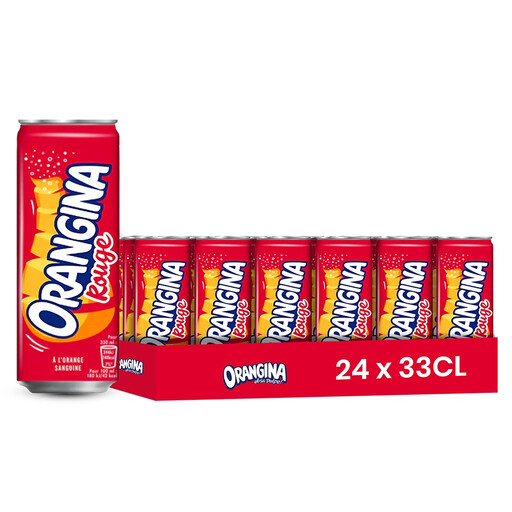 Image unavailable
Worth considering for a special occasion if you’re looking for a fizzy drink with orange and red berry flavours. It’s a fizzy drink, not a multifruit juice.
Pack of 24 330 ml cans. The volume of a can doesn’t determine the serving size for a child.
Before buying, check the packaging for sugar per 100 ml, ingredients, whether it contains caffeine and any information relevant to your child’s age.
Manger Bouger advises a maximum of half a glass of sugary drink a day for children under 11 and one glass a day for those over 11; this includes fruit juice. Water is still the drink to choose.
No. A drink with this claim may still contain sugars that occur naturally in fruit. To compare two products, check the “of which sugars” line per 100 ml and take the serving size into account.
Look for an explicit mention of carbonation on the packaging or in the product description for the exact item, then check its product category and ingredients. The word “multifruit” alone doesn’t tell you whether it’s juice or whether it contains bubbles.
Start with the product description, ingredients and nutritional information, especially the sugar content per 100 ml. The Directorate-General for Competition, Consumer Affairs and Fraud Control highlights the importance of this information on prepacked foods. Then compare pack sizes to decide how much to serve.