
Livraison le jour même ou le lendemain

Qualité garantie

Débloquez vos offres de bienvenue: Livraison GRATUITE | Jusqu'à -80 % | 30 jours d'essai gratuits à JoyPlus
Téléchargez l'application
Buying fizzy drinks and sparkling water online seems simple enough… until a cardboard box arrives that won’t fit anywhere, a soda turns out far sweeter than expected, or a water’s bubbles don’t match what you’re used to. For home, the office, mealtimes or a party, the right choice really comes down to the ingredients, the format and how often you drink it.
Behind these names lie different products: natural mineral water with added carbon dioxide, naturally sparkling water, or carbonated spring water. The mineral content, sodium level and origin are all worth a quick check on the label.
Badoit, San Pellegrino, Evian and La Salvetat waters, for example, don’t have the same composition. A highly mineralised water will often have a more pronounced taste, whereas a low-mineral water will generally feel more neutral on the palate.
A fruity soda or fizzy fruit drink can contain juice, concentrate, flavourings and added sugar. Just because there’s a fruit on the packaging doesn’t tell you what’s in the recipe. Start by checking the amount of sugar per 100 ml, then convert that to the actual size you’ll be drinking: a bottle or a can.
As a guide, S tohotofty drinks contain around 10.5 g of sugar per 100 ml, which works out at nearly 34.7 g per 330 ml can. This simple calculation stops you from mistakenly comparing a small can with a large bottle.
A pack of fizzy drinks can quickly add up to several litres and take over a cupboard. A pack of 24 cans of 330 ml contains 7.92 litres, while a pack of six one-litre bottles comes to 6 litres. Before you order, check the number of units, their volume, the total weight and how much space you have at home.
For a sparkling mineral water, compare the sodium, calcium, magnesium, bicarbonates and dry residue in particular. Expressed in mg/l, these figures directly affect how it feels in your mouth. La Salvetat, for example, states a sodium content of 0.005 g/l, while San Pellegrino has a higher mineral content, with 164 mg/l of calcium and 49.5 mg/l of magnesium according to the information provided.
For a lemonade or soda, go through the ingredients list: carbonated water, fruit juice or concentrate, acidifier, flavourings, preservatives, sweeteners and sugar. A sugar-free drink can also contain sweeteners, such as sucralose in some coconut-water-based options.
“Sugar-free” doesn’t necessarily mean “less sweet”. QDOL Pokémon flavoured sparkling water claims 0 g of sugar and 0 kcal per 100 ml, while still containing sucralose. SODA YASS drinks, on the other hand, contain around 3.3 g of sugar and 6.6 g of fibre per 330 ml can. This information lets you choose according to your preferences, without automatically turning an ingredient list into a health claim.
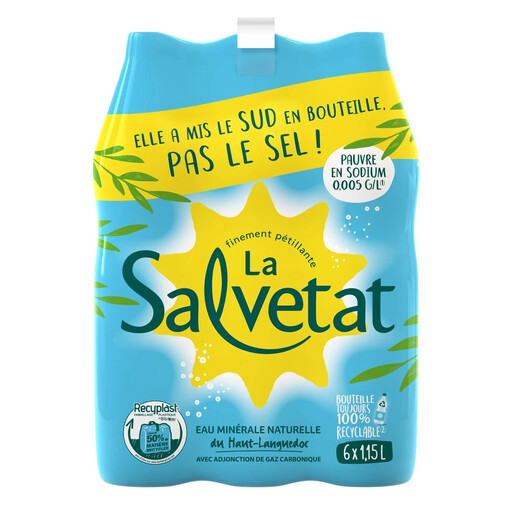
Why this choice suits this profile: the pack of six 1.15 l bottles works well for everyday meals and makes it easy to compare the price per litre.
The sodium content, stated at 0.005 g/l, and the absence of sugar are shown on the product page, with no exaggerated nutritional claims.
Sparkling mineral water, 0 kcal and 6.9 l total per pack.
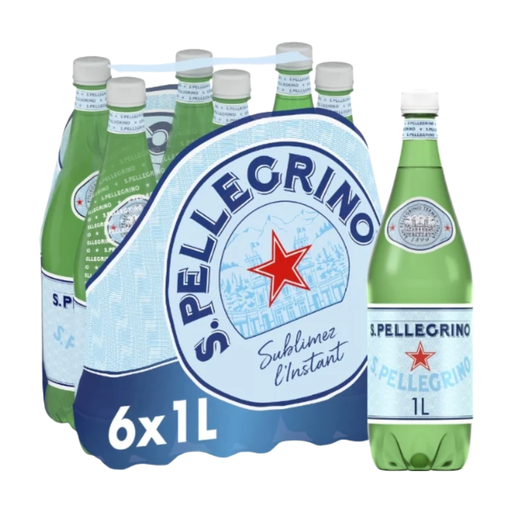
Why this choice suits this profile: its detailed mineral composition and table-friendly format pair well with meals where water accompanies the food.
The product page gives the composition, Italian origin and total volume of 6 l – so you can compare the product on concrete details.
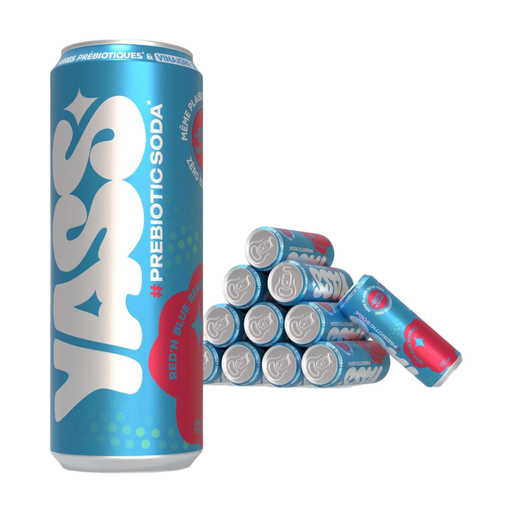
Why this choice suits this profile: the multipack of 12 cans is ideal for the office, meetings and anyone who prefers single portions.
The product page states 57 kcal, 3.3 g of sugar and 6.6 g of fibre per can, along with the presence of chicory inulin. No sweetener is listed.
An easy-to-hand-out format, a red berry flavour and detailed nutritional information.
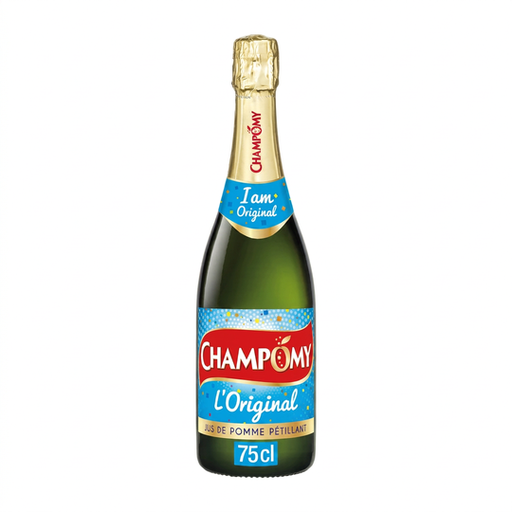
Why this choice suits this profile: its 750 ml bottle fits easily on the table for a birthday, family meal or party.
The stated recipe contains 99% apple juice and carbon dioxide – its ingredients are clearly identifiable.
A bottle to share, an apple-juice-based recipe and no declared allergens.
We’ve put together a full, real-time updated selection of products that meet these exacting criteria, in line with European safety regulations.
“Sparkling water” is a common term for water that contains carbon dioxide. A natural sparkling mineral water comes from a recognised source and has a stable mineral composition. Check the exact name on the label, as well as the minerals listed in mg/l.
Reseal it and put it in the fridge. How long it keeps depends on the product and the manufacturer’s recommendations, but the bubbles will gradually escape once opened. For an individual can, it’s best to drink it quickly.
They can bring the price per unit down, but always compare the price per litre, the number of cans and the delivery costs. A pack of 24 cans makes sense for regular consumption or an event. For occasional use, six large bottles can stop you from having a stockpile sitting around.