
Livraison le jour même ou le lendemain

Qualité garantie

Débloquez vos offres de bienvenue: Livraison GRATUITE | Jusqu'à -80 % | 30 jours d'essai gratuits à JoyPlus
Téléchargez l'application
Buying fizzy drinks in multipacks means you can stock up for meals, office breaks or parties without having to make multiple single purchases. But the price tag on a carton isn’t enough to judge whether it’s a good deal. Total volume, sugar content, packaging type and how long it stays fresh after opening can all make a big difference to its real value.
Here are the key things to look at before choosing a soda, sparkling water or fruit-flavoured fizzy drink.
A carton of 24 cans might look like a bargain, but the first thing to do is check the total volume. A pack of 24 cans of 33 cl gives you 7.92 litres. By contrast, six bottles of 1.15 litres come to 6.9 litres.
To compare two options, simply divide the price by the total number of litres. That way, you won’t automatically favour the packaging that looks biggest.
A watermelon, peach or cherry drink can contain concentrated juice, flavourings, sugar or sweeteners in very different amounts. So the word ‘fruity’ doesn’t tell you much about what’s actually in it.
Check the ingredients list and the nutritional table – first per 100 ml, then per can or bottle. That way, you can tell the difference between a sugary fruit soda, a sugar-free sparkling mineral water, or a sweetener-flavoured drink.
33 cl cans are handy for serving one person while keeping leftovers to a minimum. 500 ml to 1.15 litre bottles are better for sharing, but they gradually lose their fizz once opened and usually need to be kept in the fridge.
Before you order, also check how much space you have in your cupboards and fridge. A pack of 24 cans is easy to split up, but its weight and size are still worth considering when it comes to storage.
For an event, a pack of 33 cl cans makes serving and portion calculations simple. At home or in the office, 500 ml to 1.15 litre bottles can reduce the number of times you need to open a new one.
Here are a few useful benchmarks:
Compare the values per 100 ml, because container sizes vary from one product to another. Some fruit drinks have around 10.5 g of sugar per 100 ml, which works out at nearly 34.7 g per 330 ml can. Other recipes contain less sugar and rely on a sweetener. A natural sparkling water, on the other hand, has no sugar or calories.
The label also deserves a close look if you have any allergies or sensitivities. A drink containing aspartame, for example, must state that it contains a source of phenylalanine. Recipes with inulin or other fibres should be chosen based on your own dietary habits, without assuming any medical benefit.
A natural sparkling water goes well with meals and suits guests with different tastes. A fruity fizzy drink offers a stronger flavour, perfect for enjoying on its own or using as a base for a non-alcoholic mixer. At a family gathering, a drink made from apple juice and carbon dioxide, like Champomy Original, can also be a nice choice for a toast.
Finally, remember to check the date on the packaging, the storage conditions and any instructions after opening. Serve the drinks well chilled, as recommended by the manufacturer.
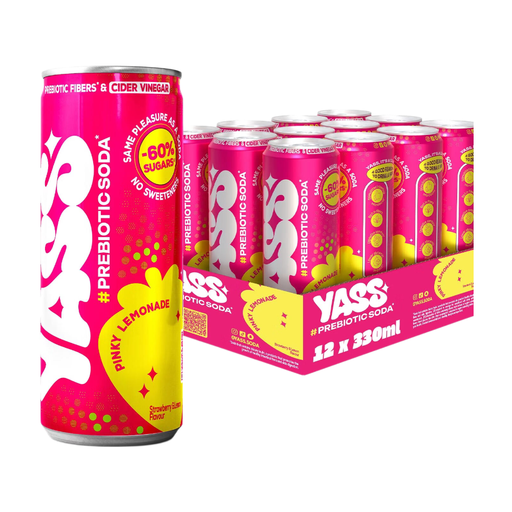
Why this suits this profile: This pack of 12 cans of 33 cl lets you try a pink lemonade with strawberry and lemon notes without committing to a large carton.
The total volume of 3.96 litres is clearly stated, and the product page lists 57 kcal and 10.9 g of sugar per can.
A single-serving format, a lemon-strawberry flavour and 6.6 g of fibre per can according to the product page.
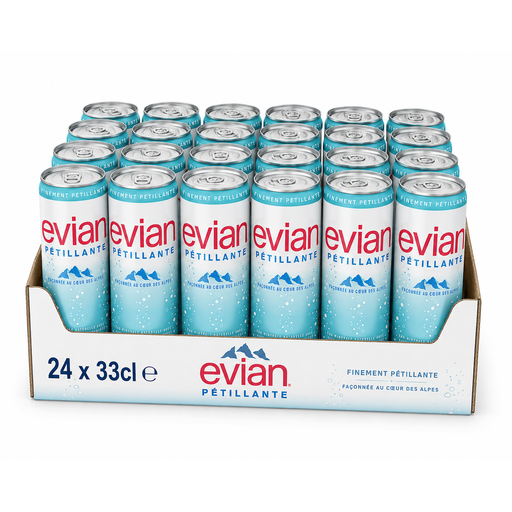
Why this suits this profile: The individual cans and detailed mineral composition make it ideal for meals, receptions and table service alike.
The product page clearly distinguishes natural mineral water with added carbon dioxide, with no sugar or calories.
24 cans of 33 cl, a stated pH of 7.2 and a detailed mineral composition including 80 mg/l of calcium.
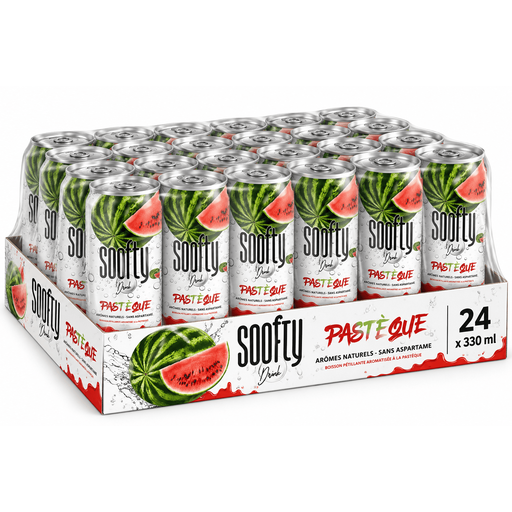
Why this suits this profile: This large pack is ideal for offices, parties and households that want a fruity drink always on hand.
The pack clearly states 24 cans of 330 ml, which is 7.92 litres – a handy reference for working out how much you need for an event.
A watermelon flavour, a slim can that’s easy to hand out, and a stated value of around 139 kcal per can.
We’ve put together a full, real-time updated selection of products that meet these exacting standards, in line with European safety regulations.
For individual servings, go for 33 cl cans. They’re easy to hand out and stop you from having several bottles open at once. Then adjust the quantity based on the number of guests, how long the event lasts, and whether you’ll also have natural sparkling water alongside the fruity sodas.
No, it depends on the recipe. Some drinks have around 34.7 g of sugar per 330 ml, while others contain less sugar and use sweeteners. Always check the ‘of which sugars’ line and the full ingredients list.
An opened can should generally be drunk quickly, because the bubbles escape once it’s exposed to the air. For a bottle, follow the instructions on the label – keeping it in the fridge and drinking it within two to three days is usually recommended.