
Livraison le jour même ou le lendemain

Qualité garantie

Débloquez vos offres de bienvenue: Livraison GRATUITE | Jusqu'à -80 % | 30 jours d'essai gratuits à JoyPlus
Téléchargez l'application
Buying fizzy drinks and sparkling water in multipacks is a great way to stock up for the home, prepare for a family meal or organise an event. But the price shown on a carton can hide several important differences: the actual volume you receive, the sugar content, how practical the format is, and how long it lasts once opened.
Before you choose a soda, a sparkling mineral water or a fruit-flavoured fizzy drink, here are the criteria to check so you can compare offers with full confidence.
A pack of 24 cans of 33 cl contains 7.92 litres, whereas a pack of 6 bottles of 1.5 litres gives you 9 litres. The number of units alone is not enough to compare two products.
To work out the real price, divide the pack price by its total volume. Also think about how you plan to use it: 33 cl cans are handy for individual servings, while 1.5 litre bottles are better suited to a family table.
Claims like "fruity", "light" or "refreshing" don't tell you much about the recipe. A drink may contain sugar, sweeteners, juice from concentrate, caffeine or preservatives.
Always take the time to check:
A carton of 24 cans or 24 bottles quickly takes up space. Drinks generally need to be stored in a dry, clean, cool place away from direct light. Also avoid freezing and keeping them near a heat source.
Once opened, recommendations vary depending on the product. A bottle of soda often needs to be refrigerated and consumed quickly to keep its fizz. A can, on the other hand, is best drunk straight after opening.
33 cl cans are easy to hand out at a birthday party, buffet or catering event. 50 cl bottles are better suited to on-the-go, the office and individual meals. Formats of 1 to 1.5 litres reduce the number of containers on the table, but they gradually lose their fizz once opened.
For drinks intended for parties and events, estimate the number of guests, how long the service will last and the variety you want. Planning several categories — sparkling water, cola and a fruity drink — can be more practical than buying a large volume of just one flavour.
Compare the data on the same basis, ideally per 100 ml. As a guide, the Coca-Cola Original Taste shown in the products below has 42 kcal and 10.6 g of sugars per 100 ml. A 33 cl can therefore represents a significantly higher amount than just the "per 100 ml" line.
Sugar-free sparkling mineral waters typically show 0 kcal and 0 g of carbohydrates on the product pages provided. That doesn't mean they all taste the same: their mineral composition, bicarbonate content and the strength of their bubbles can vary noticeably.
For a sparkling mineral water, check the source, the mineral composition and whether carbon dioxide has been added. For an energy drink, check the caffeine content and any warnings on the label. Vitamins highlighted on the packaging don't mean you can skip checking the full ingredients list.
Finally, look at the country of origin, the legal responsible party shown on the packaging and the best-before date. The information displayed on the online product page should always be compared with what's on the packaging you receive.
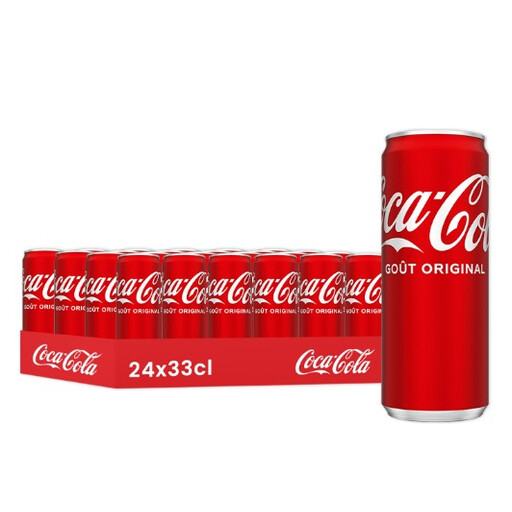
Why this choice suits this profile: With 24 cans of 33 cl, everyone can help themselves without opening a large bottle. The format is easy to store at home and works well for meals with several people.
The total volume is clearly stated: 24 × 33 cl, which is 7.92 litres. The product page also lists 42 kcal and 10.6 g of sugars per 100 ml.
Individual cans, a drink best served well chilled, and packaging in a carton that is stated as recyclable.
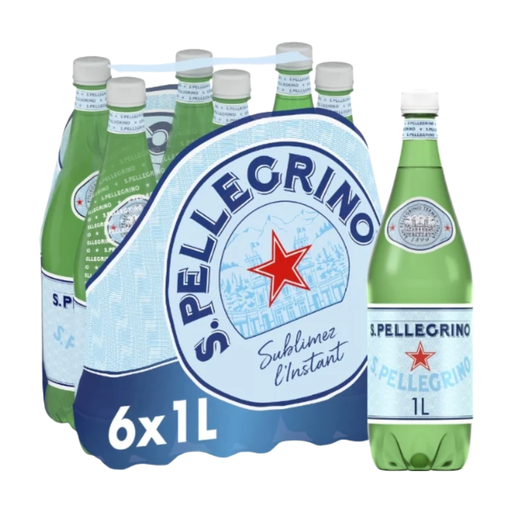
Why this choice suits this profile: This pack of 6 bottles of 1 litre accompanies meals and is aimed at those who care about table service as well as the mineral profile of the water.
The product page details the mineral composition, including 164 mg/l of calcium and 49.5 mg/l of magnesium, as well as the total volume of 6 litres.
An Italian sparkling mineral water, fine bubbles and 1-litre bottles that are well suited to table service.
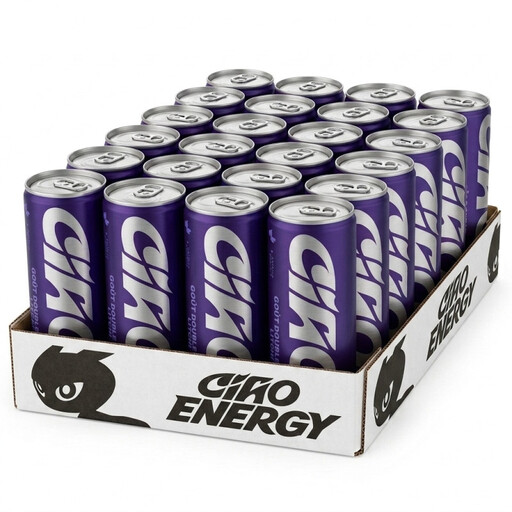
Why this choice suits this profile: The 24 cans of 25 cl are suitable for associations, catering spaces, events and people looking for an individual format containing caffeine.
The product page states the presence of caffeine from coffee and guarana, as well as 43 kcal and 10 g of sugars per 250 ml can. Check the label before consumption.
A compact 250 ml format, a lychee flavour and a recipe stated as being lower in sugar, with a steviol-based sweetener.
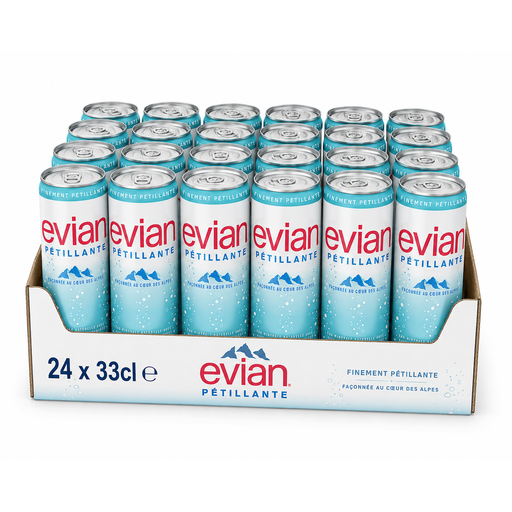
Why this choice suits this profile: The 24 cans of 33 cl are easy to hand out at a buffet, picnic or catering event, without having to handle large bottles.
The packaging states 24 × 33 cl, which is 7.92 litres. The product page also shows a water with 0 kcal and aluminium packaging that is recyclable in the appropriate schemes.
An individual format, a French mineral water and detailed information on the mineral composition.
We've put together a full selection, updated in real time, of products that meet these strict criteria as well as European safety requirements.
33 cl cans are easy to hand out and avoid leaving several bottles open. For a sit-down meal, 1 or 1.5 litre bottles help to limit the number of containers. Plan for several flavours as well as a sparkling water to suit everyone's preferences.
It all depends on the product and the manufacturer's recommendations. As a general rule, reseal the bottle, put it in the fridge and refer to the label. Some product pages recommend consuming it within two to three days. An opened can, on the other hand, is best drunk straight away.
No. An energy drink containing caffeine should be consumed taking into account the warnings on the packaging. Check the amount per serving and don't confuse it with a simple fruit-flavoured fizzy drink or sparkling water.