
Livraison le jour même ou le lendemain

Qualité garantie

Débloquez vos offres de bienvenue: Livraison GRATUITE | Jusqu'à -80 % | 30 jours d'essai gratuits à JoyPlus
Téléchargez l'application
Hanging a picture frame, a bathroom accessory, a cable trunking or a decorative item without reaching for the drill sounds simple enough. Yet a poorly chosen fixing adhesive can peel off, damage the surface or leave a stubborn mark. The right product depends less on the "ultra-strong" promise and more on the weight to be supported, the surface type and the environment.
A claim like "up to 5 kg" or "up to 120 kg" should be taken with a pinch of salt. The actual load a fixing can bear depends on the surface area being bonded, the number of pads, how flat the surface is, the temperature and the curing time. The capacity stated for an entire roll does not necessarily mean a small cut piece will support the same proportion.
For a heavy object or one installed above a walkway, allow a safety margin and follow the manufacturer's recommendations. When safety is a concern, a mounting adhesive does not always replace a mechanical fixing.
A painted wall, smooth tiles, porous wood, dusty concrete or flexible plastic all behave differently. Grease, moisture, dust and crumbly surfaces significantly reduce adhesion.
The phrase wall adhesive without nail or screw does not mean the product is suitable for every wall. Wallpaper, textured surfaces and freshly painted walls require special attention.
A bathroom, a sun-exposed balcony or a car interior subject to wide temperature swings all need a suitable solution. A simple removable paper adhesive is not the same as a waterproof adhesive tape or an outdoor adhesive designed to withstand the elements.
Compare the stated load capacity, the product format and the time you must wait before putting the fixing under stress. Some pads reach their full strength after several hours, or even 24 hours. Others offer an immediate grip but still need to be applied and pressed correctly.
For a light item, an adhesive pad or a pre-cut strip makes it easy to measure out the right amount. On a long surface, an extra-strong double-sided tape distributes the load more evenly. Cut only the length you need and avoid overlapping pieces.
Check the list of compatible surfaces and those to avoid. Some adhesives work on glass, metal, wood, stone or PVC, while others struggle to stick to polyethylene, polypropylene, PTFE or Teflon.
A fixing adhesive in a cartridge will often be better suited to panels, mouldings and uneven items. However, it requires a gun, a drying time and more careful preparation.
For outdoor use, check resistance to rain, ultraviolet rays and temperature fluctuations. Near an oven or a hob, a high-temperature contact adhesive may be appropriate, provided you respect its maximum temperature rating and the ventilation instructions.
If you are renting or like to change your décor regularly, choose a removable adhesive designed to come off cleanly. Still, test it on an inconspicuous area: paint, varnish and coatings can react differently.
Before applying, clean and dry the surface thoroughly, then remove any grease. For paste products or those containing solvents, read the warnings, wear the recommended protective gear and ventilate the room. The safety instructions supplied with the product always take priority.
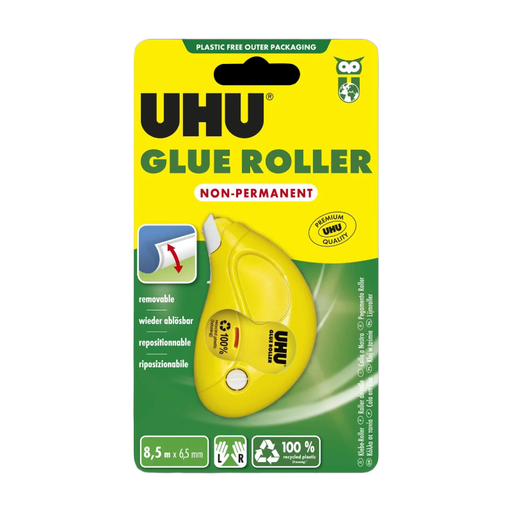
Why this choice suits this profile: Its compact format is ideal for notes, photos, envelopes and craft projects on paper or card, with no fiddly preparation.
It is designed for temporary, repositionable fixing, not for holding a heavy object on a wall.
A 6.5 mm transparent tape, a solvent-free formula and removal designed to leave no residue on compatible surfaces.
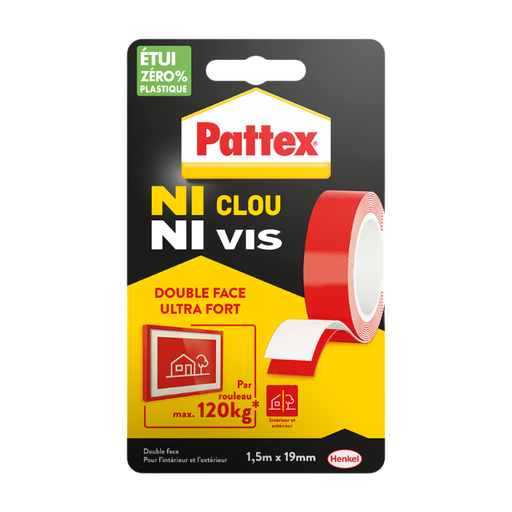
Why this choice suits this profile: This 1.5 m x 19 mm roll is designed for demanding installations on glass, metal, wood, stone and certain plastics.
The product page states a maximum load of 120 kg per roll – you still need to adjust the length used and prepare the surface properly.
Immediate adhesion, claimed moisture resistance and indoor or outdoor use, under the specified conditions.
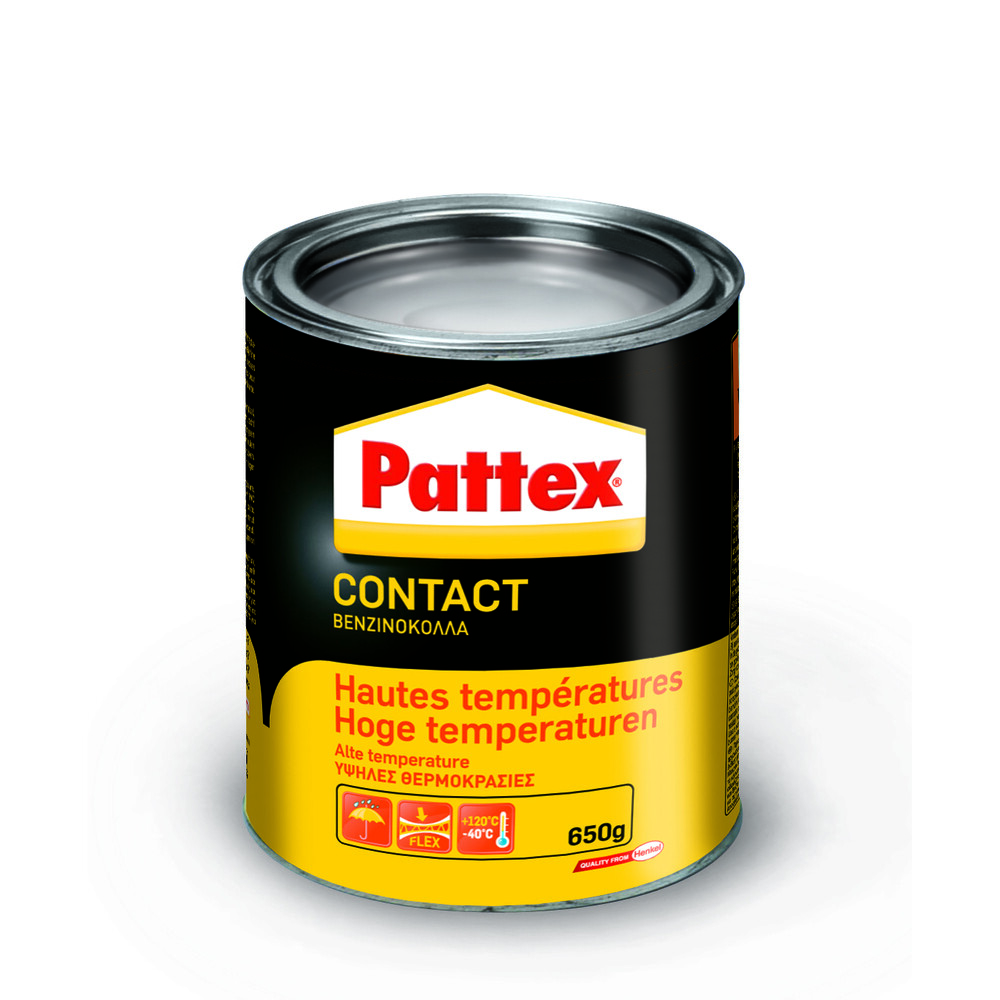
Why this choice suits this profile: Its 650 g tub is suitable for bonding wood, laminate, metal, ceramic, cork, leather or rubber, particularly near a heat source.
Its stated temperature resistance reaches 120 °C, but the product must be applied in a ventilated space and is not suitable for permanent immersion.
Strong initial grip, application with a brush or spatula and compatibility with several rigid materials.
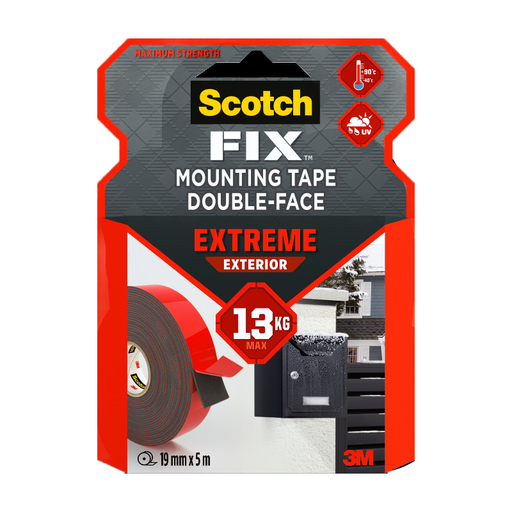
Why this choice suits this profile: This 5 m x 19 mm tape is designed for outdoor installations exposed to rain, sun and ultraviolet rays.
The "outdoor" label comes with a stated resistance to weather and UV, rather than a vague promise of universal adhesion.
A permanent black tape, a generous format and a stated load capacity of up to 13 kg, depending on application conditions.
We have compiled a complete list, updated in real time, of products that meet these demanding selection criteria as well as European safety regulations.
Dust the area, then degrease it with a product compatible with the surface coating. Let it dry completely. Apply the adhesive at room temperature, press evenly and respect the stated curing time. Avoid freshly painted, damp or crumbly walls.
The duration depends on the product, the load, humidity, UV exposure and temperature fluctuations. A permanent tape designed for outdoor use can be suitable for long-term use, whereas a removable adhesive is intended for light items and regular changes. Check the fixing from time to time.
Some models are designed to come off cleanly, but no result can be guaranteed on every surface. Remove it slowly, following the method indicated, and test it first on an inconspicuous area. For temporary fixing on paper or card, a repositionable glue roller generally limits marks and tearing.