Start by choosing the installation type your kitchen can accommodate: fully integrated to hide the appliance behind a door panel, semi-integrated if you’re happy to have a visible control panel, or freestanding if an integrated installation isn’t possible. Before comparing capacity and energy use, check the dimensions of the housing, door panel and plinth, as well as the connections, against the instructions for the exact model. A stated width of 45 or 60 cm isn’t enough to confirm that it will fit.
Who is this guide for?
Households replacing an integrated dishwasher
If you want to reuse the housing and, if possible, the existing door panel, compare their measurements with the new appliance’s installation diagram before looking at its programmes. The old model’s width doesn’t guarantee that its door panel or height will suit the replacement.
Households with a narrow housing
If the available space means you’re considering a 45 cm model, check its installation dimensions first. Then compare its stated capacity and basket layout with the crockery you use every day.
Households mindful of noise and energy use
If several models will fit your kitchen, the energy label can help you compare their energy use and noise levels. Noise is particularly worth considering if your kitchen opens onto your living space, as UFC-Que Choisir points out.
What should you check before choosing?
First decide whether the appliance needs to take a kitchen door panel. The dimensions and door mechanism will determine which models can be installed. Then compare the capacity and energy-label figures of the models that remain.
Fully integrated
Consider this if: you want to hide the appliance completely and have a suitable housing and kitchen door panel.
Bear in mind: the door panel, its fixing and its opening clearance must be compatible with the system designed for your chosen model.
Semi-integrated
Consider this if: you want an integrated appliance but are happy to have a visible control panel.
Bear in mind: the control panel breaks up the line of the kitchen doors, and you’ll still need to check the housing and door panel.
Freestanding
Consider this if: no compatible integrated installation is possible and a visible appliance will suit your kitchen layout.
Bear in mind: its exterior will remain visible and may not line up with your kitchen units.
| What to consider |
What to check before buying |
Who this matters to |
| Housing, door panel and plinth |
Compare the available width, height and depth with the installation diagram for the exact model. Also check the door panel dimensions, how it is fixed and the clearance needed to open the door. |
I want to replace an integrated dishwasher without finding out that the kitchen door catches on the plinth or the appliance won’t fit under the worktop. Around 36% of consumers prioritise this compatibility. |
| Size and capacity |
Once you’ve confirmed the housing width, compare the stated place settings and basket layout of the compatible models. |
Space is limited in my kitchen, but I still need room for the household’s usual crockery. Size and capacity come first for around 29% of consumers. |
| Everyday use and noise |
For compatible models, compare the energy label figures for kWh per 100 reference cycles, water per cycle, Eco programme duration and noise level. |
In an open-plan kitchen, I want to consider noise as well as energy use and programme duration. These everyday-use factors are the priority for around 21% of consumers. |
| Visible appliance |
If an integrated installation isn’t suitable, check the space, connections and clearance required for a freestanding model in its instructions. |
I’m happy to have a visible appliance if there’s no way to fit one into the housing and add a door panel. This becomes the top priority for around 14% of consumers. |
What mistakes should you avoid?
-
Ordering based only on “45 cm” or “60 cm”
The width doesn’t tell you how much space the appliance needs overall. For example, Bosch lists dimensions of 815 × 598 × 550 mm for its SMV4EVX36F and 865 × 598 × 550 mm for its SBV4HCX07E XXL. These models have a similar width, but different heights.
Measure the housing in all three dimensions, then compare it with the installation dimensions and clearances specified in the instructions for your chosen model.
-
Assuming the old door panel will fit the new appliance
Door mechanisms and the space beneath the door panel vary by model. A hinge designed for one particular set-up doesn’t guarantee compatibility with your kitchen door.
Before planning to reuse the door panel, compare its fixing diagram and dimensions, along with the plinth and door clearance.
-
Installing an integrated model as a freestanding appliance
UFC-Que Choisir explains that an integrated dishwasher needs to be fitted into a purpose-built housing. Simply placing it on the floor can affect how it works.
If you can’t confirm that an integrated installation is suitable, consider a freestanding model rather than improvising with an integrated one.
-
Comparing energy classes alone
An energy class doesn’t tell you how noisy an appliance will seem in an open-plan kitchen, how much water it uses per cycle or how long the Eco programme takes. ADEME explains that the electricity consumption shown on the energy label is expressed in kWh per 100 reference cycles.
Compare all the energy-label figures for models that are already suitable for your household in terms of installation and capacity.
Brands to consider for your installation
These ranges offer useful comparisons for different sizes and door types, but you’ll still need to check compatibility for each individual model.
Bosch
Worth considering if you’re comparing standard-height and XXL integrated models, or a model with VarioHinge.
- Bosch lists dimensions of 815 × 598 × 550 mm for the SMV4EVX36F and 865 × 598 × 550 mm for the SBV4HCX07E XXL.
- These dimensions and the inclusion of VarioHinge apply to specific models. Check the details for the appliance you’re considering and how its door panel is fitted.
Siemens
Worth considering for integrated and fully integrated models, particularly if you need to pay close attention to how the door panel moves near the plinth.
- Siemens describes varioHinge as a solution that reduces the space needed beneath the door panel to 5 cm on models equipped with it.
- This manufacturer’s guidance doesn’t replace checking your door and plinth against the installation diagram for the exact model.
Miele
Worth considering if you want to compare integrated, fully integrated, XXL or freestanding models to suit the space available.
- Miele’s range includes several installation types, so you can compare their capacity and noise specifications.
- Dimensions, noise figures and energy classes vary by model. A feature listed for one appliance won’t necessarily apply to the whole brand.
Beko
Worth considering if a narrow housing means you’re comparing 45 cm integrated dishwashers.
- Beko lists up to 10 place settings for some 45 cm integrated models and offers different interior layouts.
- Stated capacities and features depend on the model. Check its product details and instructions against your housing and loading needs.
Integrated and freestanding dishwashers on Joybuy
These models suit two situations: keeping your kitchen door panel with a fully integrated appliance, or choosing a freestanding dishwasher if an integrated installation isn’t suitable. Check the instructions for each model against your space before deciding which option is right for you.
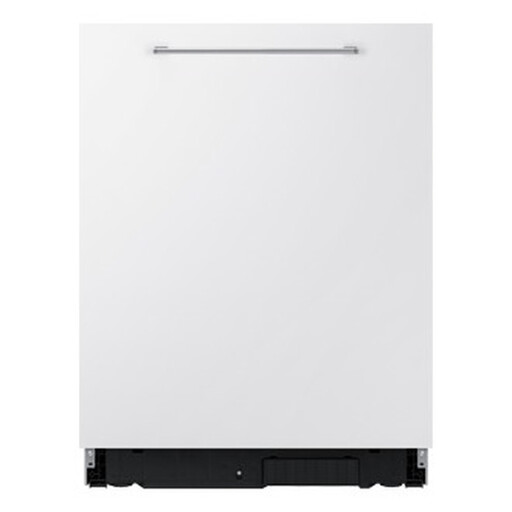 Image unavailable
Samsung DW70H72WCB0U1, 60 cm integrated dishwasher
Worth considering if you want to conceal the appliance behind a compatible kitchen door panel.
Stated capacity of 13 place settings; energy class C shown in the product title.
Check the housing dimensions, plinth and door-panel fixing system against this model’s installation diagram.
View on Joybuy
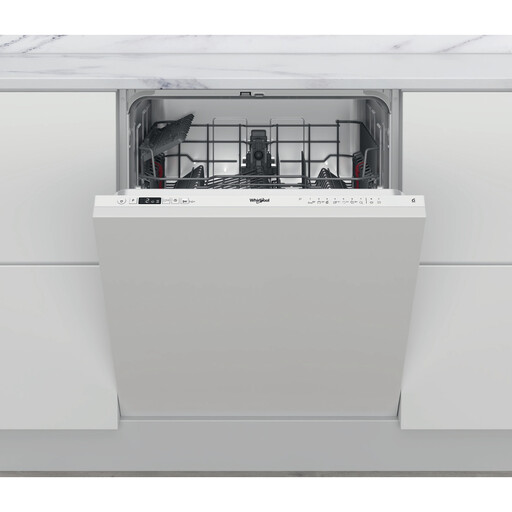 Image unavailable
Whirlpool W2I HD526 A, white 60 cm integrated dishwasher
Worth considering for a fully integrated installation, if your kitchen unit can accommodate the door panel designed for this model.
Stated capacity of 14 place settings; energy class E shown in the product title.
Compare the installation instructions with the dimensions of your housing and the plinth and kitchen door you plan to keep.
View on Joybuy
 Image unavailable
Samsung DW80H72YBB0U1, 60 cm integrated dishwasher
Worth considering for a seamless run of kitchen doors, provided the hinge and installation dimensions suit your kitchen.
Stated capacity of 13 place settings; energy class B shown in the product title.
Before comparing models by noise level, check the noise rating on the label for the exact model.
View on Joybuy
 Image unavailable
Indesit D2F HK26 S, grey 60 cm freestanding dishwasher
Worth considering when an integrated appliance with a kitchen door panel isn’t possible and you’re happy to have a visible model.
Stated capacity of 14 place settings; energy class E shown in the product title.
Measure the space and check the instructions for the required connections and clearances, including if you’re considering installing it under a worktop.
View on Joybuy
 Image unavailable
Samsung DW60M6050FS, grey freestanding dishwasher
Worth considering if you prefer a visible appliance to one concealed behind a kitchen door panel.
Stated capacity of 14 place settings and 7 cycles shown in the product title.
Before considering an under-worktop installation, check the available space, door clearance and connections in the instructions.
View on Joybuy
Frequently asked questions
Can you install an integrated dishwasher in place of a freestanding one, without a housing?
No, not by simply placing it on the floor. According to UFC-Que Choisir, an integrated dishwasher is designed for a purpose-built housing. If you can’t confirm that the installation is suitable, consider a freestanding appliance or ask someone to check your planned set-up.
What should you measure before replacing an integrated dishwasher?
Measure the internal width, height and depth of the housing, the clearance beneath the worktop, the plinth and the space for connections. If you’re keeping the door panel, measure it too and compare its fixing system with the installation diagram for the exact model. Two appliances of the same width can have different heights.
How should you choose between two models that fit the housing?
First compare their capacity and basket layout with the crockery you usually use, then check their energy labels. ADEME explains that electricity consumption is shown in kWh per 100 reference cycles. Also compare water use per cycle, Eco programme duration and noise level, especially in an open-plan kitchen.


