
Livraison le jour même ou le lendemain

Qualité garantie

Débloquez vos offres de bienvenue: Livraison GRATUITE | Jusqu'à -80 % | 30 jours d'essai gratuits à JoyPlus
Téléchargez l'application
For a seasoned angler, choosing a new fishing rod is never a simple task. It's not about finding a mere tool, but an extension of your arm—a precision instrument capable of transmitting the slightest bite and mastering the fight. Faced with a market saturated with marketing promises and obscure spec sheets, the risk of making the wrong choice is real. To avoid disappointment, it's crucial to know how to avoid the most common pitfalls.
For a demanding angler, three parameters are non-negotiable. They are what define the performance, sensitivity, and suitability of a rod for your style of fishing.
The blank is the rod's skeleton and nervous system. Its composition directly affects its weight, resonance, and responsiveness.
Expressed in grams (e.g., 10-40?g), the power rating doesn't indicate the weight of the fish you can target, but rather the lure weight range that the rod can cast and work optimally. A lure that is too light won't properly load the blank on the cast, while one that is too heavy will make it feel lifeless and risk damaging it over time. For a predator fishing rod, matching this range to your lure box is simply fundamental.
Too often underestimated, these elements are crucial, especially for a sea fishing rod or a boat fishing rod.
Rather than an exhaustive list, here are three models that perfectly meet the technical criteria mentioned, each for a very specific angler profile.
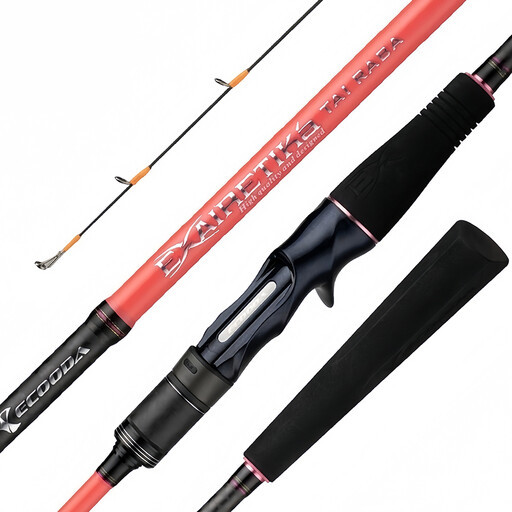
The ideal profile : The angler who uses refined techniques from a boat, such as tai rubber, tenya, or light jigging. They need a rod with an ultra-sensitive tip to detect the slightest bite directly below the boat, but with plenty of backbone power to master a good-sized sea bream or dentex.
It doesn't fall into the trap of false versatility. Designed specifically for vertical fishing, its action is not a compromise but a targeted technical solution.
Its responsive solid-tip blank offers maximum sensitivity. Its components are treated to withstand the saltwater environment.
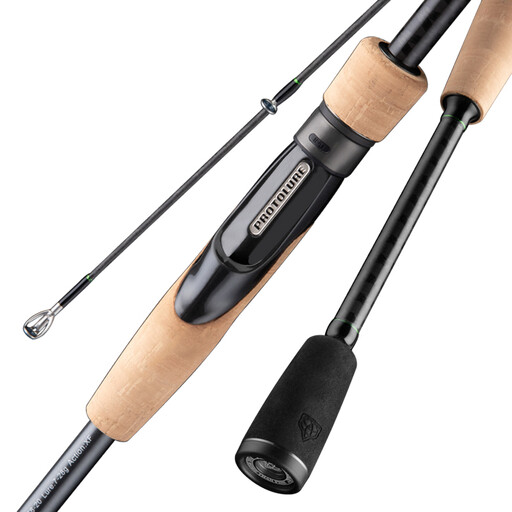
The ideal profile : The sea bass lure angler, fishing from the shore or a boat. They are looking for a responsive lure fishing rod with great casting distance, capable of working a topwater lure as well as a soft plastic. Its well-designed versatility even allows it to tackle freshwater predators (pike, zander).
It avoids the classic trap of an action/power mismatch. Its fast action is perfectly calibrated for modern lure fishing, offering total control over the lure's action and a powerful hookset.
Its highly responsive carbon blank allows for highly accurate casts. It is designed to be equally at home in saltwater and freshwater.
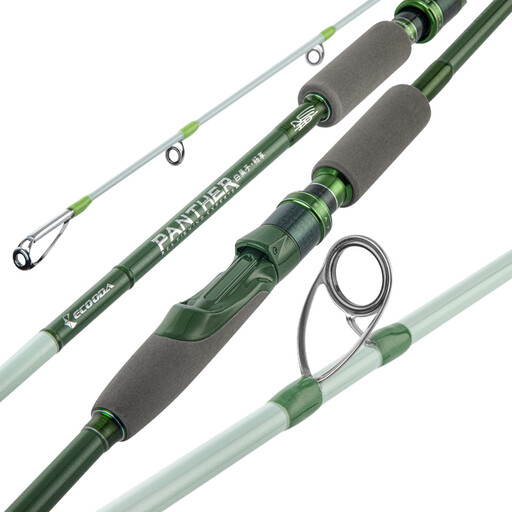
The ideal profile : The angler who fishes from a small watercraft (kayak, RIB). They are looking for a short, manageable, and lightweight boat fishing rod for casting or light trolling techniques. For them, robustness and corrosion resistance are top priorities.
It avoids the pitfall of low-end components that degrade after a few trips. Its guides and reel seat are specifically treated for offshore use, ensuring increased durability.
Excellent power-to-weight ratio for maximum fishing comfort. Its compact size is a real asset on small boats.
Explore our full selection of rods that meet our demanding selection criteria and the latest standards.
The lifespan of a carbon rod can easily exceed a decade if it is well-maintained. Its worst enemies are impacts (which can create micro-cracks) and corrosion of the metal parts. A systematic rinse with fresh water after each saltwater trip and storing it in a proper sleeve are the keys to preserving it for many years to come.
Salt is public enemy number one. After each trip, a thorough rinse with lukewarm fresh water is essential. Pay close attention to the guides and reel seat. Then, dry it with a soft cloth. For optimal protection, a thin coat of silicone lubricant on the metal parts from time to time can't hurt.
The choice depends on your preferred techniques and personal preference. Spinning (reel under the rod) is more versatile, easier to master, and ideal for most lures, especially lighter ones. Casting (reel on top of the rod) offers surgical precision, better line control, and superior hook-setting power. It is favoured for heavier lures (big baits, swimbaits) and techniques requiring constant contact with the bottom (jigging, rubber jig).