
Livraison le jour même ou le lendemain

Qualité garantie

Débloquez vos offres de bienvenue: Livraison GRATUITE | Jusqu'à -80 % | 30 jours d'essai gratuits à JoyPlus
Téléchargez l'application
Choosing the right fishing gear can often be a daunting task. Between marketing promises and opaque technical jargon, the risk of making a regrettable mistake is high. Beyond the waste of time and money, unsuitable gear simply ruins the enjoyment of being by the water. To help you avoid disappointment, let's review the most common pitfalls that await every angler, from beginner to expert.
One of the most frequent mistakes is falling for the allure of "all-in-one" gear. A rod that claims to excel at both freshwater fishing and surfcasting will ultimately prove mediocre in every situation. Another classic error is underestimating corrosion. For sea fishing, a reel not specifically treated for saltwater can be ruined in a single season. Finally, focusing solely on a material, like a carbon rod, without understanding its power and action, is a perfect recipe for disappointment.
This guide breaks down the essential criteria for choosing a fishing rod and fishing reel that are perfectly suited to your style of fishing.
Choosing a rod isn't just about its length or material. Two parameters are crucial for its performance on the water: power and action.
A rod's power, expressed in grams (g), indicates the optimal weight range of lures it can cast effectively. Using a lure that's too light for a powerful rod will result in short, inaccurate casts. Conversely, a lure that's too heavy for a light rod risks damaging it, or even snapping it clean on the cast.
The action describes how the rod bends under tension.
The reel is the engine of your setup. Whether it's a spinning reel or a casting reel, certain technical criteria are more important than marketing claims.
A reel's gear ratio (e.g., 5.2:1) indicates how many times the spool turns for one full crank of the handle. A high ratio (over 6.0:1) allows for a fast retrieve, which is useful for certain lure fishing techniques. A lower ratio provides more torque, which is valuable for working lures with a lot of resistance or for fighting large fish.
Ball bearings contribute to smoothness. Forget the numbers game: their quality is far more important than their quantity. It's better to have 5 high-quality, corrosion-resistant bearings than 12 low-end ones that will seize up at the first drop of saltwater.
Finally, the drag system is your lifeline. It must be both powerful (expressed in kg) to control a large fish and smooth enough to release line without any jerkiness, thus preventing break-offs.
To put theory into practice, here is our selection of targeted setups, based on the objective criteria we've just discussed.
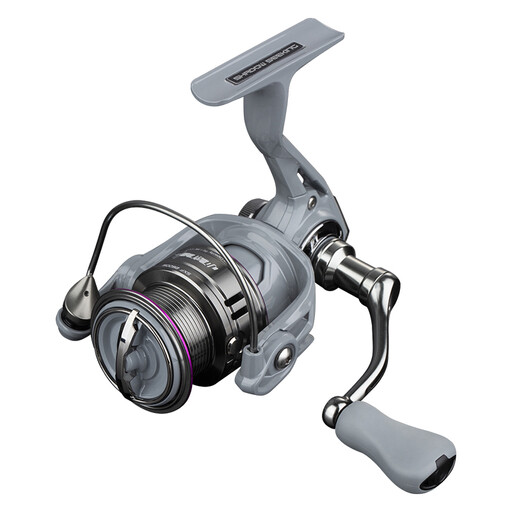
Why we chose it: This spinning reel is perfectly suited for anglers who fish in rivers and lakes. Its balanced design and ease of use make it an excellent partner for various freshwater fishing techniques, from targeting perch to zander.
It doesn't market itself as a "do-it-all" reel. It's a spinning reel engineered for freshwater, with smooth mechanics and a low weight, which helps it avoid the "jack of all trades, master of none" syndrome of being too heavy and clumsy.
Its smoothness and progressive drag are two key assets for perfectly controlled fights.
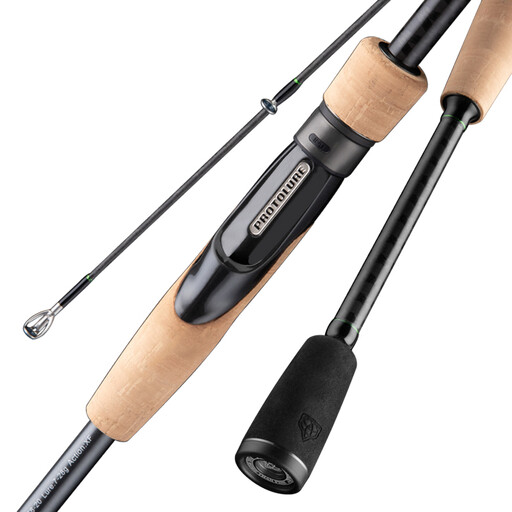
Why we chose it: This sea bass rod is designed specifically for sea fishing. Its carbon construction provides the sensitivity needed to work lures and detect the most subtle bites, while retaining enough backbone to tame this formidable fighter.
It tackles the corrosion problem head-on, with components (guides, reel seat) selected for their resistance to the saltwater environment. This is a specialised model, not a freshwater rod that has simply been "marinised" for marketing.
Its carbon blank is a powerhouse of responsiveness and lightness, optimised for long-distance casting and surgical bite detection.
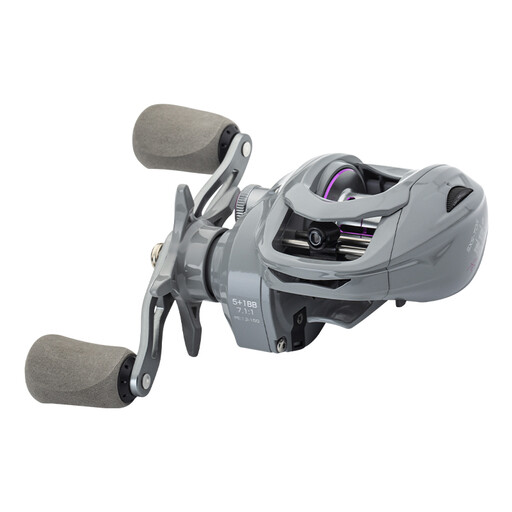
Why we chose it: This reel is tailor-made for surfcasting. Its aluminium body provides the essential rigidity for powerful casts and tough fights. Its high-capacity spool is designed to launch rigs over very long distances from the beach.
It makes no compromises on durability in a saltwater environment. Its metal construction and treated bearings are designed to resist corrosion, where a freshwater reel would be out of action after just a few trips.
Its ultra-robust aluminium body and "long cast" spool are the two pillars of surfcasting performance.
Discover our full selection of products that meet our demanding specifications and current standards.
The spinning reel is positioned underneath the rod. It's highly versatile and easier for beginners to master because it greatly reduces the risk of "bird's nests" (the infamous line tangles). The casting reel, on the other hand, sits on top of the rod. It's operated using your thumb to control the line release, offering superior casting accuracy and more torque, which makes it very popular for fishing with heavier lures.
Maintenance isn't an option; it's the key to your gear's longevity. After every sea fishing trip, it is imperative to thoroughly rinse your rod and reel with fresh, lukewarm water to dissolve salt. Then, dry them with a soft cloth. A crucial habit to develop: completely loosen your reel's drag before storing it to avoid compressing the drag washers. Periodic lubrication of moving parts is also recommended.
A carbon rod offers undeniable advantages: lightness, sensitivity, and responsiveness. It's an excellent choice for most modern lure fishing techniques. The flip side is that carbon is also more brittle and less tolerant of impacts than a fibreglass or composite blank. For a beginner, or for techniques that don't require extreme sensitivity, a composite rod can be a more forgiving and often more budget-friendly choice.