
Livraison le jour même ou le lendemain

Qualité garantie

Débloquez vos offres de bienvenue: Livraison GRATUITE | Jusqu'à -80 % | 30 jours d'essai gratuits à JoyPlus
Téléchargez l'application
Choosing the right food for your cat can quickly become overwhelming given the multitude of options available. Between the different flavors, formulas, and brands, it's easy to get lost. If fish-flavored kibble has caught your eye for your feline companion, this guide is for you.
As a Product Expert at Joybuy, my mission is to help you make sense of it all. On the agenda: practical advice for making the right choice and a selection of products for every need and budget, all without the marketing jargon.
Before diving into our selection, let's review a few essential criteria for finding the perfect kibble for your pet.
The ingredient list is the product's true report card. For salmon or other fish-based kibble, check that fish (fresh, dehydrated, or as meal) appears at the top of the list. This ensures it is one of the main components of the recipe.
Another crucial point is the grain issue. Grain-free cat food uses legumes or tubers as a carbohydrate source. Other formulas include whole grains like wheat or corn. The choice will primarily depend on your cat's digestive sensitivity and your personal beliefs about adult cat nutrition.
Your cat's age, activity level, and lifestyle are determining factors. A sterilized indoor cat does not have the same energy needs as an adventurous outdoor cat. Some formulas are enriched to meet specific needs: urinary health, coat beauty, sensitive digestion, or weight control.
Large-format cat food bags (over 5 kg) are often more economical in the long run. This is a smart move, provided you have the space to store them properly and are sure your cat enjoys the food. For a first try, a smaller bag (1.5 kg to 2 kg) is a more cautious option.
Here are three cat food references based on fish, each with its own unique features.
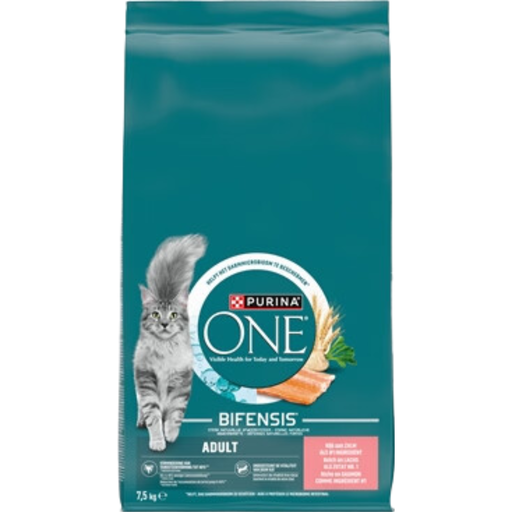
Why it stands out: This Purina kibble is formulated for complete daily nutrition. It includes the Bifensis nutritional complex, designed to support the cat's natural defenses. The recipe highlights salmon as the main ingredient and contains whole grains. The manufacturer claims the formula can reduce tartar buildup by up to 40%.
Pros:
Who is it for? For owners of adult cats looking for complete and balanced nutrition from a trusted brand, offering targeted daily health benefits in an economical format.
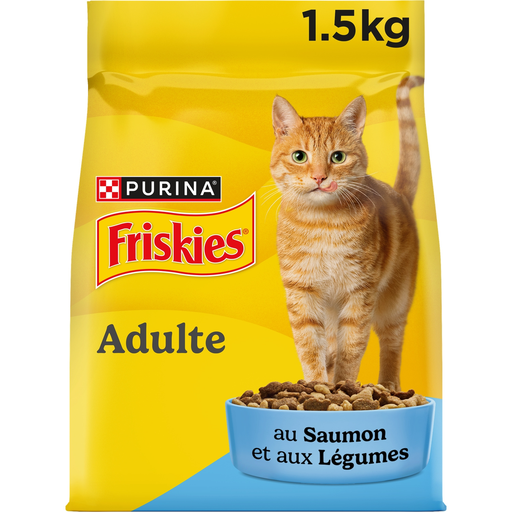
Why it stands out: Friskies offers a 100% complete and balanced recipe, specially designed for indoor cats. The formula combines animal and plant-based proteins, with salmon present in some of the kibble for flavor. The brand guarantees a recipe with no added artificial colors, flavors, or preservatives.
Pros:
Who is it for? For owners of indoor cats looking for a complete, simple, and affordable nutritional solution for daily life.
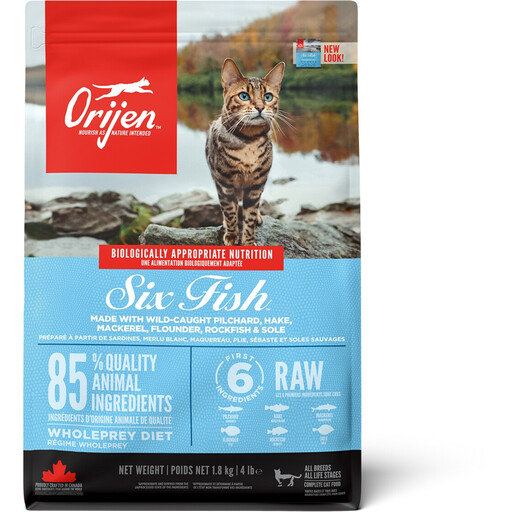
Why it stands out:Orijen kibble is distinguished by its "biologically appropriate" approach, which aims to replicate a cat's natural diet. This recipe is made with 85% animal ingredients, including six varieties of whole, raw, or fresh fish. It is a grain-free formula, very rich in protein and nutrients from meat, organs, and cartilage.
Pros:
Who is it for? For owners of cats of all ages who prioritize a premium, ultra-protein-rich diet and are looking for grain-free cat food that closely mimics the natural diet of felines.
Our selection highlights three distinct references, but the world of feline nutrition is vast. If you haven't found the perfect match yet or simply want to compare other recipes, many other possibilities are available to you.
To discover a wider range, feel free to browse our dedicated category.
Discover our full range of fish-flavored kibble
Grain-free cat food replaces traditional grains (wheat, corn) with other carbohydrate sources like peas, lentils, or sweet potatoes. They often have a higher protein content. Grain-inclusive foods, especially those with whole grains, can be an excellent source of energy and fiber for cats that tolerate them well. The choice primarily depends on your cat's sensitivity.
To avoid digestive issues, a gradual transition is necessary. Over a period of 7 to 10 days, progressively mix the new kibble with the old, gradually increasing the proportion of the new food until you have completely replaced the old one.
Generally, yes. Fish is an excellent source of protein and Omega-3 fatty acids, which are very beneficial for the skin and coat. However, like humans, cats can have strong preferences or, more rarely, food sensitivities. If you notice any unusual signs after a change in diet, the best course of action is to consult your veterinarian.