Which needs should you prioritise?
When equipping your first home, start with the functions you’re missing and the things you do regularly. Then use the space available to help choose between appliances that do the same job.
| Need | What to check before buying | Consumers concerned |
|---|
| Storing food and cooking |
Check what’s already there, then identify which refrigeration and cooking functions are genuinely missing. Choose a capacity that suits the meals you usually make. |
If I prepare meals at home, I want to store food and cook without buying an appliance that’s already there; around 29% of consumers prioritise this need. |
| Avoiding duplicates and clutter |
Measure the space and check which appliances are provided or which functions are already covered. |
In a small kitchen or a partially equipped home, I’d rather save space for things I’ll actually use; around 29% of consumers put this need first. |
| Doing the laundry |
Consider how often you do laundry, the drum’s usable capacity and the space available for the machine. |
When I do laundry at home often, I need a machine that suits the amount of washing I have, rather than a capacity chosen by default; around 24% of consumers prioritise laundry. |
| Managing long-term use |
Compare energy use and noise, where relevant, as well as any available durability or repairability information. |
If I plan to keep my appliances for a long time, I want to check their energy use and repair options before choosing; around 18% of consumers put this need first. |
Brands to consider
There are no brands to feature in this section.
Appliances to complete your home
These appliances cover three potential needs in your first home: storing food, doing the laundry and cooking on a built-in hob. Start by choosing the function you’re missing, then check the space available and the installation requirements.
 Image unavailable
CHiQ JR227LSE — 227 L fridge freezer, silver
Adds refrigeration and freezer storage to a kitchen that doesn’t already have them.
Stated capacity: 153 L for the fridge and 74 L for the freezer; 54 cm wide, reversible door, Low Frost and energy rating E.
Before choosing a spot for it, check its height, the clearances required and the annual energy use on the label.
View on Joybuy
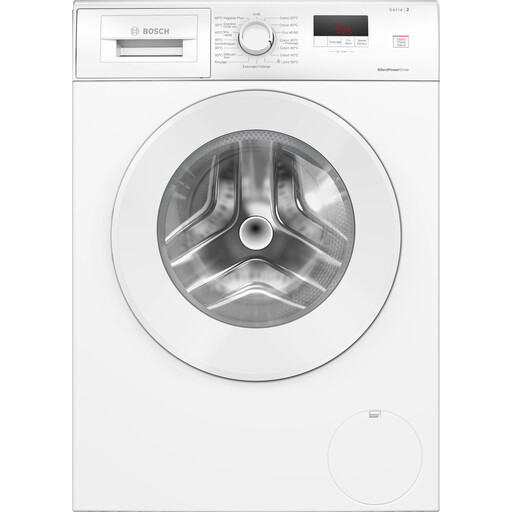 Image unavailable
Bosch WGE02407FR — 7 kg front-loading washing machine
Worth considering if you do laundry at home regularly and have a suitable space for a machine.
7 kg capacity, stated spin speed of 1,400 rpm and energy rating A. ADEME considers 7 kg enough for most people, but you should choose a capacity that suits the amount of laundry you have.
Check the dimensions and connection requirements for your home.
View on Joybuy
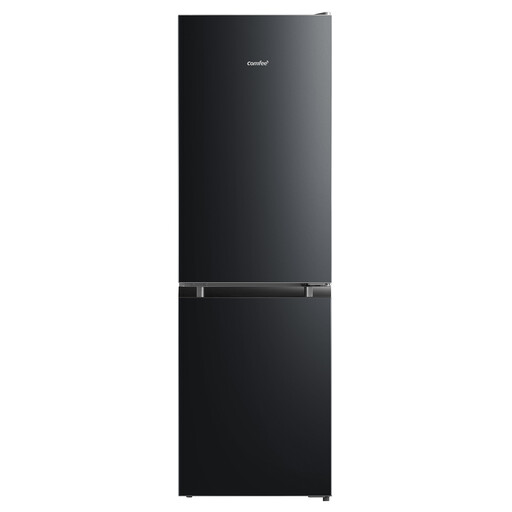 Image unavailable
Comfee' by Midea RCB230BL2EU(E) — 174 L fridge freezer, black
Covers your refrigeration and freezer storage needs if your home doesn’t already have a suitable appliance.
Stated total capacity of 174 L, Low Frost technology, adjustable thermostat, LED lighting and reversible door.
Check the full dimensions and the annual energy use shown on the label before buying.
View on Joybuy
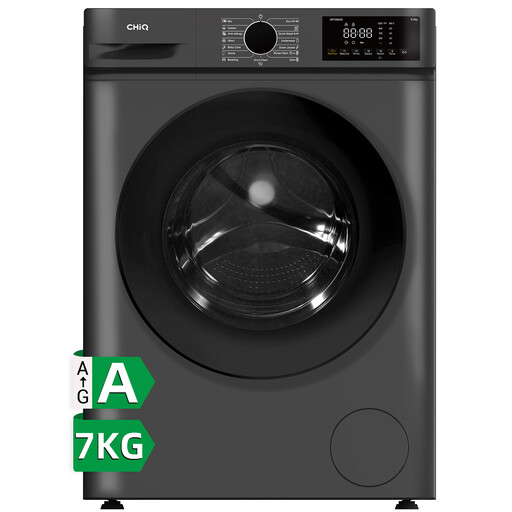 Image unavailable
CHiQ JW75883G — 7 kg front-loading washing machine, dark grey
For doing laundry at home when a 7 kg capacity suits the size of your usual loads.
Stated spin speed of 1,200 rpm, 16 programmes, steam function and energy rating A.
Check the installation space, the energy use shown on the label and the set-up instructions before use.
View on Joybuy
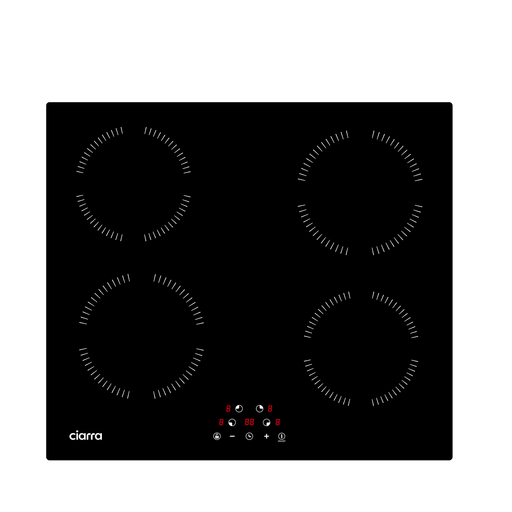 Image unavailable
CIARRA CABBIH4-A — built-in induction hob, 4 zones
Worth considering if you’re missing a cooking appliance and your kitchen can accommodate a built-in hob.
Four cooking zones and nine stated power levels.
Before buying, have the cut-out dimensions, ventilation and power supply compatibility checked against your planned installation.
View on Joybuy
Frequently asked questions
Do you need to buy a fridge and cooking appliances for a furnished rental?
Check the inventory before buying anything. For a furnished rental that serves as your main residence, the decree of 31 July 2015 published by Légifrance specifies a hob, an oven or microwave, and a fridge with a freezer or a compartment that reaches −6 °C or below. This doesn’t mean that a washing machine will also be provided.
Is a 7 kg capacity suitable for your first washing machine?
It’s a good starting point, but consider how much laundry you have: ADEME says that a 7 kg washing machine is enough for most people. If your loads are regularly smaller than the machine’s capacity, a larger model won’t necessarily suit your needs any better.
What should you compare on the energy label?
Compare the information that’s relevant to the appliance and how you’ll use it, not just its energy rating. For washing machines, look at electricity and water use, capacity and noise, bearing in mind the reference cycles the figures are based on. For refrigeration, also check the capacity and annual energy use.
How can you assess a washing machine’s durability?
Check the durability or repairability information shown for the model you’re considering, as well as details about spare parts and repairs. ADEME says the durability index has also applied to washing machines since April 2025. It adds to your comparison of energy use rather than replacing it.
Can you wait before buying a secondary appliance?
Yes, if you can already do what it’s designed for or you don’t yet have a regular need for it. Before adding a specialist appliance, work out which tasks are still difficult with the equipment you have. This follows ADEME’s advice to buy only what you really need.


