First dishwasher for a fitted kitchen
Before comparing programmes, check the available space, door clearance and connections. Having a housing unit in your fitted kitchen doesn’t guarantee that every integrated model will fit.


When choosing your first dishwasher, start by checking the space available and how much washing-up you produce. A freestanding model means you don’t need to match a cabinet door, while an integrated model needs a compatible housing unit. A compact dishwasher limits how much you can wash in each cycle. Then compare capacity, the figures on the energy label, noise levels and the model’s washing and drying results. Before ordering, check where it will go and make sure you have the right water, drainage and electrical connections.
Before comparing programmes, check the available space, door clearance and connections. Having a housing unit in your fitted kitchen doesn’t guarantee that every integrated model will fit.
Match the capacity to the number of meals you make and the washing-up you produce. UFC-Que Choisir describes 6-place-setting countertop appliances as space-saving. Its guidance on slimline 9-place-setting models also suggests they can be used every day by a small family.
If you have an open-plan kitchen or run cycles in the evening, compare the stated noise levels. ADEME also notes that the energy label provides information on electricity and water use, capacity and the duration of the Eco cycle.
Consider this if: you have a space that doesn’t need to match a cabinet door; UFC-Que Choisir describes these appliances as having finished visible sides.
Bear in mind: you’ll still need to check door clearance and connections for a freestanding dishwasher.
Consider this if: your kitchen has a suitable housing unit and you want the appliance to blend in with your cabinets.
Bear in mind: check the model’s instructions for the housing unit, cabinet door, hinges and installation requirements.
Consider this if: space is limited and you don’t produce much washing-up; UFC-Que Choisir describes countertop models with a capacity of 6 place settings.
Bear in mind: a smaller capacity may mean running more cycles if you produce a lot of washing-up at mealtimes.
Once you’ve chosen a type, compare models that genuinely suit your space and how often you’ll be loading them.
| What to compare | What to check | Think about your needs |
|---|---|---|
| Capacity | Compare the stated place settings with the amount of washing-up you produce between cycles. Check the dimensions and door clearance too. | We don’t produce much washing-up, or several meals quickly fill the machine: what capacity could we fill at a pace that suits us? |
| Consumption | ADEME recommends comparing the kWh per 100 cycles, litres per cycle, capacity and Eco cycle duration shown on the energy label. | I want to compare water and electricity use on the same basis, rather than choosing by energy rating alone. |
| Washing and drying | Look at the programmes and, for the exact model, comparable washing and drying test results, such as those published by UFC-Que Choisir. | Reducing the amount of washing-up I do by hand appeals most if the results suit our dishes and the way we load the appliance. |
| Noise | Check the stated noise level in dB on the label, and distinguish it from any figure given for a particular programme. | In an open-plan kitchen, I need to know how much noise to expect when the dishwasher is running close to the living area. |
| Installation and maintenance | Check the housing unit or space, water supply, drainage and electrical supply. Look at the leak-protection system and the repair information for the exact model. | I’d rather check the connections before ordering and understand exactly what leak protection covers. |
The type of installation doesn’t tell you whether there’s enough room to open the door or route the hoses.
Measure the space and check the instructions for the exact model. If the electrical supply needs to be installed or altered, ask a professional to assess the installation; Promotelec states that a dishwasher needs a dedicated circuit in the kitchen.
Adapting the connections or cabinets may mean extra work and costs.
You should also compare two appliances by their capacity, water consumption, Eco cycle duration and washing results. UFC-Que Choisir points out that running and maintaining an appliance involves more than simply buying it.
Read the figures on the energy label, as set out by ADEME, and look for tests covering the specific models you’re interested in.
Water, electricity, products needed to use the appliance and any repairs also add to the cost over its lifetime.
A countertop appliance saves space, but its limited capacity may mean running cycles more often if you cook frequently.
Estimate how much washing-up you produce between cycles, then compare the capacity and stated consumption of the models that fit in your home.
Bosch describes AquaStop as a safety feature, but notes that it cannot prevent every leak. The condition of your taps and pipes still matters.
Check the feature and its terms for the model you’re considering, as well as the condition of your connections and the manufacturer’s installation requirements.
These examples can help you decide what to check for each model; they’re no substitute for comparing the features of the appliance you’re considering.
Worth considering if leak protection is one of your priorities.
Worth considering for a large-capacity freestanding dishwasher advertised with overflow and leak protection.
Worth considering if access to spare parts matters to you.
This selection includes countertop models for smaller amounts of washing-up, a freestanding model and integrated models. For each one, compare the stated capacity with your needs, then check the space and connections.
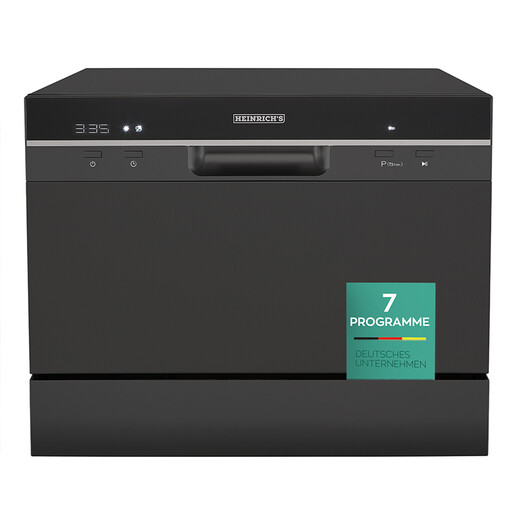 Image unavailable
This countertop model is worth considering if you’re short on space and have up to 6 place settings to wash per cycle. The product title states that it has 7 programmes, a noise level of 47 dB and a D energy rating. Check its dimensions and connections before deciding where to put it.
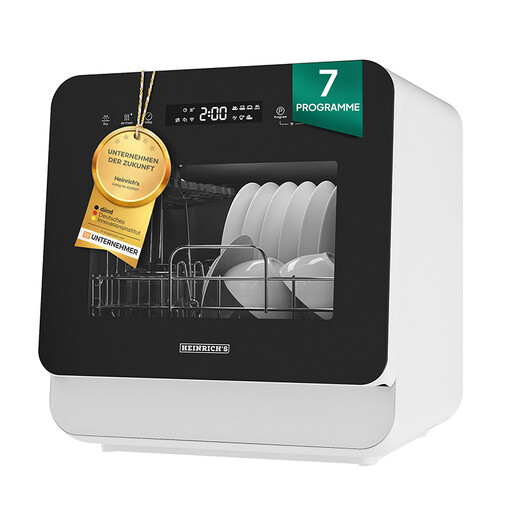 Image unavailable
For very small amounts of washing-up, this countertop model is listed with 3 place settings and 7 programmes. Its product title states a noise level of 56.3 dB and a C energy rating. Check its dimensions and the water-supply method required for your installation.
 Image unavailable
This freestanding option is listed with 14 place settings, making it suitable for a household that produces more washing-up. Its product title specifies a width of 60 cm, a noise level of 41 dB and a C energy rating. Check the door clearance and connections in your kitchen.
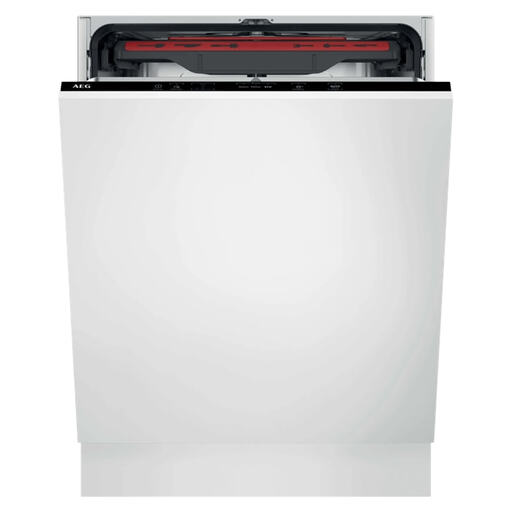 Image unavailable
This fully integrated model is listed with 14 place settings and a C energy rating. Before choosing it for a housing unit, check its dimensions: the title states a width of 60 cm, while a different measurement appears in the description. Check the required cabinet door and hinges too.
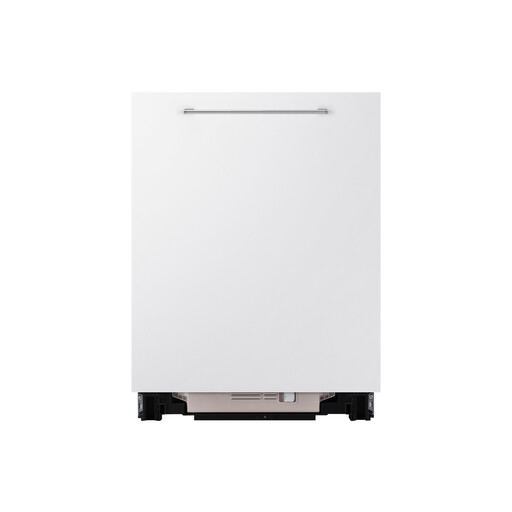 Image unavailable
Worth considering if your kitchen is designed for an integrated appliance: the product title states 13 place settings, a width of 60 cm and a B energy rating. Check the housing unit dimensions, cabinet door compatibility and installation requirements in the model documentation.
Check the water supply, drainage and electrical supply at the intended location, then consult the model instructions for connection requirements and hose routing. Promotelec states that a dishwasher needs a dedicated circuit in the kitchen; ask a professional to assess the installation if it needs to be installed or altered.
Compare the figures on their energy labels rather than looking only at the letter rating. ADEME lists the kWh per 100 cycles, litres per cycle, capacity and Eco cycle duration, among other details. Capacity matters when judging how much each cycle can wash.
No. Bosch describes AquaStop as a safety feature, but notes that it cannot prevent every leak. Check the feature’s coverage for the model you’re considering, along with the condition of the tap and connections.
Yes. The ministry responsible for the ecological transition states that dishwashers are covered by the repairability index, which is displayed on the product or its packaging. For more information, check the repair details and parts available for the model you’re considering.