Households where the washing-up piles up
If several meals regularly leave you with dishes to wash, compare the space in the baskets with your usual load and see whether planned wash cycles fit your routine.


A dishwasher can make your routine easier if dirty dishes regularly pile up after meals and you can install a suitable model in your kitchen. Before choosing between freestanding, integrated and compact designs, compare the available space and connections with the amount of washing-up you produce. If that amount is small or irregular, washing by hand may still be more practical. Then compare the Eco programme figures and the maintenance requirements of the model you’re considering.
If several meals regularly leave you with dishes to wash, compare the space in the baskets with your usual load and see whether planned wash cycles fit your routine.
The right format depends first on the available space, the appliance dimensions and the connections you can use. For an integrated dishwasher, you’ll also need to check that the door panel and installation setup are suitable.
As well as installation, consider water, electricity, detergents and maintenance. ADEME recommends checking the energy label to compare appliance specifications.
Start by checking whether your washing-up routine justifies an appliance. If it does, choose a format that can be installed in your kitchen before comparing capacity and the operating requirements of different models.
| Criterion | What to check | Who it matters to |
|---|---|---|
| Space and installation | Measure the appliance, its intended space and the access route. Check the manual for the water inlet, drainage and electrical supply. For an integrated model, check the housing and door panel too. | If my kitchen is already fitted, I want to know whether the appliance will fit and connect without unexpected alterations. Around 36% of consumers say this compatibility is their top priority. |
| Usable capacity | Compare the stated number of place settings and the basket layout with your plates, glasses and bulky utensils. | When dishes from several meals pile up, I want to load them efficiently without running extra cycles. Capacity is the top priority for around 29% of consumers. |
| Use and maintenance | Compare the Eco programme figures on the energy label, then check the products required and the model’s maintenance needs. | I expect to use the appliance regularly and want to plan for the water, electricity and consumables it will need. For around 21% of consumers, running costs come before other criteria. |
| Whether the appliance is worthwhile | Consider how often you eat at home, how much washing-up you produce and whether you can run cycles at a time that suits you. | If I produce little washing-up or only do so occasionally, I’d rather check that an appliance would genuinely make things easier. Avoiding an appliance that will rarely be used is the priority for around 14% of consumers. |
An incompatible door panel, plinth or cabinet can prevent the appliance from being installed as planned, even if an installation service is offered.
Compare your measurements with the model’s specifications and manual. Before ordering, clarify whether any changes to the cabinet or connections will be needed.
The consumption figures on the label relate to the Eco programme; they don’t cover every cycle or reflect how often you’ll use the appliance. UFC-Que Choisir also points out that usage and maintenance are part of assessing an appliance.
Compare the Eco programme figures with the capacity you need, then check the consumables and maintenance requirements of your chosen model.
Saucepans, serving dishes and tall glasses can take up basket space differently from a load measured in place settings.
Think about the items you wash most often and check the available height and basket adjustments on the exact model you’re considering.
A worktop appliance also needs a stable surface and a suitable arrangement for the water supply, drainage and electricity.
Read the manual for the compact model you’re considering and make sure its installation suits your kitchen, including how it drains.
Bosch offers freestanding and integrated dishwashers, including models listed in widths of 45 cm and 60 cm.
Siemens offers integrated formats with different control-panel designs and options for fitting the appliance into your kitchen.
Beko’s range includes freestanding and integrated appliances, so compare the options with your kitchen layout.
Some Miele models combine detailed consumption figures with an automatic detergent dosing system.
These Joybuy models let you compare freestanding dishwashers for regular washing-up with a compact worktop model for kitchens with limited floor space. Before choosing, check the manual and intended location for each one.
 Image unavailable
Worth considering if you want to load dishes from several meals into a freestanding appliance.
The listing states 14 place settings and 7 cycles. Check the manual for the dimensions, clearance and connections needed in your kitchen.
 Image unavailable
A freestanding option to consider if your available space can accommodate an appliance listed as 60 cm wide.
The listing states 14 place settings and an energy rating of E. Check the full energy label to compare the Eco programme, then consult the manual for the connections required.
 Image unavailable
Worth comparing for regular household washing-up, provided the appliance suits the space you have in mind.
The listing states an energy rating of C and a noise level of 41 dB. The specifications mention automatic door opening: follow the manual’s precautions regarding hot steam, particularly if there are children in your home.
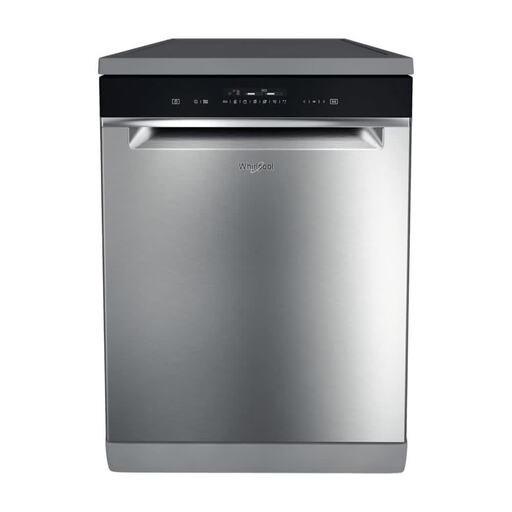 Image unavailable
Worth considering for a large amount of washing-up, but don’t order this model based on the width stated in its listing alone.
The listing states a width of 60 cm and an energy rating of C, but the other dimensions given for this model don’t match that width. Check the exact dimensions in the manufacturer’s documentation before measuring the space for it.
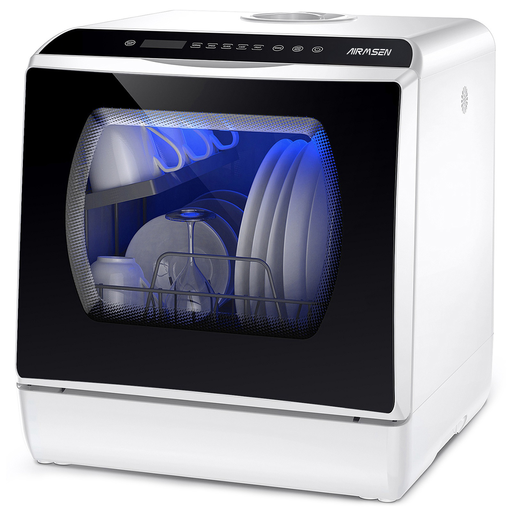 Image unavailable
An option to consider if floor space is limited, provided its capacity suits your everyday washing-up.
The listing states that it has a built-in 5 L tank and 5+1 cycles. Check the manual for the filling and drainage arrangements required for your planned setup.
Check the water inlet, drainage and electrical supply specified in the model’s manual, as well as its dimensions and the space available. For an integrated model, check the housing, plinth and door panel too. Separately, find out whether your kitchen will need any alterations.
According to ADEME, a dishwasher’s energy label includes details such as energy and water use, capacity, Eco programme duration and noise rating. Eco programme figures are useful for comparing models, but don’t describe every cycle they offer.
Allow for water, electricity, detergents and maintenance, as well as any alterations needed for installation. If you’re considering a model with automatic dosing, check which consumable it requires and whether it’s available.
No. The energy rating won’t tell you whether the appliance will fit in your kitchen or whether its baskets can hold your dishes. Compare the Eco programme figures, then check the capacity, installation requirements and maintenance needs of the model.