Households where washing-up piles up
Meals, saucepans and utensils end up in the sink every day. The right choice depends on how much you need to wash and whether you can fill the machine without running lots of lightly loaded cycles.


If washing-up regularly piles up, start by choosing a capacity that suits the dishes you use and the space available. Que Choisir says 60 cm models generally hold 12 to 17 place settings, 45 cm models hold 9 to 10, while its comparisons also feature compact models with 6 place settings. A fitted kitchen may point you towards an integrated model, provided you check the space and connections. If washing and drying the dishes after each meal takes you less than 15 minutes, Que Choisir considers a dishwasher non-essential.
Meals, saucepans and utensils end up in the sink every day. The right choice depends on how much you need to wash and whether you can fill the machine without running lots of lightly loaded cycles.
If you have fewer dishes or limited space, compare the capacity of a 45 cm model with that of a compact one, and don’t forget to account for your bulkiest dishes.
When fitting a dishwasher in an existing kitchen, the space available, door clearance and access to water, drainage and electricity matter just as much as the stated size.
Before choosing a size, look at the dishes you get through over several meals. A smaller appliance needs to fit your dishes, while a larger model should suit how quickly you can fill it. Then check the space and connections, and compare the energy and water use of models that genuinely suit your kitchen.
| What matters | What to check | Who it matters to |
|---|---|---|
| Everyday load | For several meals, note how many dishes you use, how many large items you have and how long you spend washing up by hand. Compare this with the place-setting capacity and basket layout. | When plates and utensils pile up, I want to make washing up less of a chore without often running a half-full cycle. Around 36% of consumers would put this everyday burden first. |
| Space and capacity | Measure the width, height and depth, as well as the door clearance. Compare these measurements with the model’s dimensions and the space needed for your dishes. | In a small kitchen, I want an appliance that fits without being too cramped for the dishes from our meals. Around 29% of consumers would prioritise size and capacity. |
| Water, energy and noise | Once you’ve found a suitable capacity, compare the kWh per 100 cycles, litres per cycle, Eco programme duration and noise level shown on the label. | If the kitchen is open-plan or the machine runs often, I want to be able to take its energy and water use and noise into account. Around 21% of consumers would put these factors first. |
| Installation | Check the space or location, water inlet, drainage, power supply and the connections specified in the instructions. | With an existing fitted kitchen, I need to know whether the appliance and its connections will fit before I order it. Around 14% of consumers would prioritise this compatibility. |
The stated width alone doesn’t tell you whether a dishwasher will fit in a space or whether its door can open. A slimline or compact model also leaves less room for dishes.
Measure the space in three dimensions, check the door clearance and delivery route, then look up the model’s exact dimensions.
A set-up service doesn’t necessarily include installing a water inlet, drainage, a socket or a cabinet door. Electrolux says its installers don’t carry out plumbing, electrical or carpentry work as part of its pre-installation service.
Check exactly what your chosen service includes, and make sure your home has the necessary connections before delivery.
The energy rating letter doesn’t tell you the capacity, water used per cycle, Eco programme duration or noise level. ADEME and the European Commission show these details separately on dishwasher labels.
Compare kWh per 100 cycles, litres per cycle, Eco programme duration and decibels across appliances with a capacity that suits your household.
The 6-place-setting compact models featured by Que Choisir are designed for homes where space is limited, but their capacity may be too small if dishes from several meals or large items start to pile up.
Picture how you’d load the machine on a typical day, including your saucepans and dishes, before ruling out a 45 cm or 60 cm model.
The range showcased by Bosch Electroménager France includes freestanding, integrated and compact dishwashers.
Siemens Electroménager offers freestanding and integrated models, with features that vary by model.
Beko France divides its range into freestanding, integrated with a visible control panel, and fully integrated models.
Miele France product pages detail specifications such as the energy rating and noise level for certain models.
These freestanding and fully integrated models are aimed at households considering swapping handwashing for a large-capacity machine. Before choosing one, check that 14 place settings suit your dishes and that the installation type works for your kitchen.
 Image unavailable
Worth considering if washing-up builds up regularly enough to make use of this capacity and you have space for a freestanding appliance.
The product name lists seven cycles. Compare the energy label and Eco programme duration before deciding whether it suits your usage.
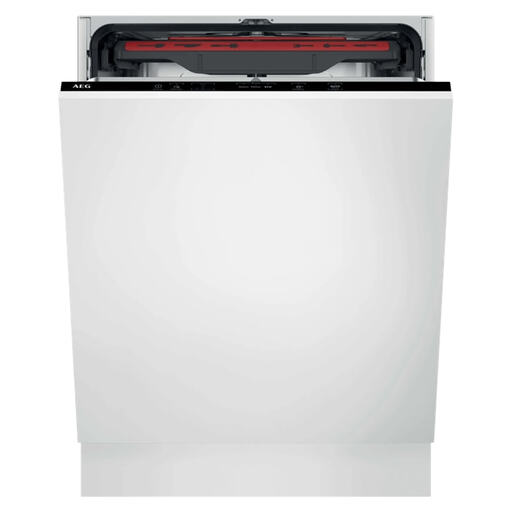 Image unavailable
Consider this model if your kitchen has a space for a fully integrated appliance and its capacity suits the dishes you use.
The title lists an energy rating of C. It also states a width of 60 cm, while the dimensions on the product page give 68 cm. Confirm the external measurements and check that it will fit before ordering.
 Image unavailable
This size may suit a household that regularly has enough washing-up to fill a 14-place-setting appliance.
The title lists a width of 60 cm and an energy rating of E. To compare it with other models, also check its energy and water use and Eco programme duration on the label.
 Image unavailable
Worth comparing if your household needs this capacity and the space you have can accommodate a freestanding model.
The title lists an energy rating of C and a width of 60 cm, but the dimensions on the product page don’t match that width. Confirm the external measurements before deciding where to install it.
 Image unavailable
Worth considering if you’re looking for a freestanding appliance and regularly have enough washing-up to suit 14 place settings.
The title lists a width of 60 cm, an energy rating of C and a stated noise level of 41 dB. Check the installation dimensions, energy and water use, and Eco programme duration. The product page also notes that the automatic door opening may release hot steam.
Handwashing may still make sense if you wash up after every meal and washing and drying the dishes takes you less than 15 minutes. In that case, Que Choisir doesn’t consider a dishwasher essential. Also take into account how many dishes you need to wash and how much space you have.
Compare the energy rating, kWh per 100 cycles, litres of water per cycle, Eco programme duration, capacity and noise level. ADEME and the European Commission show these details on the label. Start by choosing a suitable capacity, then compare energy and water use.
Don’t assume a standard set-up service will provide any missing connections. Electrolux says its installers don’t carry out plumbing, electrical or carpentry work. Have your kitchen assessed and check exactly what the service includes before delivery.
Make sure you have the detergent, water and electricity needed to run it. If your kitchen needs a cabinet door, fitting or connection work, check who will take care of it before you order.