
Same-day & Next-day Delivery

Quality Guaranteed

Unlock Your Welcome Offers: FREE Delivery | Up to 80% OFF | Free 30-day JoyPlus trial
Download the APP
A well-prepared first-aid kit is about more than a few adhesive plasters. At home, in a hiking pack or in the car, the needs vary: a minor cut, a graze, a heel blister, a corn on the toe or a dressing that needs securing over a joint. The common pitfall is being drawn in by attractive packaging, only to find that the product is not truly suited to its intended use.
Here are the most common mistakes to avoid and the criteria to check before buying your first-aid plasters and bandages.
The label “water-resistant” may offer only limited protection against a few splashes. For showers, baths or swimming, look instead for a clearly waterproof backing, adhesive that fully surrounds the plaster and a non-stick wound pad.
A plaster designed for minor wounds will not necessarily stay in place as well as a waterproof model. The MERCUROCHROME Waterproof Bandages Ultra-Thin Transparent X16, for example, is described as ultra-thin, transparent and suitable for minor superficial injuries exposed to water. However, it is recommended that you replace it after bathing, or as soon as it becomes wet or dirty.
A standard rectangular plaster may stay perfectly secure on a finger, yet slip from a heel or come away around a joint. Shape and dimensions therefore matter just as much as the number of plasters in the box.
To have several sizes available, an assortment such as the NEXCARE Breathable Universal Plasters Mix – 40 Plasters offers three sizes: 19 × 72 mm, 25 × 72 mm and 22.5 mm. Its non-stick pad makes removal easier, while the flexible backing follows the contours of the body. For a larger or irregularly shaped wound, a cut-to-size roll may be more practical.
Hydrocolloid plasters are designed to protect certain blisters and reduce friction. They are not a substitute for medical advice when a wound is deep, infected, very painful or caused by a bite.
Plasters for corns and calluses, meanwhile, are primarily intended to protect intact skin from pressure and friction. They do not constitute medical treatment for a corn. If you have diabetes, poor circulation or a persistent foot problem, it is best to seek advice from a healthcare professional.
For minor wound plasters, choose an absorbent pad that does not stick to the injury. Flexible fabric backings are suitable for areas that move frequently, while slim, transparent backings are more discreet.
Sterile dressings can be used to clean or cover a wound before securing it with medical tape. Check that the individual packaging is intact and that the word “sterile” is clearly displayed on the product. Dressings are generally intended for single use.
Effective adhesion should not necessarily mean painful removal. If you have sensitive skin, check the product information for latex-free materials, a gentle backing and easy removal. Clean and dry the skin around the wound before application, without stretching the plaster.
Medical tape on a roll is used to secure a dressing or other medical device. A microporous model allows air to circulate more freely and can often be torn by hand. When designed to hold a dressing in place, it should not be applied directly to an open wound.
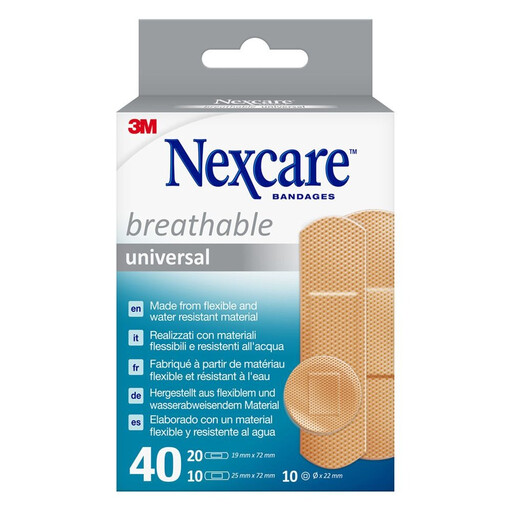
Why this choice suits this profile: With 40 pieces in several sizes, this assortment is ideal for equipping a family or replenishing a first-aid kit without accumulating multiple boxes.
The range of sizes avoids covering a small wound with an unnecessarily large plaster. The non-stick pad helps reduce the risk of pulling away a scab or skin during removal.
40 plasters, flexible backing and water-resistant construction. Class I medical device according to the information provided.
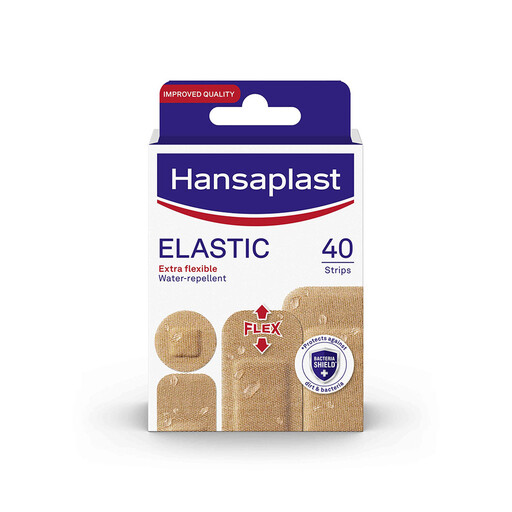
Why this choice suits this profile: This family-sized pack is well suited to everyday minor injuries, with a supple fabric designed for areas that are constantly in motion.
Its flexible, water-repellent backing follows movement more comfortably than a rigid plaster, without claiming to be fully waterproof.
40 pieces, four sizes, breathable fabric and a latex-free composition as stated.
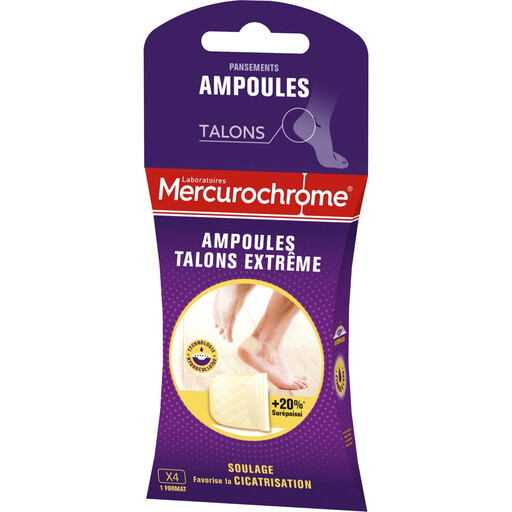
Why this choice suits this profile: This box of four plasters features a reinforced protective mesh, designed specifically for blisters on the heel and sole of the foot.
Its targeted shape avoids relying on a universal plaster in an area exposed to friction and pressure from footwear.
Hydrocolloid technology, tapered edges, water-resistant backing and a mesh stated to be 20% thicker than the brand’s standard version.
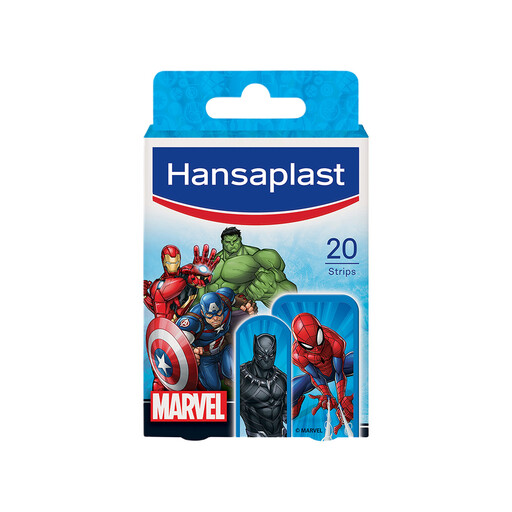
Why this choice suits this profile: With their colourful designs, these children’s plasters are made for everyday minor injuries.
The design is not everything: always check the size, adhesion and condition of the skin before applying the plaster.
20 pieces, removal described as gentle and a latex-free composition according to the information provided.
We have brought together an up-to-date selection of plasters, dressings, medical tape and bandages suited to the main everyday needs in France.
To secure a dressing, an elasticated support bandage or elastic bandage should be applied firmly, but without constriction. If numbness, tingling or a change in colour occurs, remove it immediately. An elastic bandage is not a substitute for medical advice in the event of a sprain or fracture.
A standard adhesive plaster should generally be replaced every day, or as soon as it becomes damp or dirty. A hydrocolloid plaster may remain in place for several days if it is still adhering properly, depending on the instructions and the condition of the skin. Remove it promptly if signs of infection appear.
A hydrocolloid plaster specifically designed for blisters may be suitable for clean, uninfected skin. Dry the area thoroughly, choose a size that extends sufficiently beyond the sensitive area and allow the plaster to come away naturally when recommended by the instructions. People with diabetes should seek medical advice before using one.
Ready-to-use plasters are convenient for minor cuts and grazes. Sterile dressings, used with medical tape or a suitable bandage, offer greater flexibility for covering a larger area or changing the dressing regularly. A family first-aid kit therefore benefits from containing both.