
Livraison le jour même ou le lendemain

Qualité garantie

Débloquez vos offres de bienvenue: Livraison GRATUITE | Jusqu'à -80 % | 30 jours d'essai gratuits à JoyPlus
Téléchargez l'application
A cut in the kitchen, a blister after a hike or an incident on the road may not require the same equipment. Yet many first aid kits and products intended for minor injuries are bought without checking their contents, size or conditions of use.
Before choosing first aid products, bear these three common pitfalls in mind:
A first aid kit intended for the home should cover the most common incidents: minor cuts, grazes, blisters and mild burns. Check that it contains several sizes of plasters, sterile dressings, disposable gloves and medical tape or adhesive tape for securing a dressing.
For the car, the contents can be more comprehensive and better organised. Kits stating compliance with DIN 13164 generally contain plasters, bandages, dressings, an emergency blanket, scissors and gloves. This reference makes it easier to check the contents, but remember to check the expiry dates of the items and the condition of the packaging too.
Choose the adhesive according to the area to be protected. On a joint or finger, a soft, stretchy material will follow movement more effectively. To secure gauze, microporous tape or adhesive tape will often be more suitable.
Here is what to look out for:
Strong adhesion does not mean that a product will suit every skin type. If irritation occurs, remove it and stop using it.
Hydrocolloid plasters are designed to cover certain blisters and form a gel when they come into contact with wound fluid. They must not be applied to an infected or deep wound, a bite or a serious burn. The skin around the area should be clean and dry to help them stay in place.
To clean a wound, choose a wound-cleaning spray and follow the manufacturer’s instructions. An antiseptic must be used in accordance with its label, avoiding the eyes and any ingestion. Some solutions labelled ‘hydrogen peroxide’ are intended for use on hair: they must not be applied to a wound if the packaging prohibits it.
In the event of heavy bleeding, persistent pain, significant swelling or signs of infection, seek medical advice promptly. First aid products are not a substitute for professional medical care.
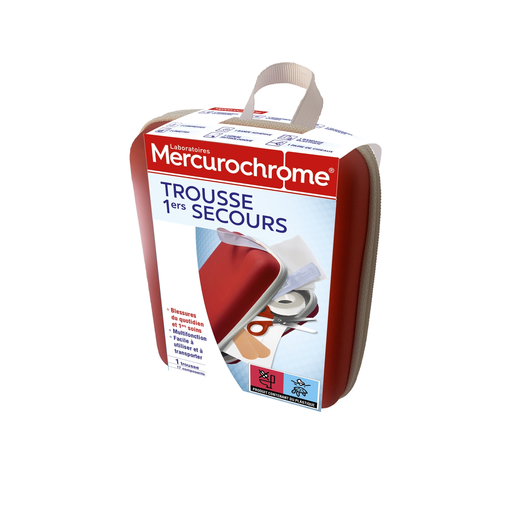
Why this choice suits this profile : This ready-to-store kit is ideal for a household that wants to keep everyday essentials close at hand for use at home, when out and about and for minor accidents.
It saves you from putting a kit together yourself and accidentally leaving out essential accessories. Its portable size also makes it easy to store in a cupboard or bag.
A lightweight, versatile kit : check the contents and replace products after use or when they reach their expiry date.
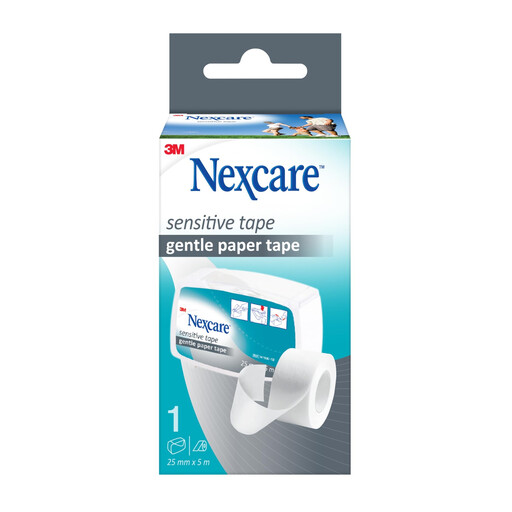
Why this choice suits this profile : This transparent tape is designed for anyone who values discretion, comfort and easy application when securing a dressing or gauze.
The width of 25 mm and length of 5 m are clearly stated. The tape is perforated for easy hand tearing and contains no natural latex.
A breathable, water-resistant and stretchy material that adapts to areas of movement.
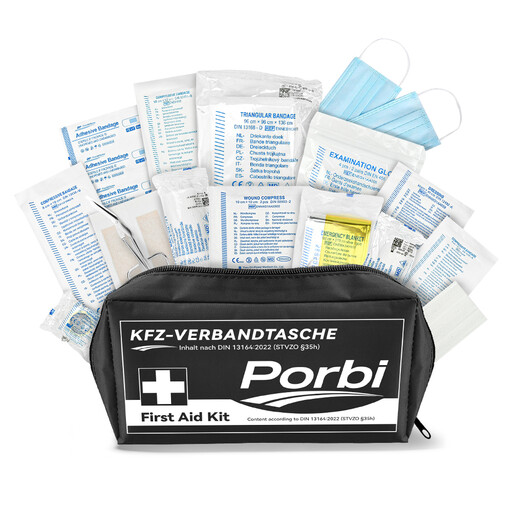
Why this choice suits this profile : This car first aid kit contains a range of practical sizes for commuting, travelling and keeping permanently in a vehicle.
The list includes sterile dressings, gloves, an emergency blanket, a burn dressing and a manual. It is still essential to check every package.
Detailed contents in accordance with DIN 13164, including bandages, scissors, masks and four pairs of disposable gloves.
We have put together a complete, real-time updated list of products that meet these demanding selection criteria and European safety regulations.
Depending on your needs, it is better to add a few targeted products than to fill your kit with duplicate items:
For blisters, an assortment of hydrocolloid plasters in several sizes will often be more useful than a single model. At home, a roll of medical tape and cut-to-size plasters make it easy to adapt to minor injuries.
Include several plaster sizes, sterile dressings, medical adhesive tape, disposable gloves, an antiseptic suitable for the stated use and, if necessary, a cleaning spray. Add blister plasters if members of your household enjoy walking or taking part in sport.
Shelf life varies from one item to another. Check the dates shown on the packaging, replace used products immediately and regularly inspect the condition of adhesives, dressings and solutions. A kit kept in a car should be protected from heat and humidity.
No. The composition, concentration, application area and minimum permitted age vary from one product to another. Read the instructions before use and do not confuse a solution for hair with a product intended for skincare. For a deep or infected wound, or one that is not healing, consult a healthcare professional.