
Livraison le jour même ou le lendemain

Qualité garantie

Débloquez vos offres de bienvenue: Livraison GRATUITE | Jusqu'à -80 % | 30 jours d'essai gratuits à JoyPlus
Téléchargez l'application
Protecting your important documents, family heirlooms, or business assets from fire and water is a top priority. In the face of a disaster, a fireproof and waterproof safe is often the last line of defense. However, the market is flooded with models making tempting promises that often lead to disappointment. As a Product Expert at Joybuy, my mission is to help you see clearly, navigate the marketing traps, and make a truly informed choice.
Before you start shopping, here are the 3 most common and costly mistakes buyers make:
To avoid falling for these tricks, focus on objective, verifiable features. Here are the three points to scrutinize.
These are your best guarantees. Don't just take the brand's word for it; demand proof from these two independent labels:
A safe's security relies on the balance between its locking mechanism and its physical robustness.
Fireproof insulation and locking mechanisms take up a considerable amount of space. As a result, the internal dimensions are often much smaller than the exterior suggests. Before finalizing your purchase, measure the items you plan to protect (A4 documents, binders, laptops) and meticulously compare them to the safe's internal dimensions.
To illustrate these criteria in action, here is a selection of models, each designed to meet a specific need.
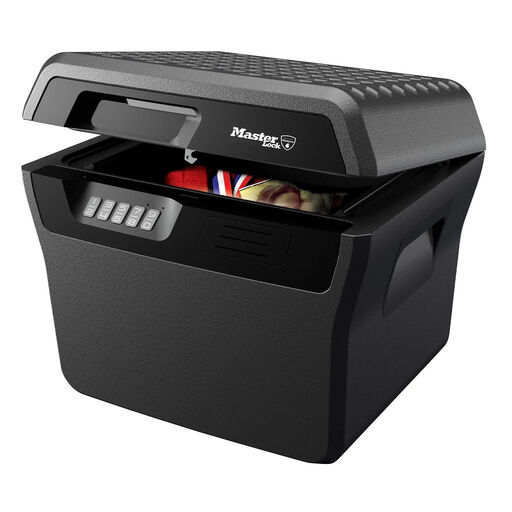
Why we recommend it: Perfect for entry-level protection. Its compact size allows it to be stored in a closet while still offering enough volume for flat A4 documents, passports, and digital media. It's a solution similar to a fireproof security case, but with the robustness and certifications of a true safe.
Its certifications are clear and verified: UL for 30 min at 1550°F (843°C) for documents and ETL for digital media and water submersion. A far cry from vague promises.
It combines certified protection for both paper and digital media with a programmable combination lock, all in a portable design.
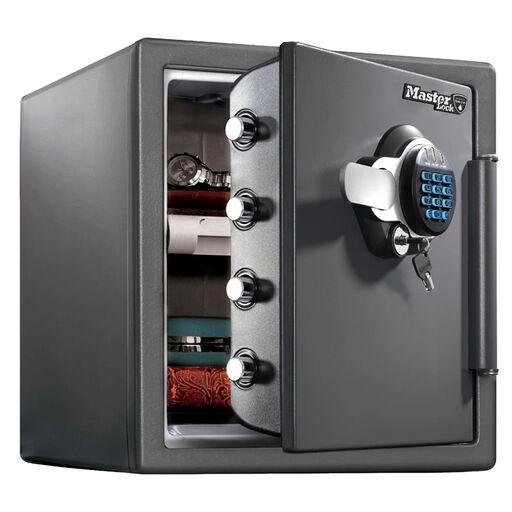
Why we recommend it: For those seeking absolute peace of mind. Its 33 L capacity and, most importantly, its extended fire resistance make it a top-tier choice for protecting critical documents, contracts, or valuables in a family or small business setting.
It offers exceptional fire protection with a UL certification for 2 hours at 1700°F (927°C), far exceeding market standards. Its dual-locking system (code + key) avoids the single-lock trap.
Superior fire protection and enhanced security with a dual-locking system, all backed by a robust construction with 4 active locking bolts.
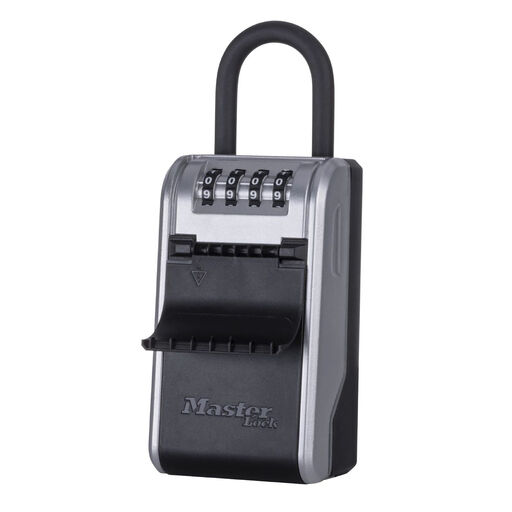
Why we recommend it: The ideal solution for homeowners, vacation rental managers, or families needing to share access. This secure key box is designed for convenience, weather resistance, and protection against common break-in attempts.
It doesn't claim to be fireproof but focuses on its primary mission: providing secure outdoor access with a robust aluminum body, ergonomic dials, and full weather protection.
Large capacity (up to 10 keys), a removable shackle for versatile mounting, and a design engineered for easy one-handed operation.
We have curated a full range of products that meet our strict selection criteria and current safety standards.
For optimal theft protection, bolting it down is indispensable. It prevents a burglar from carrying the safe away to open it later at their leisure. However, be aware: drilling into the safe to bolt it to the floor voids its water protection. Most waterproof certifications, like those from ETL, are only valid if the product is not bolted down. You have to make a choice: protection against theft or against water damage. Finally, never bolt a safe to a wall, as this would void its fireproof certification.
UL and ETL are two independent and recognized testing laboratories (NRTLs) that evaluate products against similar safety standards. For the end-user, one isn't fundamentally better than the other. What matters isn't the lab's logo, but the specific standard to which the product was tested (e.g., the duration and temperature of fire resistance). A product certified by either one offers a reliable performance guarantee.
Maintenance is simple but crucial. Replace the batteries in your digital or biometric safe once a year (or as soon as the low battery indicator lights up), using high-quality alkaline batteries. Keep the keypad clean and dry. Most importantly, keep the backup key (if provided) in a secure location outside of the safe. Never store it inside.