
Livraison le jour même ou le lendemain

Qualité garantie

Débloquez vos offres de bienvenue: Livraison GRATUITE | Jusqu'à -80 % | 30 jours d'essai gratuits à JoyPlus
Téléchargez l'application
Passports, property deeds, important contracts, or digital backups on a USB drive… Protecting our most valuable possessions is a natural instinct. In the face of a fire or flood, the consequences can be disastrous. The market is filled with solutions to prepare for such events, but be warned?: not all are created equal.
Before you make a decision, it's crucial to avoid the common pitfalls that could render your purchase useless. Behind tempting marketing claims often lie products that fail to deliver on their promises when put to the test by fire (or water). Here are the key things to watch out for to make an informed decision.
To see clearly, rely on objective, verifiable features, not just marketing hype. Two parameters are non-negotiable?: certifications and a design that fits your needs.
Labels from independent testing labs are your best, and only, guarantee. The two most reputable certifications for protecting documents from fire are UL (Underwriters Laboratories) and ETL (Intertek).
The insulation required for fire protection means the walls are very thick. Therefore, always check the internal dimensions to ensure your documents (usually A4 size) can be stored flat.
Also, consider the form factor. A small portable safe or a fireproof security case offers the flexibility to be taken with you in an emergency evacuation. The downside?: its portability makes it more vulnerable to theft. A heavier, bolt-down model will offer much better security against break-ins, but will obviously be less easy to move.
Rather than an exhaustive list, we have selected solutions that meet clear user profiles, based on the reliability criteria we have just discussed.
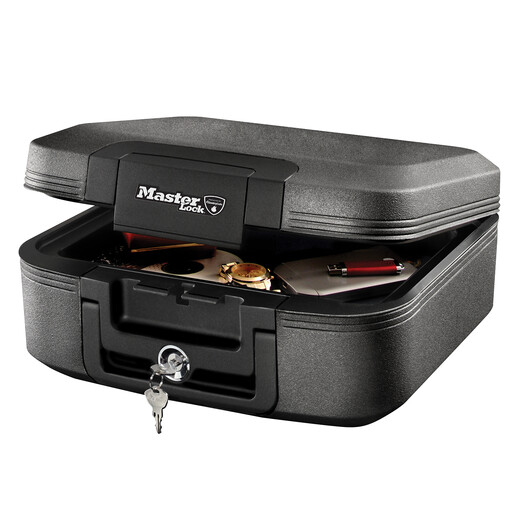
Why it's a great choice: Perfect for securing essential family documents (ID papers, deeds) and digital backups. Its compact size and handle make it very practical in an emergency evacuation.
This Master Lock model doesn't just make empty claims. It boasts genuine UL and ETL certifications, which guarantee its protection against fire (for both paper and digital media) and full water submersion.
Its certified dual protection for both paper documents AND digital media (USB drives, CDs)—a detail that is too often overlooked. The tubular key lock adds basic security against prying eyes.
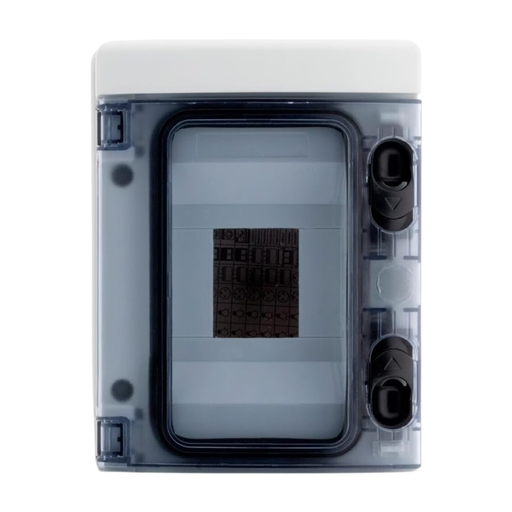
Why it's a great choice: For a very specific need: protecting equipment from water and dust in a harsh environment (workshop, garage, pool equipment room), without requiring fire or theft protection.
This product doesn't pretend to be something it's not. Its sole mission is waterproofing. Its IP65 certification guarantees total protection against dust and powerful water jets.
A technical and robust solution for shielding electrical components or small equipment that is sensitive to moisture and dust. Warning: This box offers no protection against fire or theft.
Explore our complete, up-to-date selection of products that meet these rigorous selection criteria and current safety standards.
The structure of a safe is built to last for decades. The weak point, or rather the point to monitor, is the waterproof seal. Over time, it can compress or dry out, losing its effectiveness. Be sure to inspect it regularly. It's worth noting that some brands, like Master Lock, offer a lifetime after-fire replacement guarantee, a testament to their confidence in their products' reliability.
The ideal location is always a balance between security and accessibility. For optimal fire protection, the ground floor is preferable: if the building structure collapses, the safe won't fall several metres. Avoid basements prone to flooding, unless your safe is certified for prolonged submersion. Finally, choose a location that is easy for you to access but remains discreet from visitors' eyes.
Not necessarily. The primary mission of a fireproof and waterproof safe is to resist fire and water, so its design is optimised for thermal insulation. While most models have a lock to deter casual snoops, they do not offer the burglary resistance of a true security safe (e.g., one with an A2P certification). To protect high-value items, it is essential to choose safes specifically designed and certified against theft.