
Livraison le jour même ou le lendemain

Qualité garantie

Débloquez vos offres de bienvenue: Livraison GRATUITE | Jusqu'à -80 % | 30 jours d'essai gratuits à JoyPlus
Téléchargez l'application
Protecting your important documents, family heirlooms, or digital data is a necessity. Faced with the risk of fire or flood, a fireproof and waterproof safe stands as the ultimate safeguard. But be warned: the market is a jungle of models with sometimes misleading claims. Falling for a common trap can turn your investment into a simple metal box, useless when you need it most.
As a Product Expert at Joybuy, my role is to guide you through this jungle. Together, let's break down the mistakes to avoid and the essential points to check so you won't regret your choice.
Buying a safe is, above all, a matter of trust. The problem? Some marketing promises are designed to mislead you if you don't read the fine print.
To be sure your safe will live up to its promises, three technical points must be scrutinized.
This is the most important criterion. Look for the following labels:
The type of lock is a trade-off between simplicity, convenience, and level of security.
Before you decide, take inventory of what you want to protect. And think bigger: your needs today may not be the same tomorrow.
To move from theory to practice, here is our selection of models that tick all the right boxes, each meeting a specific need.
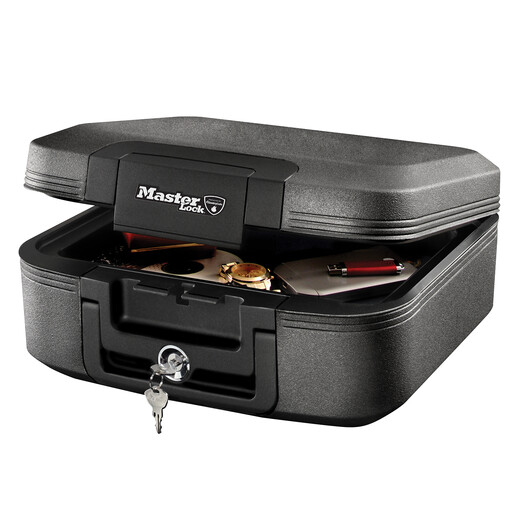
Why we chose it: Perfect for securing essential documents (passports, property deeds) and a few valuables. Its compact size and handle make it easy to conceal or take with you if needed.
It displays clear UL/ETL certifications, guaranteeing real protection against fire (30 min) and water submersion—a far cry from empty promises. Its tubular key lock is a simple, reliable solution that will never suffer from dead batteries.
Certified, portable protection at an accessible price point. It also protects digital media (USB drives, CDs, etc.).
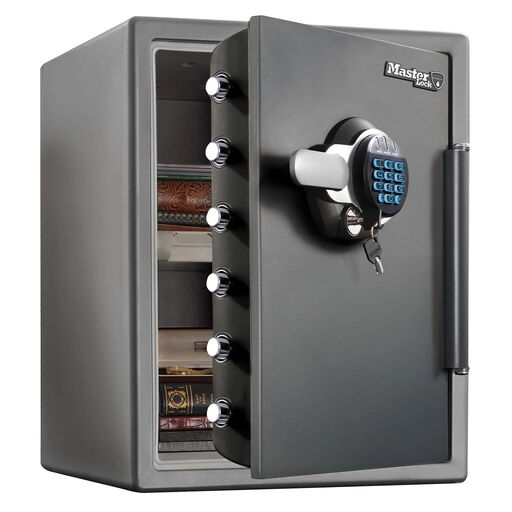
Why we chose it: Its generous 56L capacity is ideal for archiving important files, contracts, and digital backups. The dual lock provides an extra layer of security in a professional environment.
It goes far beyond the standard with 2-hour fire protection at 927°C / 1700°F. The combination of an electronic lock and a physical key creates a dual barrier against unauthorised access.
An XXL capacity and long-duration fire protection (2 hours), with a bolt-down kit included for optimal anti-theft security.
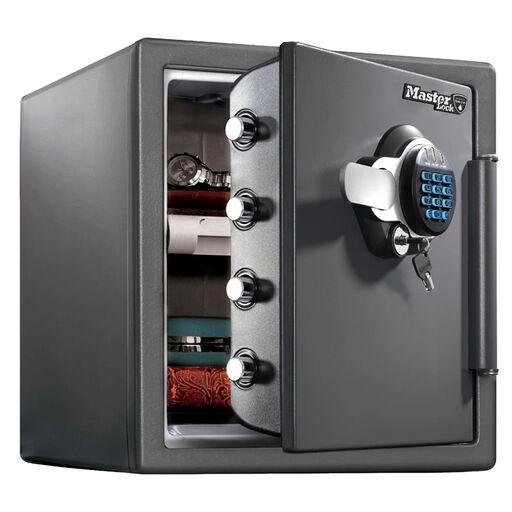
Why we chose it: It's the perfect balance between a comfortable capacity and cutting-edge protection for the family's most precious assets (jewellery, backups, important papers).
This model is a true fortress: it combines 2-hour fire protection, resistance to a 4.5-metre / 15-foot drop, and certified waterproofing in 20 cm / 8 inches of water. The dual lock (electronic + key) meets the highest security standards.
A dual lock and a trio of certifications (fire, water, drop) for absolute peace of mind.
Our full selection of products meets these demanding security criteria.
Bolting it down is highly recommended to prevent a burglar from walking away with the safe under their arm. The dilemma, as we've seen, is that drilling into the safe to secure it often voids its waterproof warranty. The technical sheets, especially from Master Lock, are clear: the ETL water protection certification is only valid if the bolt-down kit is not used. You will therefore have to choose your priority: the risk of theft or the risk of flooding, depending on your home.
For typical use, expect one to two years of battery life. Most electronic safes are equipped with a low-battery indicator light to alert you. Our advice: replace the batteries annually as a precaution and, most importantly, keep the physical override key in a secure location—and never inside the safe!
No, not necessarily! This is a common pitfall. Digital media (USB drives, hard drives, etc.) are destroyed at a much lower temperature (around 121°C / 250°F) than paper (177°C / 350°F). To protect them effectively, the safe must display the ETL Verified for digital media protection certification. This is a crucial detail to check if the survival of your data is at stake.