
Livraison le jour même ou le lendemain

Qualité garantie

Débloquez vos offres de bienvenue: Livraison GRATUITE | Jusqu'à -80 % | 30 jours d'essai gratuits à JoyPlus
Téléchargez l'application
When faced with unforeseen events like a fire or flood, protecting your essential documents and valuables isn't a luxury—it's a necessity. Passports, property deeds, digital backups, family heirlooms... some items are simply irreplaceable. The market is flooded with solutions, but how can you distinguish a true safeguard from a simple plastic box?
As a product expert at Joybuy, my mission is to give you the keys to making the right choice. Here are the most common pitfalls to avoid and the essential criteria for selecting the fireproof and waterproof safe that will truly meet your needs.
Investing in security shouldn't be a blind decision. Be wary of marketing promises that are too good to be true; many products fail to deliver on their claims in real-world conditions.
For true peace of mind, your choice must be based on objective and verifiable features.
Certifications are the only way to ensure your safe has been tested under rigorous conditions. Steer clear of products that don't display any.
Before relying on the external volume, check the internal dimensions. A good safe should be able to hold your standard documents (A4 or letter size) without you having to fold them. Also, consider the space needed for your other valuables: hard drives, jewellery, passports, etc. A fireproof security case or a portable safe may seem compact, but its capacity must be sufficient for your current and future needs.
Here are models that meet different needs, all evaluated based on the objective criteria we've just discussed.
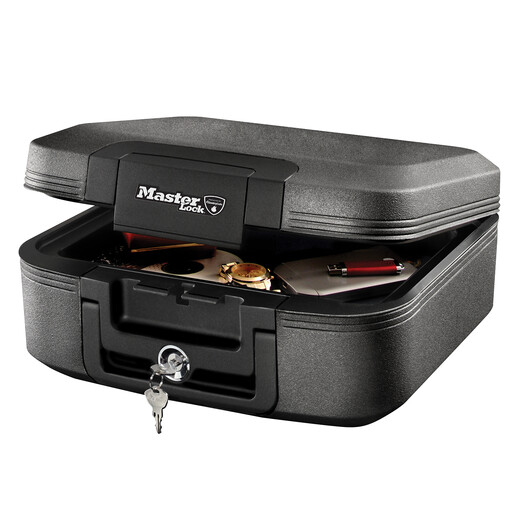
Why we chose it: This model is a complete solution for individuals and home-based professionals who refuse to compromise. It's designed to protect both paper documents and digital media from the two major risks: fire and water. Its handle makes it easily portable in an emergency evacuation.
It tackles common pitfalls head-on with its unambiguous certifications: UL certified for 30 minutes of fire resistance at 843°C (1550°F) and ETL certified for water immersion and digital media protection. No vague marketing, just facts.
Its dual certification (fire and water) from independent bodies. Its internal volume is designed to hold A4 documents flat, a practical detail that is too often overlooked.
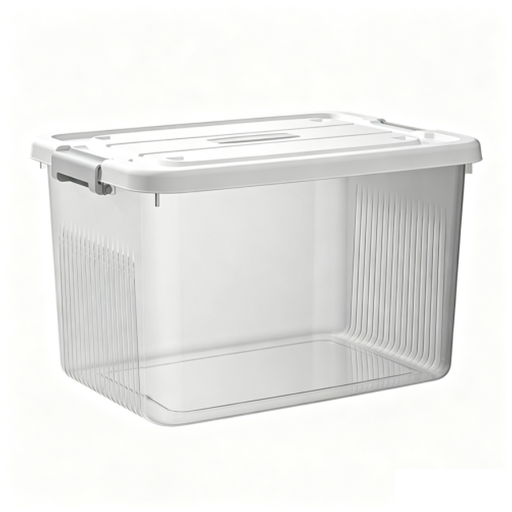
Why we chose it: This option is a perfect counter-example: it is intended for storing and organising everyday items (clothes, toys, supplies). Its sturdy, stackable design is perfect for optimising space in a closet, garage, or laundry room.
This product perfectly shows the difference between storage and security. We feature it here to emphasize that it offers NO certified protection against fire or flood. Mistaking it for a safe is the number one pitfall to avoid.
Large capacity and stackable design to efficiently organise your space. The clip-on lid protects from dust and ambient moisture, but absolutely not from immersion.
A safe protects your most precious belongings, but good daily organisation is just as important. Discover our selection of storage solutions for a perfectly tidy home.
Where should I place a fireproof and waterproof safe in my home? For optimal fire protection, place it on the ground floor, preferably in a corner or a closet. Avoid upper floors, where temperatures rise faster during a fire. For water protection, be wary of basements unless your model is certified for prolonged immersion.
What should I do if I lose my safe keys? Always keep a spare set of keys in a secure location, completely separate from the safe (e.g., with a trusted relative). Some manufacturers, like Master Lock, offer an online serial number registration service to make ordering new keys easier. As a last resort, calling a professional locksmith will be unavoidable.
Is a portable safe a good idea? Its portability is a real plus for a quick evacuation. The flip side: a portable safe can also be more easily stolen. If you don't plan on moving it, opt for a model that can be bolted to the floor or wall for better protection against theft.