
Livraison le jour même ou le lendemain

Qualité garantie

Débloquez vos offres de bienvenue: Livraison GRATUITE | Jusqu'à -80 % | 30 jours d'essai gratuits à JoyPlus
Téléchargez l'application
Protecting your essential documents, family keepsakes, and digital data is more than just a precaution. When faced with the risk of fire or flood, a good safe can literally save everything. But be careful—the market is saturated with vague, and even misleading, marketing claims. As a Product Specialist at Joybuy, I'm here to cut through the noise and guide you toward an informed and confident choice.
Before you start, be sure to avoid these three classic pitfalls that could turn your purchase into a waste of money?:
To assess the reliability of a fireproof and waterproof safe, certifications from independent laboratories like UL (Underwriters Laboratories) or ETL (Intertek) are your best form of protection.
Beyond certifications, other practical aspects will determine the ideal safe for your needs.
Rather than an endless list, here is a selection of products that meet clear user profiles, taking into account the security and practical criteria we've just discussed.
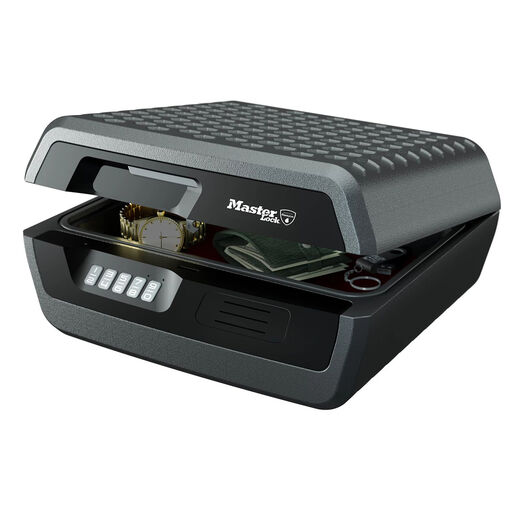
Why we recommend it : Perfect for a first level of protection at home. Its compact size is designed to protect essential documents (deeds, passports, A4-sized contracts) and digital media (USB drives, CDs) without taking up too much space. It's the ideal solution for a first home safe.
It clearly displays its ETL and UL certifications for fire (30 min at 843°C / 1550°F) and water. Its interior is specifically designed for A4 documents to lie flat, optimising its usable capacity.
Its certified protection for digital media, a detail too often overlooked on entry-level models. Its portable design offers great installation flexibility.
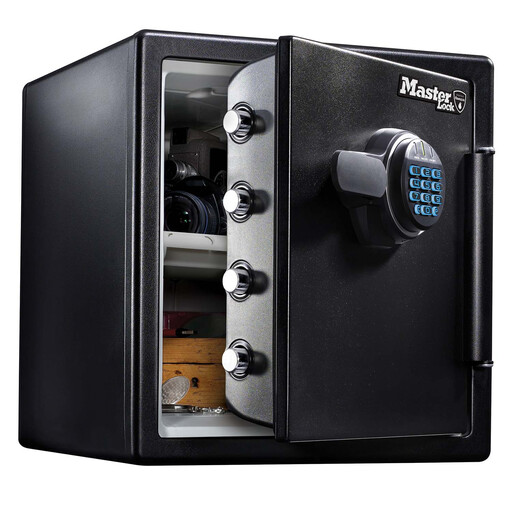
Why we recommend it : At 33.6L, this Master Lock safe takes things to the next level. It's built for families or small businesses that need to protect a significant volume of documents, valuables, and digital backups.
It offers superior fire protection (1 hour at 927°C / 1700°F), and its product sheet explicitly states that the waterproof guarantee is voided after bolting it down—a level of transparency we appreciate. The interior is optimised with a shelf, LED lighting, and door storage.
The perfect balance of large capacity, a smart layout, and high security (4 locking bolts, pry-resistant hinge), all backed by rigorous certifications.
Explore our full selection of products that meet our strictest security and reliability criteria.
Bolting the safe to the floor or a wall is highly recommended to prevent the entire safe from being stolen. However, this action almost always voids the waterproof certification, as the drill holes create entry points for water. It's a difficult trade-off?: if the risk of flooding is your primary concern, do not bolt it down. If theft is your biggest worry, bolting it is essential.
Be careful, not always?! Digital storage media (USB drives, DVDs, external hard drives) are much more sensitive to heat than paper and can be damaged at temperatures as low as 120°C (250°F). For effective protection, you need a safe that has a specific ETL verification for digital media at a given temperature and duration. Both models featured above include this protection.
Battery life varies depending on usage, but you can generally expect 1 to 2 years. Most quality models have a low-battery indicator to warn you in advance. Our advice?: change the batteries annually as a precaution and keep the backup key (or master code) in a safe place... but never inside the safe itself.