
Livraison le jour même ou le lendemain

Qualité garantie

Débloquez vos offres de bienvenue: Livraison GRATUITE | Jusqu'à -80 % | 30 jours d'essai gratuits à JoyPlus
Téléchargez l'application
When facing the unexpected, peace of mind is priceless. Whether it's protecting property deeds, passports, digital backups, or family heirlooms, a disaster like a fire or flood can destroy everything. The market offers a myriad of safes, but how can you tell the difference between reliable protection and a simple metal box?
Too many buyers fall for marketing promises that don't hold up. Before making your choice, beware of these three common mistakes:
This guide is here to help you decode the spec sheets and choose a safe that will truly protect your most precious belongings.
To make a smart investment, it's crucial to understand the standards that guarantee the effectiveness of a fireproof and waterproof safe. Here are the three parameters you must check.
A safe's ability to protect its contents from heat is measured by independent organisations. The two most recognised certifications are:
A fire-resistant safe that doesn't display one of these labels is a risky bet for protecting your important documents.
Water, whether from a flood or firefighting efforts, is an equally serious threat. The ETL Verified for Water Submersion certification specifies the conditions of protection. For example, protection of "20 cm for 24 hours" means the safe can be submerged under 20 cm of water for a full day without the contents being affected.
Note: Bolting the safe to the floor, while recommended to prevent theft, often voids this waterproof guarantee. You must weigh the trade-offs: maximum protection against theft or against water?
The security of a home safe doesn't just depend on its lock. Examine the following elements:
A well-designed fireproof security cabinet combines these three pillars for complete protection.
Every need is unique. Here are recommended options, categorised by distinct user profiles, to help you find the right model for you.
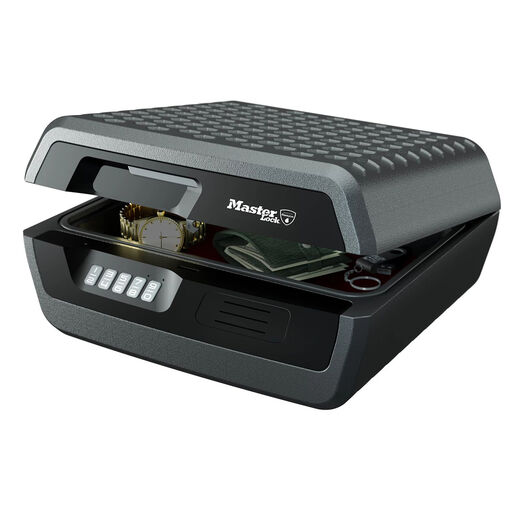
Why we recommend it: Perfect for securing essential documents (fits A4 flat), passports, and a few digital media items without investing in a large-capacity model. Its compact size and digital combination lock make it a practical and discreet solution for an apartment or office.
This safe doesn't just make promises. It features UL and ETL certifications for 30 minutes of fire protection (up to 843°C) and ETL verification for water submersion, offering verifiable protection against the two major threats.
Certified fire and water protection in a compact size. Programmable digital combination lock for keyless access.
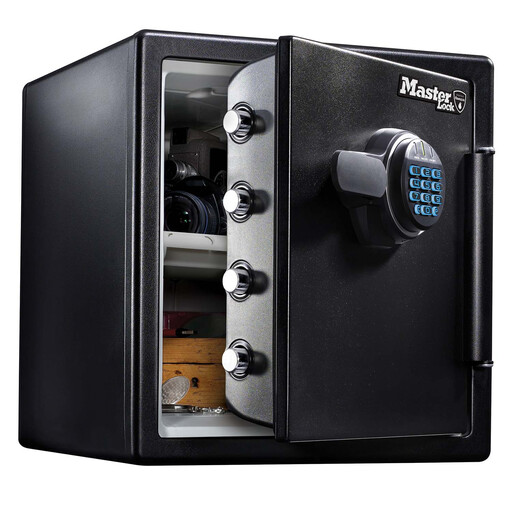
Why we recommend it: For families needing more space to protect documents, jewellery, electronics, and valuables. Its interior organisation (shelf, door pocket) and LED lighting make storage and access easy.
It avoids the trap of flimsy construction. With its four live-locking bolts and pry-resistant hinge, it offers physical security far superior to entry-level models, in addition to 1-hour fire protection at 927°C (UL).
High level of fire (1hr) and break-in protection. Spacious and organised interior with LED lighting.
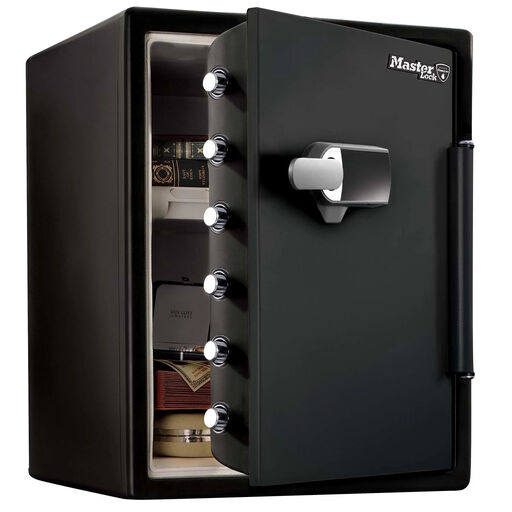
Why we recommend it: Perfect for self-employed professionals, small businesses, or collectors who need maximum storage volume for files, cash, or large valuables. Its XXL construction and integrated alarm make it a true home fortress.
This model offers uncompromising protection. It combines a 1-hour UL/ETL fire rating at 927°C, ETL water protection up to 20 cm, and maximum physical security with six live-locking bolts and an alarm. It doesn't sacrifice one feature for another.
Very large 56.5 L capacity. High-level certified protection against fire, water, and break-ins, with a deterrent alarm.
Discover our full selection of products that meet these demanding security criteria.
1. Is it essential to bolt down your safe? For optimal theft protection, yes. A burglar will always prefer to carry away a small safe to open it at their leisure later. However, keep in mind that drilling into the safe to bolt it down almost always voids its waterproof certification. It's a trade-off you have to make based on your primary risk: theft or flood.
2. What's the difference between fire protection for paper and for digital media? Paper only ignites at 177°C. In contrast, digital media (USB drives, external hard drives, DVDs) can be damaged by heat and humidity much sooner, sometimes at temperatures as low as 120°C. If you want to protect digital backups, look for a safe with a specific ETL certification for digital media, which guarantees a lower internal temperature is maintained.
3. How long do the batteries in a digital combination safe last? Generally, good quality alkaline batteries last between 1 and 2 years with normal use. Most digital combination safe models are equipped with a low-battery indicator to warn you. It is imperative to keep the backup key (when provided) in a safe place, and most importantly, outside the safe.