
Livraison le jour même ou le lendemain

Qualité garantie

Débloquez vos offres de bienvenue: Livraison GRATUITE | Jusqu'à -80 % | 30 jours d'essai gratuits à JoyPlus
Téléchargez l'application
Keeping our most precious belongings safe is a top priority for many of us. Whether it's irreplaceable official documents, family heirlooms, or sensitive digital media, the risks of fire, flood, or theft are very real. Faced with these threats, the fireproof and waterproof safe stands out as the most effective solution.
However, the market is flooded with models that often make vague promises. To help you cut through the noise and avoid costly mistakes, we've broken down the 3 most common pitfalls and the essential criteria to check before you buy.
To ensure you're investing in equipment that will live up to its promises, it's essential to understand a few standards and features.
These are the acronyms to look for on the spec sheet. UL (Underwriters Laboratories) and ETL (Intertek) are independent laboratories that subject products to drastic resistance tests according to standardised protocols.
The choice will depend on your habits and the level of security you're looking for.
This is the number one disappointment: discovering that your A4 binders or laptop won't fit. Always check the internal dimensions, not just the external volume. Think about everything you want to store in it and plan for 20% extra space for the future.
To guide you, here are practical solutions for three different user profiles, selected based on the security and convenience criteria we've just covered.
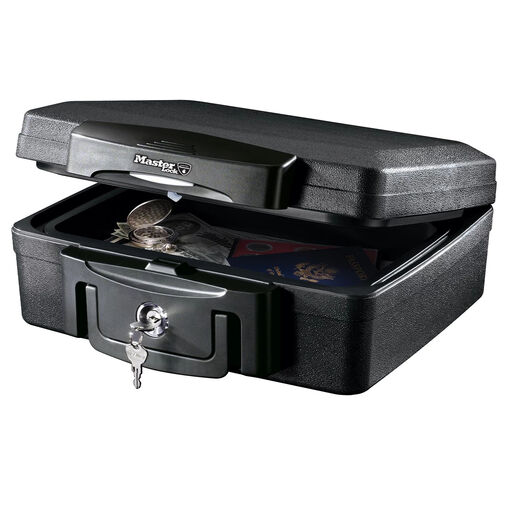
Why it's a match: Ideal for those who need to secure and transport essential documents (passports, deeds, USB backups) between home and the office. Its carrying handle makes it an excellent portable safe.
This model doesn't just make vague promises. It displays clear certifications: ETL Verified for fire protection of both documents AND digital media (30 min at 843 °C), as well as for total submersion, which removes any ambiguity.
It combines dual certification (fire and water) with true portability, thanks to its handle and simple, hassle-free key lock.
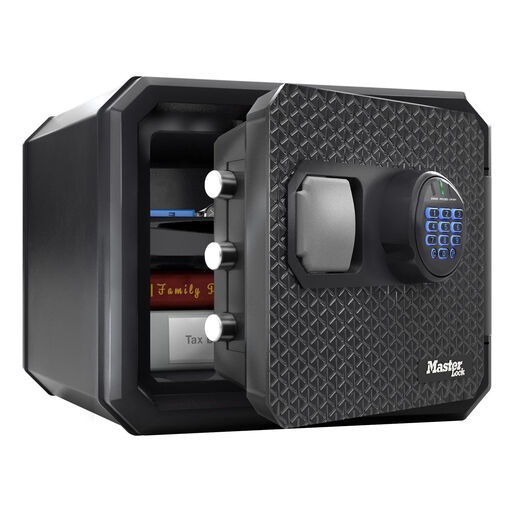
Why it's a match: An excellent home safe, with ample capacity for the whole family's documents, a few valuables, and digital backups. Its electronic lock with a backlit keypad makes it very easy to use daily.
It solves a major dilemma: bolting it down. Thanks to its patented waterproof bolting kit, it can be securely anchored for theft protection while retaining its ETL Verified waterproof certification. A rare competitive advantage.
All-around protection (UL 1-hr at 927 °C fire, water, drop) with the unique ability to be bolted down without sacrificing its waterproof seal.
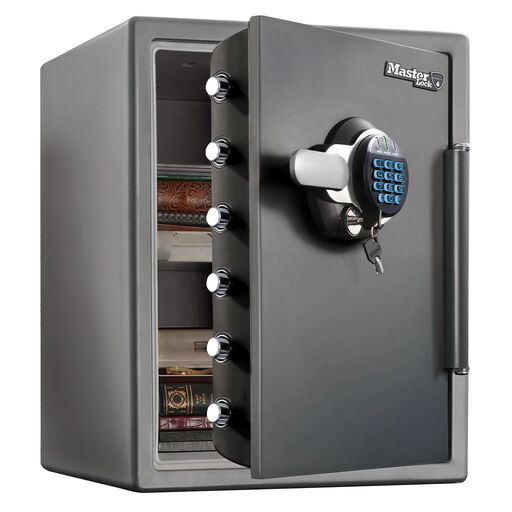
Why it's a match: Designed for small businesses or individuals with high-value assets. Its generous 56 L capacity and dual-locking system (code + key) make it a high-security safe.
It raises the bar with extended fire protection. Its UL 2-hour at 927 °C certification offers maximum peace of mind for critical documents in a major fire, an often-overlooked criterion.
The combination of 2-hour fire protection, certified waterproofing, and a dual lock makes it a true fortress for your most valuable possessions.
Explore our full selection of products that meet our strict selection criteria and current safety standards.
Bolting down is highly recommended to deter a burglar from simply carrying it away. But be careful: drilling into a safe can void its fireproof and waterproof properties. Carefully follow the manufacturer's instructions. As we've seen, some models offer bolting kits that preserve the waterproof seal. If the manual forbids it, it's better to conceal the safe in a hard-to-reach place.
Not always. As explained, digital media are far more fragile than paper when exposed to heat. To effectively protect your data, the safe must have a dedicated certification, such as the ETL Verified for Digital Media Protection mark. Without it, the risk of losing everything is very real.
Maintenance is simple, but crucial. Replace the batteries once a year (with high-quality alkaline batteries!), even if they are still working. Clean the keypad with a soft, dry cloth. Finally, and most importantly: keep the physical backup key and/or master code in a secure location, but never inside the safe itself.